Recent Posts

Discover 18th Century Protestant Churches in America


The 1700s brought radical changes to spiritual life across colonial settlements. Waves of religious revival reshaped communities, blending European traditions with emerging American ideals. This era saw fiery preachers challenge established norms, sparking movements that prioritized personal faith over rigid doctrine.

New denominations flourished as settlers sought fresh expressions of belief. Emotional gatherings under open skies replaced formal services for many, creating lasting impacts on worship styles. Key legal milestones later cemented principles we still value today, separating government influence from spiritual matters.

From coastal towns to frontier settlements, diverse faith groups adapted to their surroundings. These communities laid groundwork for modern religious freedom while preserving core values. Their stories reveal how early Americans balanced heritage with innovation during turbulent times.

Key Takeaways

  • The Great Awakening revolutionized colonial worship through emotional revivals
  • Methodist and Moravian movements gained traction in urban centers
  • Religious freedom became law through landmark documents post-1776
  • Preachers like George Whitefield drew massive outdoor crowds
  • New denominations challenged traditional church authority structures
  • Colonial meeting houses evolved into permanent worship spaces

Historical Context and Colonial Beginnings

English policies shaped America’s spiritual landscape long before colonists built their first meeting houses. Religious freedom seekers carried European conflicts across the Atlantic, planting seeds for new expressions of belief.

The Role of Colonial Settlements and Early Religious Movements

Four main groups emerged from England’s religious turmoil. Quakers built thriving trade networks while maintaining simple worship practices. Congregationalists created self-governing communities where local leaders set spiritual rules.

These distinct approaches to faith transformed raw wilderness into organized societies. Presbyterians developed flexible theology that later influenced educational institutions. Particular Baptists focused on personal conversion experiences that would fuel revival movements.

Dissenters, the Act of Settlement, and Evolving Faith

England’s 1701 law changed colonial dynamics overnight. By securing Protestant succession to the throne, it strengthened ties between American believers and their homeland. This legal framework let certain denominations flourish while others faced challenges.

The separation of church and state began taking shape as communities tested new governance models. While some groups maintained European traditions, others blended old practices with frontier innovations. These experiments laid groundwork for America’s unique approach to spiritual life.

Exploring “protestant churches in 18th c”: Revival, Missions, and Growth

Spiritual landscapes across the colonies shifted dramatically as new forms of worship took root. Two powerful forces reshaped religious life: emotional revivals and ambitious missionary efforts. These changes created lasting patterns still visible in modern faith practices.
18th century religious revival movements

The Great Awakening and Its Lasting Influence

The 1750s witnessed a spiritual earthquake across North America. Preachers like George Whitefield drew thousands to open-air meetings, where crowds experienced intense emotional conversions. This great awakening prioritized heartfelt faith over dry rituals, forever changing how communities practiced their beliefs.

Jonathan Edwards’ famous sermon “Sinners in the Hands of an Angry God” epitomized the revival’s urgency. These gatherings broke down social barriers, creating shared spiritual experiences among diverse groups. The movement’s emphasis on personal connection with divinity influenced education, politics, and social reforms for generations.

Pietism, Moravian Outreach, and Missionary Work

German Pietists brought fresh energy to spiritual life through their focus on individual piety. Settling in Pennsylvania and Georgia, they established tight-knit communities emphasizing daily devotion. Their heart-centered approach inspired new missionary ventures reaching from Native American tribes to distant continents.

Moravian missionaries made history in 1706 by founding India’s first Protestant mission at Tranquebar. Backed by European royalty, these efforts marked the start of organized global evangelism. The Baptist Missionary Society later continued this legacy, sending William Carey to establish groundbreaking work in India.

Notable Figures and Critical Events in Protestant History

Visionary leaders ignited spiritual revolutions that transformed colonial religious practices. Their work reshaped worship styles and created lasting community bonds. Three key forces drove these changes: fiery preachers, innovative communities, and cultural shifts.

John Wesley, George Whitefield, and the Methodist Revival

John Wesley’s life changed forever during a 1738 London meeting. As a Moravian speaker read Martin Luther’s writings, Wesley described feeling his “heart strangely warmed” – a moment sparking the Methodist movement. This emphasis on personal conversion challenged Anglican Church traditions, prioritizing emotional faith over formal rituals.

George Whitefield’s booming voice captivated crowds from New York to Georgia. His open-air sermons drew thousands, creating shared experiences across social classes. Together, these leaders showed how heart-centered preaching could build vibrant spiritual networks.

Count Zinzendorf and the Formation of the Moravian Community

Count Zinzendorf turned his German estate into a refuge for persecuted believers in 1722. The Herrnhut settlement became a model Christian community, blending prayer with practical work. Moravian missionaries later established vital centers in Pennsylvania, sending helpers as far as the Caribbean.

Their slogan “Come as you are” welcomed all seekers. This approach influenced English revivals and set new standards for inclusive worship. By 1775, their communities spanned continents while maintaining close-knit bonds.

The Impact of Enlightenment Thought on Religious Reform

The French Revolution’s upheaval forced religious groups to rethink traditions. As Voltaire questioned church authority, movements like Methodism offered heartfelt alternatives to cold rationality. Leaders balanced new ideas with timeless spiritual needs.

These changes created lasting images of faith – warm communities, passionate preaching, and personal transformation. Their legacy continues shaping American religious life today.

Conclusion

By the late 1700s, a distinct spiritual identity had taken root across North America. Religious movements reshaped communities through passionate revivals and innovative missions. These changes created lasting patterns in how people practiced faith and organized their spiritual lives.

The era’s legacy lives on in modern principles of religious freedom and community-driven worship. From frontier settlements to growing cities, diverse groups found new ways to express shared beliefs. Their experiences remind us how historical events continue shaping our understanding of faith’s role in society.

FAQ

How did colonial settlements shape early religious movements in America?

Colonial settlements created diverse communities where faith played a central role. Groups like Puritans, Quakers, and Anglicans established churches that blended European traditions with New World challenges, fostering unique spiritual identities.

What role did dissenters play in evolving 18th-century faith practices?

Dissenters challenged state-backed churches, advocating for religious freedom and separation of church and government. Their efforts led to new denominations and a shift toward personal spiritual experiences over rigid doctrine.

Why was the Great Awakening significant for Protestant growth?

The Great Awakening emphasized emotional revival and personal conversion, uniting colonies through preachers like George Whitefield. It sparked grassroots movements, increased missionary work, and laid groundwork for later reforms.

How did Moravian missionaries influence 18th-century communities?

Moravians, led by Count Zinzendorf, prioritized global missions and communal living. Their outreach to Native Americans and enslaved people introduced inclusive worship styles, inspiring other groups to expand their evangelical efforts.

What connected John Wesley and George Whitefield to the Methodist revival?

Both leaders preached salvation through faith and heartfelt conversion. While Wesley organized Methodist societies, Whitefield’s open-air sermons drew massive crowds, fueling a transatlantic revival that reshaped Protestantism.

How did Enlightenment ideas affect religious reform in the 1700s?

Enlightenment thinkers promoted reason and individual rights, pushing churches to adapt. This era saw debates over tradition versus innovation, influencing movements like Unitarianism and fostering tolerance in some colonial regions.
Exploring the Protestant Reformation in the 1600s


What began as a bold stance against religious authority in 1529 grew into one of the most influential movements of the 17th century. At the Diet of Speyer, a group of German leaders refused to let political power dictate their faith, sparking a wave of change. Their defiant act gave birth to a term that would reshape Europe: Protestant.

Over the next hundred years, this religious revolution evolved in surprising ways. While early reformers like Martin Luther and John Calvin laid the groundwork, the 1600s saw new ideas take root. Communities across England and beyond developed distinct practices, blending theology with local traditions. This wasn’t just about church doctrine—it reshaped laws, art, and daily life.

Royal courts and village squares alike became battlegrounds for spiritual identity. Leaders debated how to structure worship, while families passed down handwritten prayer books. Even politics shifted, as nations grappled with balancing unity and religious diversity. Through it all, ordinary people found innovative ways to express their beliefs.

Key Takeaways

  • The term “Protestant” originated from a 1529 protest against religious restrictions
  • 17th-century reforms introduced new organizational structures and theological ideas
  • Political power struggles deeply influenced religious practices and policies
  • Protestant ideas spread through both official channels and grassroots movements
  • This era’s religious changes continue to impact modern Christianity and Western culture

Historical Context and Overview

The 17th century dawned on a continent wrestling with profound questions of faith and power. Europe stood at a crossroads, where aging institutions clashed with fresh ideas about human dignity and divine connection. Royal courts buzzed with debates about who should control spiritual life – kings, priests, or ordinary believers.

A Continent in Transition

Three forces shaped this era: rising literacy, political rivalries, and technological change. The printing press let ideas spread faster than ever before. By 1620, over 200 million printed items circulated across Europe – many challenging traditional beliefs.

Local rulers saw religious choice as a way to assert independence. In German states and Scandinavian kingdoms, leaders used faith debates to resist foreign influence. Meanwhile, merchants and artisans embraced new teachings that valued hard work and personal scripture study.

Region Key Political Factors Social Impact
Spain/Italy Strong Catholic monarchy Limited reform acceptance
France Edict of Nantes compromises Growing urban dissent
German States Peace of Augsburg divisions Localized religious wars
England Monarch-led reforms Parish-level innovations

Foundations for Modern Belief

This period redefined Christianity’s core concepts. Theologians argued that salvation came through faith rather than rituals. Ordinary people began keeping family Bibles – a radical act in a time when clergy once controlled scripture access.

These changes planted seeds for democratic thought. When reformers claimed “every believer a priest,” they unknowingly set the stage for later arguments about individual rights. Church music shifted from Latin chants to vernacular hymns, making worship more accessible.

By century’s end, Europe’s spiritual landscape had fractured into competing visions. Yet this very diversity forced new conversations about tolerance – messy beginnings of ideas we now consider fundamental to modern society.

Origins and Early Influences of Protestant Reform

Long before Luther’s 95 Theses, voices of dissent echoed through Europe’s monasteries and universities. Visionary thinkers laid groundwork for religious change by challenging established power structures. Their bold critiques of spiritual authority would later fuel sweeping reforms.

Medieval Church Critique and Reform Ideals

William of Ockham sparked debates in the 14th century by accusing Pope John XXII of heresy. The Franciscan philosopher argued church leaders betrayed Christ’s example of poverty. “No earthly power,” he insisted, “should contradict scripture.”

medieval church reform

John Wycliffe took this further by translating the Bible into English. His followers – called Lollards – spread handwritten copies, undermining clergy control over scripture. This radical act made faith personal rather than priest-mediated.

Pre-Reformation Efforts and Dissent

Jan Hus blended religious reform with Czech pride in Bohemia. His sermons against corrupt clergy drew massive crowds. When burned at the stake in 1415, Hus became a martyr symbolizing resistance.

Christian humanists used scholarship to expose church flaws. Lorenzo Valla proved the Donation of Constantine – a key papal land claim – was forged. Erasmus mocked empty rituals in The Praise of Folly, urging a return to Biblical roots.

These pioneers created networks through:

  • Secret Bible study groups
  • University debates
  • Printed pamphlets

Their ideas about individual faith and institutional accountability became cornerstones of later reforms. Though often silenced, their legacy lived on in handwritten notes and whispered teachings.

Key Figures and Leaders of the Reformation

Dynamic thinkers and determined leaders forged paths that millions would follow. Their bold ideas challenged old systems while creating new ways to practice faith. Let’s meet the architects of religious change who left lasting marks on history.

Influential Reformers and Preachers

Martin Luther’s 95 Theses shook Europe’s religious foundations. His translation of the Bible into German let ordinary people engage directly with scripture. Swiss reformers like Huldrych Zwingli took this further, arguing churches should reflect local communities rather than distant authorities.

John Calvin’s teachings sparked global movements. His concept of predestination became central to Reformed churches. “True faith,” Calvin wrote, “shines through action rather than ceremony.” These ideas crossed oceans, shaping colonies and cultures.

Notable Personalities in Church England

James I’s reign marked a turning point for the Church of England. Though raised Calvinist, he embraced Anglican traditions to unify his kingdom. His successor Charles I appointed William Laud as archbishop, whose strict rules angered many worshippers.

Leader Role Lasting Impact
Oliver Cromwell Military ruler Established Puritan reforms
William Laud Archbishop Fueled religious tensions
John Cotton Colonial preacher Shaped American church models

Cromwell’s New Model Army defended Parliament during England’s civil wars. As Lord Protector, he promoted “saints’ governance” – blending faith with politics. Across the Atlantic, John Cotton blended English and colonial practices, proving reformers could adapt to new frontiers.

Political Dynamics and Power Struggles in Church England

Crowns and crosses collided as English rulers sought divine validation for earthly rule. James I declared himself “God’s lieutenant,” merging religious leadership with royal authority. His vision of absolute power faced resistance from Parliament and local congregations demanding self-governance.

church england political conflict

Monarchs as Spiritual Authorities

Charles I intensified royal control by appointing William Laud as Archbishop of Canterbury. Laud’s rigid reforms – ornate altars and strict prayer books – angered worshippers accustomed to simpler services. This top-down approach sparked rebellions from Scotland to Cornwall.

When Worship Became Warfare

Scottish Presbyterians revolted when forced to use Anglican prayer books in 1637. Their resistance inspired English dissenters, creating alliances between religious groups and political opponents of the crown. The resulting civil war divided communities:

  • Cavaliers defended royal divine rights
  • Roundheads fought for parliamentary sovereignty

Charles’ eventual execution shocked Europe, proving no king stood above collective faith. These clashes reshaped relationships between governments and religious institutions, planting early seeds for constitutional governance.

Impact on Religious Practices and Liturgical Changes

Imagine holding a book that sparked both unity and rebellion. The Book of Common Prayer became exactly that—a text shaping worship while fueling fiery debates. Royal decrees turned altars into political stages, with rituals revealing deeper struggles over spiritual identity.

Evolution of Worship and the Prayer Book

James I took a flexible approach, letting clergy adapt services to local needs. Priests could skip making the sign of the cross if congregations objected. This tolerance fostered creative interpretations of the common prayer traditions.

Charles I flipped this policy entirely. His 1633 decree demanded strict adherence: “Every word shall be read as printed, without omission or alteration.” Special robes and ornate church decorations became mandatory, alarming worshippers who saw Catholic influences creeping in.

Transition in Clergy and Administrative Reforms

Civil war upheavals reshaped church leadership overnight. Parliament scrapped bishops in 1646, replacing them with Presbyterian committees. The dramatic shift left many asking: Who truly holds spiritual authority?

Policy Change James I Era Charles I Era
Prayer Book Use Flexible interpretations Strict enforcement
Clergy Requirements No persecution for dissenters Mandatory rituals
Church Decor Simple spaces Elaborate religious art

The 1662 Act of Uniformity forced ministers to swear allegiance to updated prayer books. Nearly 2,000 Puritan leaders refused, losing their positions. This church purge created lasting divisions, proving that worship practices could reshape entire communities.

Influence of Protestant 1600s on National Identity

When crowns merged but faiths clashed, Britain’s map redrew itself through spiritual struggle. The 1603 union of England and Scotland under James I created a shared throne but competing visions of religious identity. While leaders sought unity, local traditions deepened divides – setting the stage for centuries of cultural negotiation.

england scotland national identity

Shifts in Religious Authority and National Pride

Charles I’s attempt to impose Anglican practices on Scotland ignited a firestorm. The 1637 introduction of the Scottish Prayer Book sparked riots, with worshippers hurling stools at clergy. This rebellion became a rallying cry for Scottish independence, blending faith with fierce national pride.

During England’s Civil War, religious alliances shaped political battles. Scottish Presbyterians backed Parliament against the crown, while English Puritans sought to “purify” church practices. These conflicts transformed worship into a marker of cultural identity:

Policy England Scotland
Prayer Book Use Mandatory under Charles I Rejected as foreign imposition
Civil War Alignment Split between Royalists and Parliamentarians United Presbyterian support for anti-royal forces
Post-War Outcome Anglican dominance restored Kirk maintained independence

The 1689 Act of Toleration changed the game. Non-conformist groups gained legal worship rights if they pledged loyalty to the crown. “This wasn’t freedom for all,” notes historian Margaret Weston, “but it let minority faiths exist within national borders.” Catholics remained excluded, reinforcing Protestant identity as a requirement for full citizenship.

By century’s end, religious and national identities had fused. England viewed itself as a Protestant nation standing against Catholic powers like France. Scotland’s Kirk became central to its cultural separation from southern neighbors. These patterns still echo in debates about British identity today.

Transformations in Church Structures and Governance

The clash of beliefs reshaped more than theology—it reinvented how communities organized their spiritual lives. As traditional hierarchies crumbled, new systems emerged that reflected evolving ideas about authority and participation.

Breaking Chains of Hierarchy

England’s Civil War sparked dramatic changes when Parliament abolished bishops in 1646. The short-lived Presbyterian system only took root in London and Lancashire, revealing how regional needs shaped religious government. Oliver Cromwell championed local autonomy, envisioning a “reign of saints” where congregations self-governed without centralized power.

Blueprint for Pure Communities

Puritan leaders like John Cotton redefined membership rules. His churches required personal stories of spiritual awakening—a radical filter ensuring only the “elect” could join. This approach prioritized moral order over quantity.

The 1648 Cambridge Platform codified these ideas, creating a manual for self-governed congregations. Its principles spread beyond England, influencing colonial churches and future democratic structures. These changes showed how religious reformation could reshape societal organization at its core.

FAQ

What factors defined religious change in 17th-century Europe?

The era saw intense shifts due to the Reformation’s spread, political rivalries, and rising nationalism. Conflicts like the Thirty Years’ War reshaped borders, while reformers challenged Roman Catholic traditions. The Book of Common Prayer and vernacular scripture also played key roles in reshaping worship.

How did earlier movements set the stage for the Reformation?

Pre-Reformation figures like John Wycliffe and Jan Hus critiqued church corruption, inspiring later dissent. Movements such as the Lollards emphasized scripture over clergy authority, laying groundwork for reformers like Martin Luther to demand systemic change.

Who were influential leaders in church England during this period?

Thomas Cranmer, architect of the Book of Common Prayer, and John Knox, a driving force in Scottish reform, were pivotal. Puritan leaders like William Perkins also pushed for deeper doctrinal and structural changes within the church.

How did monarchs shape religious policies in England?

Kings like James I and Charles I often clashed with reformers over control of doctrine. The English Civil War and Acts of Uniformity highlighted tensions between crown authority and demands for congregational autonomy.

What liturgical reforms emerged from this era?

Worship shifted from Latin Mass to English services, emphasizing congregational participation. The Book of Common Prayer standardized rituals, while clergy roles evolved to focus on preaching and pastoral care over sacramental duties.

How did religious changes influence national identity?

Breaking from Roman Catholic dominance, nations like England tied faith to cultural pride. The Church of England became a symbol of independence, while events like the Glorious Revolution reinforced Protestant ideals in governance.

What structural changes occurred in church governance?

Episcopal hierarchies faced challenges from Puritan-led congregational models. Groups like the Presbyterians advocated for elder-led systems, decentralizing power and emphasizing local community input in spiritual matters.

Top Protestant Churches to Visit in Zimbabwe


Zimbabwe’s spiritual identity shines brightly through its diverse faith communities. Nearly 70% of the nation’s population identifies with a branch of Christianity that traces its roots to the Reformation era. This religious majority creates a unique cultural tapestry where historic traditions meet modern expressions of faith.

Travelers will find over 120 distinct Christian groups united under one national organization established in 1962. These communities range from century-old stone cathedrals to lively grassroots assemblies blending drum-led worship with traditional hymns. Many visitors are surprised by the warm welcome they receive at local services.

These faith centers do more than host weekly gatherings. They operate schools, medical clinics, and community programs that strengthen neighborhoods nationwide. International guests often leave inspired by how spiritual values translate into practical support for local families.

Key Takeaways

  • Zimbabwe has one of Africa’s highest concentrations of Reformation-rooted Christian communities
  • Over 120 distinct denominations collaborate through a national network
  • Historic and modern worship spaces coexist across the country
  • Faith communities actively support education and healthcare initiatives
  • Visitors can experience unique cultural blends in worship services
  • Many congregations warmly welcome international guests

Overview of Zimbabwe’s Protestant Landscape

Missionary efforts in the 19th century sparked a spiritual transformation across this Southern African nation. The London Missionary Society planted the first seeds in 1859, working closely with local communities. Their efforts gained momentum when explorer David Livingstone championed land grants for religious groups, leading to permanent mission stations.

Historical Foundations of Faith

By 1888, the Universities’ Mission claimed its first permanent base. New denominations arrived like clockwork:

  • Methodist teachers established schools in 1896
  • Seventh-Day Adventists introduced health programs in the 1890s
  • Charismatic movements reshaped worship styles from the 1920s onward

These early efforts laid groundwork for today’s 120+ Christian groups. A local pastor notes: “Our spiritual roots run deep because foreign missions partnered with village elders from the start.”

Modern Expressions of Belief

Today’s religious landscape blends tradition with innovation. African Apostolic communities incorporate ancestral drums into Sunday services, while urban congregations use digital projection systems. This fusion extends beyond worship:

  • Church-led farming cooperatives support rural areas
  • Medical missions operate mobile clinics
  • Youth programs teach both scripture and computer skills

With constitutional protections ensuring freedom of belief, Zimbabwe scored 3/4 for religious liberty in 2023. This openness allows diverse groups to address community needs while preserving their unique identities.

Directory of Protestant Churches in Zimbabwe

Zimbabwe’s urban centers showcase dynamic faith communities shaping spiritual and social landscapes. From Harare’s bustling streets to Bulawayo’s historic districts, these groups blend vibrant worship with practical neighborhood support.

Harare Bulawayo churches

Featured Churches in Harare & Bulawayo

Harare hosts multiple Lighthouse Chapel branches known for energetic services. The River of Life network offers contemporary worship experiences across two locations:

Church Location Leadership Special Feature
Kingdom People Harare Sibs Sibanda & Dave West Innovative church plant
New Creation Bulawayo Mbonisi Malaba Youth-focused programs
Lobungela BICC Bulawayo Rev. Albert Ndlovu World’s largest BICC congregation

Community Impact and Outreach

These organizations extend their ministry beyond Sunday services. The New Apostolic Church supports over 13,000 members through 115 congregations nationwide. Many groups run essential programs:

  • Mobile medical clinics serving rural towns
  • Skills training for young adults
  • Food security projects for local families

Bishop Daniel Mulemba notes: “Our churches thrive when communities thrive.” Visitors can connect with these initiatives while experiencing Zimbabwe’s unique spiritual culture.

Key Protestant Denominations in Zimbabwe

Zimbabwe’s faith communities showcase a vibrant mix of established traditions and homegrown ministries. These groups shape both spiritual practices and social development across urban and rural areas.

Evangelical and Charismatic Movements

Dynamic evangelical organizations thrive through community-focused work. The Baptist community stands out with four national conventions serving over 125,000 members. Agape Missions, founded in 1984, grew from humble beginnings in Nkayi to multiple regions.

Denomination Members Key Projects
Brethren in Christ 33,453 Bible institute, hospital
New Apostolic 13,000+ 115 congregations
Lighthouse Chapel Multiple branches Urban outreach

African-Initiated and Traditional Ministries

Locally founded groups blend spiritual teachings with cultural heritage. The Zion Christian Church became Zimbabwe’s largest Protestant denomination through grassroots growth since the 1920s. Johane Marange’s 1932 vision birthed the African Apostolic Church, now the nation’s second-largest ministry.

“Our services honor both scripture and ancestors,” shares a Harare congregation leader. These denominations often partner with para-church organizations to run schools, health clinics, and farming cooperatives.

From drum-accompanied hymns to digital worship tools, these groups create unique expressions of faith while addressing practical community needs.

Planning Your Visit: Church Services and Events

Exploring Zimbabwe’s vibrant spiritual culture requires thoughtful planning to fully engage with local worship traditions. The Zimbabwe Council of Churches (ZCC) unites communities under a vision of unity and social transformation, creating opportunities for visitors to witness faith in action. Many gatherings reflect this mission through lively services and community-driven outreach.

church services Zimbabwe

Service Schedules and Worship Timings

Most Sunday services start between 9:00 AM and 10:00 AM, with evening gatherings offering a more intimate atmosphere. Midweek prayer meetings often occur Wednesday nights – perfect for travelers seeking deeper connections. Seasonal events like youth rallies or choir festivals showcase Zimbabwe’s musical heritage. A Harare church leader shares: “Our doors stay open for anyone wanting to experience hope through song and scripture.”

Travel Tips and Local Area Insights

Central locations in Harare and Bulawayo make church visits convenient, with reliable taxis and affordable guesthouses near major worship centers. Many leaders blend Shona or Ndebele languages into services, creating authentic cultural exchanges. After gatherings, don’t be surprised if members invite you to share sadza (maize porridge) and stories about their community work.

While exploring, you’ll notice diverse religious landmarks – from historic chapels to modern mosques in larger towns. Comfortable walking shoes and modest attire show respect for local customs. As the ZCC emphasizes: “True faith thrives when people support each other’s journeys.”

Conclusion

Zimbabwe’s faith communities demonstrate how spiritual roots can shape national identity while embracing modern needs. The Evangelical Fellowship unites over 120 denominations and 20 partner organizations, serving more than two million members. This network shows how numbers translate into action, with 69% of citizens participating in groups that blend worship with community development.

From bustling towns to rural areas, these ministries balance tradition with innovation. Constitutional freedom of belief allows unique cultural expressions – think drum-led hymns beside digital prayer networks. Many visitors find inspiration in seeing schools and clinics run by local leaders who’ve served for generations.

Travelers gain fresh perspectives through interactions with welcoming congregations. Whether exploring century-old cathedrals or vibrant youth programs, each experience reveals how faith strengthens communities. As one Harare pastor shared: “Our doors open wider when others join the journey.”

Consider adding a spiritual stop to your itinerary. You’ll discover why this nation’s religious landscape captivates both heart and mind.

FAQ

How many Christian denominations are active in Zimbabwe?

Zimbabwe hosts over 100 registered Christian groups, including Evangelical, Charismatic, and African-Initiated organizations. Major cities like Harare and Bulawayo have diverse congregations contributing to spiritual and social initiatives.

What distinguishes Evangelical groups from African-Initiated ministries?

Evangelical movements often focus on scripture-based teachings and global outreach, while African-Initiated ministries blend traditional practices with Christian beliefs. Both prioritize community development but approach cultural contexts differently.

Are visitors welcome to attend services in Harare?

Yes! Many congregations in Harare, such as Celebration Ministries International, welcome travelers. Check service timings online, dress modestly, and arrive early to experience vibrant worship styles and local hospitality.

How do faith-based organizations support communities here?

Groups like United Methodist Church Zimbabwe run schools, clinics, and food programs. Others, including Zimbabwe Assemblies of God Africa, provide disaster relief and vocational training to empower marginalized populations.

Which cities have the most active Christian communities?

Harare and Bulawayo are hubs for large denominations like Apostolic Faith Mission and Salvation Army. Smaller towns like Mutare and Gweru also host growing congregations with localized outreach projects.

What’s unique about Sunday services in Bulawayo?

Services in Bulawayo often feature multilingual worship, blending English, Ndebele, and local dialects. Dynamic music, energetic preaching, and post-service fellowship events reflect the city’s rich cultural heritage.

Do local ministries collaborate with international groups?

Yes. Organizations like World Vision partner with Zimbabwean churches on education and healthcare. Some African-Initiated groups also network with global bodies to address issues like climate resilience.

Is religious freedom respected nationwide?

Zimbabwe’s constitution guarantees religious freedom. While most groups operate without restrictions, rural areas sometimes face challenges due to limited resources or cultural tensions between traditional and modern practices.

Are Apostolic Church services open to non-members?

Many Apostolic congregations welcome visitors, though practices vary. Some groups emphasize strict dress codes or prayer rituals—research specific branches in advance or contact local leaders for guidance.

Protestant Religions of the 1600s: A Historical Overview


Let’s step back in time to explore a pivotal era that reshaped Europe’s spiritual landscape. The 17th century saw dramatic shifts in faith practices, building on ideas sparked decades earlier. Though Martin Luther’s 1517 protests ignited change, the ripple effects lasted well into the 1600s, creating lasting impacts still felt today.

This period wasn’t just about theology—it transformed politics, culture, and daily life. Historians often mark its conclusion with the 1648 Treaty of Westphalia, which ended decades of conflict. At the heart of these changes lay a simple yet revolutionary idea: Scripture, not tradition, should guide spiritual truth.

You’ll discover how communities reimagined worship and governance during this age of reform. From England’s growing Anglican identity to Calvinist movements in Switzerland, new interpretations of faith took root. These developments didn’t just shape churches—they influenced laws, education, and even international relations.

Key Takeaways

  • The Reformation’s impact stretched far beyond its 1517 origins, defining the 17th century
  • Major treaties like Westphalia (1648) helped stabilize religious tensions
  • Biblical authority became central to evolving faith practices
  • Religious changes sparked political and social transformations
  • Distinct denominations emerged, each with unique traditions

Historical Context and the Foundations of the Reformation

Long before Luther’s famous theses, seeds of religious change were sprouting across Europe. Visionary thinkers challenged the church’s authority, paving the way for sweeping reforms. Their ideas would later fuel movements that reshaped entire nations.

Pre-Reformation Pioneers and Their Legacy

John Wycliffe sparked debates in 14th-century England by translating Scripture into English. His work gave ordinary people direct access to biblical teachings. This bold move weakened the clergy’s control over religious interpretation.

Jan Hus took up the reform torch in Bohemia. At Prague University, he criticized church corruption and championed Czech nationalism. His 1415 execution made him a martyr, inspiring future reformers to question traditional doctrines.

Reformer Contribution Impact
John Wycliffe English Bible translation Empowered lay readers
Jan Hus Church corruption critiques Fueled nationalist reforms
Early Printers Mass-produced texts Spread ideas rapidly

The Information Revolution of Faith

Gutenberg’s printing press changed everything. By 1525, Luther had published over 100 works – more than 17 other reformers combined. Vernacular Bibles reached common people, creating a spiritual awakening.

This technology let reformers bypass traditional church channels. Printed pamphlets spread new doctrines to princes and peasants alike. For the first time, religious debates reached the entire population.

These developments created fertile ground for lasting change. Centuries of simmering discontent met revolutionary communication tools. The stage was set for Europe’s great religious transformation.

The Evolution of Protestantism in Europe

While Luther challenged Rome, Swiss thinkers crafted their own path to reform. These parallel movements transformed how communities practiced faith and governed themselves. Their distinct approaches created lasting traditions that still shape Christian worship today.

Germany, Lutheranism, and Revolutionary Change

Martin Luther‘s bold stand in 1517 began quietly—nailing debates about indulgences to a Wittenberg church door. By 1521, his refusal to recant at the Diet of Worms made him Europe’s most famous heretic. “Here I stand,” he declared, sparking a spiritual revolution.

lutheranism-calvinism-europe

Protected by Saxon princes, Luther translated the Bible into German—a radical act that let ordinary people interpret Scripture. Local rulers soon adopted Lutheranism as their state religion, blending spiritual authority with political power. This partnership fueled rapid growth across northern Europe.

Switzerland and the Rise of Calvinism

Zurich’s Ulrich Zwingli launched Switzerland’s reformation in 1519, emphasizing scriptural purity. But Geneva became Calvinism’s powerhouse after 1541. John Calvin’s strict doctrine taught that God predestined souls before birth—a concept that shaped daily life through moral codes.

Exiled reformers flocked to Geneva, turning it into a training hub for Protestant leaders. Calvin’s ideas spread like wildfire through pamphlets and trained missionaries. By 1600, his teachings influenced Scotland’s kirk, French Huguenots, and Dutch Reformed communities.

Both movements proved that new interpretations of faith could reshape societies. Luther’s focus on personal faith and Calvin’s structured theology created competing visions—each leaving deep marks on European culture.

Protestant Religions 1600: Key Figures and Doctrinal Shifts

At the heart of Europe’s spiritual revolution stood bold thinkers who reshaped Christianity’s future. Their debates about authority and truth sparked movements that still influence modern faith. Let’s uncover how ideas clashed and merged during this defining era.

Influential Reformers and Their Historical Impact

When German princes protested at the 1529 Diet of Speyer, they coined the term “Protestant” by declaring loyalty to God over rulers. This moment crystallized two major camps: Lutherans focused on grace through faith, while Reformed groups emphasized God’s sovereignty. Leaders like Martin Bucer bridged these views, crafting compromises that united communities.

“Scripture alone lights our path—not popes or councils,” argued theologian Theodore Beza, capturing the reformers’ core belief.

Tradition Core Doctrine Geographic Reach
Lutheran Justification by faith Northern Germany, Scandinavia
Reformed Predestination Switzerland, Scotland, Netherlands
Anglican Via media (middle way) England, American colonies

Doctrinal Debates and Religious Publications

The 17th century saw clergy publish thousands of articles debating baptism, communion, and church structure. Printed works like the Westminster Confession (1646) became doctrinal guidebooks. These texts shaped worship practices, from sermon styles to hymn singing.

Reformers also clashed over Catholicism’s legacy. Some sought complete separation, while others preserved rituals like liturgical calendars. These disputes birthed new denominations—each claiming biblical authority for their doctrines.

Through pamphlets and sermons, ideas spread faster than ever. Ordinary people gained access to theological debates once reserved for scholars. This shift forever changed how communities practiced faith.

The English Reformation: Politics, Power, and Religion

England’s religious landscape changed forever when a king’s personal crisis sparked a national transformation. What began as Henry VIII’s desperate bid for a male heir evolved into a complete overhaul of spiritual authority.

henry viii church england

Breaking Ties with Rome

In 1527, Henry VIII faced a dilemma. His marriage to Catherine of Aragon produced no surviving sons. When the Pope refused an annulment, the king took radical action. The 1534 Act of Supremacy declared him “Supreme Head of the Church of England“—a title merging royal and religious power.

Crafting a Spiritual Compromise

Henry’s new church walked a careful line. It kept Catholic rituals but rejected papal control. Monasteries were dissolved, their wealth funding royal coffers. English Bibles appeared in parishes, letting people read Scripture firsthand.

This “middle way” created lasting change. By placing the throne above foreign religious authority, it shaped England’s identity for centuries. The Church of England became both a spiritual institution and a tool of statecraft.

Socio-Political Transformations and Shifts in Church Authority

England’s landscape shifted dramatically as spiritual and earthly authority merged under royal control. This fusion reshaped everything from land ownership to how ordinary people experienced faith. Let’s explore how these changes rippled through society.

Monarchy, Authority, and Dissolution of Monasteries

Henry VIII made history by seizing church lands starting in 1536. Nearly a third of England’s territory changed hands, filling the Crown’s empty treasury. New landowners emerged while monasteries vanished, erasing centuries of tradition.

Parishes now needed English Bibles by royal decree. For the first time, common people could read Scripture themselves. This power shift from clergy to king redefined spiritual access.

Impact on Marriage, Power, and National Identity

After Henry’s death, Edward VI accelerated reforms. Latin mass ended in 1549, replaced by Thomas Cranmer’s Book of Common Prayer. English liturgy became law, not choice.

Elizabeth I perfected the balance when she took the throne in 1558. Her Church of England blended old rituals with new ideas. This “middle way” crafted a unique national identity still felt today.

FAQ

Why did Henry VIII break from the Catholic Church?

Henry VIII sought to annul his marriage to Catherine of Aragon to marry Anne Boleyn, hoping for a male heir. When the Pope refused, Henry rejected papal authority, declared himself head of the Church of England, and dissolved monasteries to consolidate power.

What made the Church of England’s “Middle Way” unique?

The “Middle Way” blended Catholic traditions—like rituals—with Protestant ideas, such as vernacular worship. This approach aimed to ease tensions between reformers and traditionalists while maintaining royal control over doctrine.

How did Martin Luther’s theses spark change in Germany?

Luther’s 95 Theses criticized indulgences and clerical corruption, spreading rapidly due to the printing press. His ideas challenged papal authority, leading to Lutheran reforms and empowering local rulers to reject Catholic dominance.

What role did Calvinism play in Switzerland?

John Calvin emphasized predestination and strict moral codes in Geneva. His teachings influenced governance, education, and social norms, making Switzerland a hub for Reformed theology that spread across Europe.

How did the dissolution of monasteries affect England?

Henry VIII seized monastic lands and wealth, redistributing them to nobles. This weakened Catholic influence, enriched the crown, and shifted economic and political power to the monarchy and loyal elites.

Why was the Book of Common Prayer significant?

Introduced under Edward VI, it standardized Anglican worship in English instead of Latin. It reflected Protestant doctrines while retaining familiar rituals, shaping the Church of England’s identity and unifying practices.

How did marriage laws shift during the Reformation?

The Church of England allowed royal divorces and emphasized marriage as a civil contract. This contrasted with Catholic sacramental views, reinforcing the monarchy’s control over personal and religious matters.

The Meaning of Protestant Church in Malayalam Explained


When exploring faith traditions, language often shapes how we connect with ideas. For Malayalam speakers, understanding terms like പ്രൊട്ടസ്റ്റന്റ് പള്ളി goes beyond translation—it opens a window into a vibrant spiritual movement. This branch of Christianity focuses on personal faith, grace, and the Bible as the ultimate guide.

Many associate the term with physical spaces, but it represents a broader shift in religious thought. Originating in the 16th century, these communities prioritize individual relationships with faith over rituals. Their teachings emphasize that everyone can access spiritual truths directly through scripture.

This guide breaks down complex ideas into simple concepts. Whether you’re learning religious vocabulary or curious about different denominations, we’ll walk through history, beliefs, and cultural connections. You’ll discover how language bridges gaps between traditions and fosters meaningful dialogue.

Key Takeaways

  • Learn the Malayalam term for this faith community and its deeper significance
  • Understand core principles like scripture-based practice and accessible worship
  • Discover how historical reforms shaped modern spiritual practices
  • Gain tools to discuss beliefs across languages and cultures
  • Find clear answers to common questions about traditions and values

Introduction to Protestant Church Terminology

Every belief system has its unique vocabulary. To grasp these spiritual communities, we start with their foundational terms. Think of it like learning a new dialect – each word carries history and purpose.

Defining Key Terms

Let’s break down three essential phrases:

Term Explanation Impact
Five Solae Core principles guiding belief Shapes worship practices
Priesthood of Believers Direct connection to divinity Empowers personal faith
Scripture Alone Bible as ultimate authority Simplifies religious access

These concepts emerged from 16th-century reformers seeking clarity. As Martin Luther noted:

“Every Christian is by faith so exalted above all things that by virtue of spiritual power he is lord of all.”

Overview of Protestant Ideals

Three main ideas shape these communities:

  • Accessible worship: Services focus on understanding rather than ritual
  • Personal responsibility: Individuals interpret sacred texts
  • Shared leadership: Congregations guide decision-making

This approach creates diverse groups united by core values. You’ll find variations in music styles or sermon formats, but the bedrock principles remain constant. Modern gatherings reflect these ideals through interactive Bible studies and community-led services.

Deep Dive into protestant church meaning in malayalam

Language acts as a cultural mirror, reflecting how communities adopt and adapt ideas. The term പ്രൊട്ടസ്റ്റന്റ് പള്ളി blends phonetic elements from English with Malayalam’s script, creating a linguistic bridge for spiritual concepts.

Malayalam religious terminology

Literal Translation and Context

Breaking down the phrase reveals its dual roots: പ്രൊട്ടസ്റ്റന്റ് mirrors “Protestant,” while പള്ളി translates to “place of worship.” This hybrid term preserves core theological ideas while fitting Kerala’s linguistic landscape. Unlike direct translations, it carries historical weight from 16th-century reforms emphasizing scripture over tradition.

Local speakers use this expression when comparing worship styles or explaining denominational differences. For example, discussions might contrast liturgical practices with simpler, Bible-focused services common in these communities.

Cultural and Linguistic Nuances

In Kerala’s diverse Christian landscape, the phrase helps distinguish newer movements from ancient Syrian Christian traditions. One church leader notes: “Our vocabulary shapes how we perceive faith – this term captures both continuity and change.

The adaptation process highlights how global belief systems root themselves locally. While English theological terms provide structure, Malayalam inflections add cultural resonance. This balance allows communities to maintain global connections while nurturing regional identity.

Glossary of Key Protestant Terms

Understanding spiritual concepts requires clear definitions. Let’s explore foundational ideas that shape modern Christian communities.

Priesthood of All Believers

This definition flips traditional hierarchies. Every person connects directly with the divine – no intermediaries needed. Martin Luther emphasized this when he wrote:

“All who trust in Christ become living stones built into a spiritual house, a holy priesthood.”

It means shared responsibility. Leaders guide, but all members actively serve through prayer and support.

Grace, Faith, and Justification

Grace is God’s free gift – like sunlight you didn’t earn. Faith becomes the hands that receive it. Together, they create justification, where mistakes fade but growth continues.

Imagine a courtroom where you’re declared “right” despite flaws. That’s the heart of this trio. These ideas explain why many groups prioritize personal Bible study over rituals.

Historical Insights from the Protestant Reformation

A spiritual earthquake rocked Europe in the 1500s, reshaping how people practiced their faith. This period birthed new ideas about personal spirituality and community leadership, challenging centuries-old traditions.

Origins and Reformation Impact

Reformers like Martin Luther and John Calvin questioned religious authority structures. They argued that scripture—not clergy—should guide believers. “Why should a farmer need permission to read God’s word?” became a rallying cry.

The movement dismantled complex systems requiring priestly mediation. Ordinary people gained direct access to spiritual truths through vernacular Bibles. Literacy rates soared as communities embraced education to understand sacred texts.

Three key changes emerged:

  • Power shift: Congregations began shaping worship practices
  • Simplified rituals: Focus moved from ceremonies to heartfelt belief
  • Shared responsibility: Everyone became stewards of their faith journey

These reforms sparked political debates across kingdoms. Rulers faced tough choices—support traditional structures or back emerging ideas about individual liberty. The ripple effects still influence modern discussions about personal freedom and institutional trust.

“A simple shoemaker can grasp divine truth as clearly as any bishop.”

– Anonymous Reformation-era pamphlet

Today’s religious landscapes still reflect these revolutionary principles. Bible studies and community-led services continue the Reformation’s legacy of accessible spirituality.

Essential Teachings and Beliefs in Protestantism

At the heart of this spiritual tradition lies a revolutionary idea: divine acceptance comes through trust, not transactions. This principle reshaped religious thought and continues to guide communities worldwide.

Protestant doctrine of justification

The Doctrine of Justification

Imagine standing before a judge who declares you innocent—not because you’re perfect, but because someone else paid your debt. That’s justification. Reformers taught that right standing with God comes through faith in Christ’s sacrifice, not personal achievements.

Three key aspects define this teaching:

  • Grace-based: A gift received, not earned
  • Faith-activated: Trust bridges human imperfection and divine perfection
  • Christ-centered: Relies entirely on Jesus’ actions, not human effort

“The believer becomes simultaneously sinful and righteous—flawed yet fully loved.”

The Role of Good Works

While good deeds don’t earn salvation, they naturally flow from transformed hearts. Think of it like apples growing on a healthy tree—the fruit proves the tree’s vitality but didn’t create it.

Aspect Justification Good Works
Source God’s gift Human response
Purpose Relationship restoration Love in action
Timing Instant declaration Lifelong process

This approach creates freedom. Believers serve others not from fear, but gratitude. Communities emphasize practical compassion—feeding the hungry or mentoring youth—as joyful expressions of faith.

Protestant Church Practices and Basic Rules

Communities shape their identity through shared actions and guidelines. These groups prioritize simplicity in spiritual routines while maintaining core biblical values. Let’s explore how their approaches differ from other traditions.

Protestant sacraments baptism communion

Sacramental Differences

Most focus on two sacred practices: baptism and communion. Why just these? Reformers insisted on clear scriptural commands from Jesus. This contrasts with traditions recognizing seven sacraments rooted in church history.

Governance styles vary like puzzle pieces fitting different needs. Some groups elect leaders through member votes. Others appoint regional supervisors. One pastor explains: “Our structure reflects local needs while keeping scripture central.”

Active participation defines worship services. Members read texts aloud, lead songs, and share testimonies. This contrasts with strictly clergy-led ceremonies. Everyone contributes—not just professionals.

Ministers often marry and raise families, viewing relationships as ministry tools. A 2022 survey found 89% of U.S. Protestant clergy are married. This practice stems from rejecting mandatory celibacy rules.

Basic guidelines emphasize practical faith over complex laws. Communities address conflicts through open dialogue, aiming for reconciliation. For example, many use small groups to resolve disagreements before escalation.

Practice Purpose Biblical Basis
Believer’s Baptism Public faith declaration Matthew 28:19
Communion Remembering Christ’s sacrifice 1 Corinthians 11:24-25
Member-Led Decisions Shared responsibility Acts 15:22

Linguistic Comparisons: English and Malayalam

Translating religious terms requires more than dictionary equivalents. Cultural bridges form when language carries sacred ideas across borders. Let’s explore how പ്രൊട്ടസ്റ്റന്റ് പള്ളി reflects this delicate dance between sounds and meanings.

Cultural Bridges in Translation

Converting theological concepts between English and Malayalam demands creativity. Many terms lack direct matches. For example, “grace” might become ദയ (mercy) plus explanatory sentences about unearned blessings. This preserves intent while respecting grammar rules.

Local translators often add context. A phrase like “priesthood of believers” becomes descriptions of shared spiritual roles. This approach maintains core ideas without forcing unnatural words.

Mastering Pronunciation

The Malayalam version of “protestant church” adapts English sounds to local speech patterns. Break it down: പ്രൊ-ട്ട-സ്റ്റൻ-റ് flows like rapid taps, while പള്ളി ends with a soft “li.” Practicing these sounds helps discussions flow naturally.

Digital tools like English Malayalam translators offer starting points. But human insight remains vital for capturing layered meanings. Community input ensures translations resonate emotionally and intellectually.

FAQ

What does "priesthood of all believers" mean in Protestantism?

This teaching emphasizes that every Christian has direct access to God through faith, removing the need for intermediaries like clergy. It underscores personal responsibility in spiritual growth and worship.

How do Protestant teachings on grace differ from other Christian traditions?

Protestants believe salvation comes solely through God’s grace, received by faith alone. Unlike some traditions, they reject the idea that human effort or rituals contribute to redemption.

Why is the Bible central to Protestant practices?

Scripture is viewed as the ultimate authority for doctrine and life. Translations into local languages, like Malayalam, aim to make teachings accessible for personal study and communal worship.

What cultural challenges arise when translating Protestant terms into Malayalam?

Certain theological concepts, such as “justification,” may lack direct equivalents. Translators often use descriptive phrases or borrow Sanskrit-rooted words to preserve meaning while respecting linguistic norms.

How did the Reformation influence Protestant views on sacraments?

Reformers like Luther reduced sacraments to baptism and communion, rejecting others as non-biblical. This shift prioritized inward faith over outward rituals in many denominations.

Are good works important in Protestant belief systems?

While deeds are seen as a response to salvation, they don’t earn it. Followers are encouraged to live ethically as gratitude for grace, not to achieve divine favor.

What tips help pronounce Protestant terms correctly in Malayalam?

Focus on vowel sounds and stress patterns unique to the language. Listening to native speakers or using audio resources can improve clarity, especially for terms like “karunyam” (grace).

Explore the Historic Protestant Church in Zurich


Step into spaces where history whispers through vaulted ceilings and sunlight dances across ancient stone. Zurich’s iconic spiritual sites blend stunning architecture with stories that shaped a nation. These landmarks aren’t just relics—they’re vibrant hubs where tradition meets modern life.

Walk the same aisles where reformers once debated ideas that changed Europe. Marvel at intricate stained glass while learning how these buildings became cornerstones of Swiss identity. Visitors today find more than quiet chapels—they uncover living communities hosting concerts, workshops, and cultural exchanges.

Whether you seek peaceful reflection or hands-on history lessons, these welcoming spaces invite exploration. Join guided tours to decode hidden symbols in carvings, or simply sit beneath towering spires feeling centuries melt away. Every visit offers fresh perspectives on how faith and society evolve together.

Key Takeaways

  • Experience 500+ years of history through guided tours and interactive exhibits
  • Attend concerts, lectures, and cultural events in awe-inspiring settings
  • Discover how Reformation-era ideas still influence modern Swiss culture
  • Enjoy free access to most locations with multilingual resources available
  • Find tranquil gardens and cafes perfect for quiet contemplation

Discovering the Historic Protestant Church in Zurich

Every corner of this landmark breathes life into pivotal moments that shaped a nation’s spiritual journey. Its twin towers rise like stone sentinels, guarding stories of courage and change that transformed religious practices across Europe.

Where Past and Present Converge

Interactive displays let you touch replicas of 16th-century manuscripts, their weathered pages whispering tales of bold reformers. Modern soundscapes blend with ancient architecture, creating an immersive timeline that spans five centuries.

Melodies from the organ fill the space during weekly concerts, proving tradition thrives here. Discussions on ethics and community issues echo through forums held beneath stained-glass windows, showing how faith remains a living conversation.

Visitors of all backgrounds find connection in quiet chapels and bustling event spaces. Guides share insights about how this location became a cradle for ideas that still shape social progress today. Free multilingual booklets help every person engage deeply with the site’s legacy.

Sunlit courtyards invite reflection, while workshops let you craft parchment replicas using historical methods. Whether joining a choir performance or tracing carved symbols, you become part of an unbroken chain of seekers and storytellers.

Historical Roots and Reformation Influence

Peel back layers of time in a place where ink-stained debates forged new ways of thinking. This landmark’s stone walls hold echoes of passionate discussions that reshaped spiritual and civic life across continents.

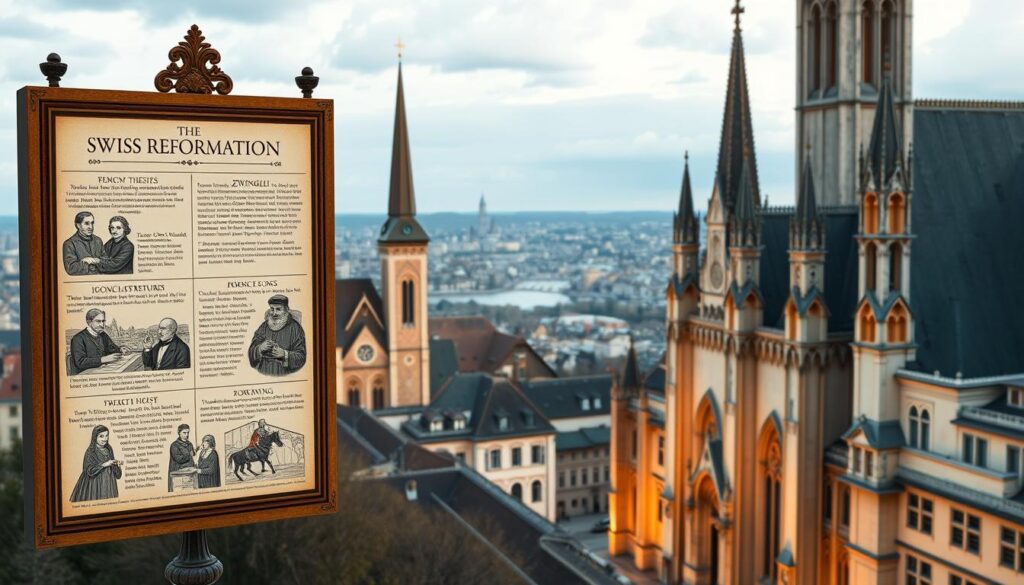
Swiss Reformation milestones

Key Milestones in the Swiss Reformation

Original letters and printed pamphlets let you trace revolutionary ideas from quill to congregation. Touch replicas of 1523 debate transcripts where bold thinkers challenged traditions—their words sparked movements still studied worldwide.

Interactive timelines reveal how local reforms grew into global changes. Rare artifacts like hand-illuminated Bibles show the care taken to make sacred texts accessible. Guides explain how these efforts created ripple effects in education and governance.

Socio-Political Dialogue Through the Ages

Debates about fairness and community responsibility still fill these halls. Modern forums tackle topics from climate ethics to digital privacy, proving historical courage fuels current conversations.

Exhibits contrast 16th-century petitions for religious freedom with today’s social justice initiatives. You’ll see how generations have used this space to address inequality—a thread connecting past reformers to present activists.

Weekly discussion circles invite visitors to share perspectives beneath vaulted ceilings where similar exchanges occurred centuries ago. It’s proof that wrestling with big questions remains central to this living tradition.

Architecture and Artistic Expression

Discover how centuries-old stones were shaped to elevate both spirit and community through visionary design. The Grossmünster stands as a living canvas where medieval builders translated spiritual ideals into physical form. Its twin towers reach skyward, framing portals adorned with carvings that whisper ancient truths to modern visitors.

Monumental Design and Notable Features

Marvel at the interplay of strength and grace in the structure’s Romanesque foundations. Massive columns support vaulted ceilings designed to draw eyes upward, while narrow windows filter sunlight into golden shafts. Look closer to spot symbolic carvings—grapevines representing communion and lions guarding sacred thresholds.

Stained glass panels transform sunlight into storytelling spectacles. Each vibrant scene depicts biblical narratives using techniques perfected by generations of artisans. These windows served a dual purpose: educating worshippers through visual parables and creating spaces for quiet reflection.

The Role of Art in Religious Heritage

Music breathes life into these ancient walls with acoustics tailored for communal song. The vaulted nave carries voices in harmonious unity, a feature intentionally crafted to strengthen collective worship. Weekly concerts showcase pipe organ melodies that have echoed here for centuries.

Artistic elements extend beyond decoration—they shape how people connect with tradition. From hand-carved pulpits to modern installations, every detail invites engagement. Workshops on medieval crafts and guided tours explaining symbolic motifs keep heritage alive through hands-on experiences.

Services and Community Programs

Sunday mornings hum with energy as generations gather under vaulted ceilings. At 10 am, voices rise in bilingual hymns—Swiss German harmonies blending with English lyrics. This weekly rhythm connects ancient rituals to today’s questions through music, prayer, and practical teachings.

Overview of Regular Gatherings

The Sunday church services honor Reformed traditions while addressing modern life. You’ll hear pipe organ preludes followed by discussions about ethical dilemmas in tech-driven societies. Interactive elements like shared reflection times keep participation dynamic and personal.

Special Programs for Kids and Teens

Colorful activity packs greet children the moment they arrive. Toddlers explore Bible stories through puppet shows, while teens debate faith concepts in cafe-style settings. Age-specific groups meet during services, letting young minds engage at their level.

Weekdays bring cooking classes for immigrants and book clubs discussing social justice. Volunteer teams organize neighborhood cleanups, turning beliefs into action. These initiatives help people weave spiritual values into everyday routines, creating bonds that last far beyond Sunday mornings.

Guided Tours and Visitor Experiences

Unlock hidden narratives in stone corridors where every arch holds untold stories. Expert-led explorations transform silent walls into vibrant classrooms of history. Guides reveal secret symbols in carvings and share tales of thinkers who shaped cultural movements.

guided tours historic church

Interactive Tour Highlights

Touch replicas of medieval tools used by master builders. Digital projections overlay historical scenes onto modern spaces, creating immersive time jumps. Special evening events feature costumed interpreters reenacting debates that changed religious practices.

Young visitors solve puzzles using UV lights to uncover faded fresco details. Adults can handle replica manuscripts while learning decoding techniques. These hands-on moments make centuries-old traditions feel immediate and personal.

Audio Guides and Contextual Insights

Multilingual headsets offer tailored journeys through the space. Choose thematic routes focusing on architecture, social history, or musical heritage. Narration blends scholarly information with dramatic readings from historical figures’ diaries.

Pause anytime to hear deeper dives into specific artworks or traditions. The audio tour’s map feature helps locate lesser-known gems like hidden stonemason signatures. First-time visitors and repeat explorers alike gain fresh perspectives through this flexible resource.

Exploring the Protestant Church Zurich Legacy

Stone arches hold more than memories—they cradle living traditions that shape tomorrow’s beliefs. This sacred space bridges eras through careful stewardship of its tangible and intangible heritage.

preservation of historical traditions church

Guardians of Timeless Wisdom

Specialists use historical methods to repair stained glass and preserve 500-year-old manuscripts. Hands-on workshops teach visitors how artisans mixed medieval pigments or bound Reformation-era books. These efforts keep skills alive while honoring original craftsmanship.

Music remains a heartbeat of continuity. Choirs still sing hymns from the 1500s, their melodies carrying reformed theology into modern ears. Lyric sheets with side-by-side translations let everyone join the chorus of history.

Weekly discussion circles explore how faith principles apply to current social issues. Topics range from climate ethics to digital community-building, proving ancient wisdom adapts to new challenges. Youth groups reimagine parables through street art projects and podcast debates.

Every person becomes part of this legacy. Whether tracing carved symbols or joining a candlelit chant, visitors experience traditions as active invitations—not dusty relics. Here, preservation means keeping doors open for future generations to add their stories.

Community Events and Musical Offerings

Harmonies rise through sunlit arches as voices from across generations unite in song. This vibrant space pulses with creative energy, blending centuries-old traditions with fresh expressions of shared purpose. From spirited concerts to thought-provoking gatherings, every occasion invites participation in something larger than oneself.

Where Sound Meets Soul

The venue’s exceptional acoustics transform performances into immersive experiences. Classical quartets share the stage with jazz ensembles, their melodies bouncing off stone walls that have amplified music for 500 years. Modern sound systems enhance without overpowering, ensuring every note reaches the farthest pew.

Workshops pair live performances with interactive discussions about music’s role in social change. Attendees might find themselves debating ethical issues after a choir’s rendition of Reformation-era hymns or creating digital art inspired by organ solos. These dynamic blends of old and new spark unexpected connections.

Volunteers from all backgrounds help curate programs that reflect diverse tastes and needs. A retired teacher might coordinate a youth orchestra, while tech professionals design light shows for evening concerts. This collaborative spirit turns historic spaces into laboratories for cultural innovation.

Free community dinners often follow performances, fostering friendships over shared meals. Visitors leave nourished in body and spirit, carrying forward the harmony they helped create.

Planning Your Visit and Accessibility Tips

Your journey through history begins with practical details that make exploration seamless. This landmark welcomes curious minds year-round with thoughtful amenities and clear guidance.

Timing Your Experience

Summer visits (March 1–October 31) offer extended hours from 10 am to 6 pm—perfect for leisurely exploration. Winter schedules (November 1–February 28) maintain accessibility with 10 am–5 pm openings. Free admission ensures everyone can enjoy quiet reflection or guided discovery.

Finding Your Way

The central location at Zwingliplatz 7 puts you steps from tram stops and walking routes. Multilingual staff provide maps highlighting nearby cafes and photo-worthy courtyards. For events updates or group visit coordination, reach out via phone or email.

Check the official website for holiday closures or special programs that might enhance your trip. Wheelchair ramps and audio guides demonstrate the commitment to inclusive access. Whether arriving by train or foot, clear signage guides you from city bustle to tranquil discovery.

Digital Engagement and Bilingual Services

In an era where screens connect continents, spiritual communities thrive beyond physical walls. Our innovative approach ensures no one misses meaningful moments—whether they’re across town or oceans away.

Breaking Barriers Through Live Streams

Every Sunday, our live-streamed services bring people together through YouTube. Join grandparents in Geneva, students in Tokyo, and newcomers down the street—all sharing the same experience in real time. Missed the broadcast? Archived videos let you revisit powerful sermons or choir performances whenever inspiration strikes.

Language Inclusivity in Modern Worship

Hear messages delivered in both English and Swiss German during every gathering. Professional translators ensure complex ideas resonate clearly across language divides. This dual-language approach creates unity without sacrificing depth—whether you’re a lifelong local or first-time visitor.

Beyond Sundays, virtual discussion groups tackle faith topics through Zoom. Interactive workshops explore historical traditions using digital tools, while multilingual resources help families engage together. Technology here doesn’t replace community—it expands who gets to belong.

Conclusion

As your journey through these storied spaces concludes, remember you’ve walked paths where ideals transformed nations. These sacred sites aren’t frozen in time—they pulse with living conversations between centuries-old stones and modern seekers.

What makes these landmarks extraordinary isn’t just their carved arches or stained glass. It’s how communities breathe new life into ancient traditions daily. Through shared meals after concerts or quiet moments in sunlit chapels, visitors become threads in an unbroken tapestry of connection.

Your presence here fuels ongoing stories of hope and service. Whether you light a candle or join a discussion circle, you help preserve a legacy that shapes tomorrow. Carry forward the warmth of welcoming spaces where history’s whispers meet today’s brightest dreams.

FAQ

What are the operating hours for visiting?

The historic site is open daily from 9 AM to 6 PM, with seasonal adjustments. Check the official website for holiday closures or special event schedules.

Are guided tours available in English?

Yes! Multilingual audio guides and live tours in English, German, and French are offered. Interactive tours highlight stained glass, Reformation history, and architectural details.

Is there parking or public transport nearby?

Tram stops and train stations are within walking distance. Limited street parking is available, but public transit (VBZ or SBB) is recommended for convenience.

Are there programs for children and families?

Absolutely. Youth workshops, storytelling sessions, and family-friendly events occur monthly. Check the community calendar for themed activities like Easter crafts or Advent celebrations.

Can I attend services if I’m not Protestant?

Everyone is welcome. Bilingual services blend traditional hymns and modern worship. Livestreams are also available for remote participation.

How does the church preserve its historical legacy?

Restoration projects, archival digitization, and partnerships with institutions like the Swiss National Museum ensure artifacts, texts, and traditions remain accessible.

Do concerts require advance tickets?

Most musical events are free, though popular performances (e.g., organ recitals or choir festivals) may require reservations. Sign up for the newsletter for updates.

Is the venue wheelchair accessible?

Ramps and elevators provide access to main areas. Contact staff ahead of time for tailored assistance or detailed accessibility maps.