Recent Posts

Nearby Protestant Churches for Sunday Service


Finding a welcoming spiritual home in Chicago just got easier. This guide highlights three vibrant congregations offering meaningful Sunday gatherings across different neighborhoods. Whether you prefer morning or evening options, these locations provide flexible schedules to match your routine.

Progressive Baptist Church welcomes visitors at 9:30 AM near South Side’s historic Wentworth Avenue. Just 15 minutes later, Park Near North opens its doors at Crosby Street with both 10 AM and 5:30 PM gatherings. North Side residents can join Addison Street Community Church’s 10:30 AM program featuring modern worship elements.

Each location prioritizes accessibility with parking options and inclusive programming. From Addison Street’s youth mentorship initiatives to Park Near North’s multicultural outreach, these communities actively support local families. Many first-time attendees praise the blend of traditional values and fresh approaches to faith-building.

Key Takeaways

  • Three distinct congregations serve South Side, Near North, and North Side neighborhoods
  • Service times range from 9:30 AM to 5:30 PM for scheduling flexibility
  • All locations offer parking and family-friendly environments
  • Diverse worship styles from gospel traditions to contemporary formats
  • Community programs include food drives and youth activities

Detailed addresses and contact information help simplify your visit planning. These faith communities extend open invitations to newcomers seeking connection through shared values and uplifting experiences.

Discover protestant church services near me

Exploring Chicago’s spiritual communities reveals diverse Sunday gatherings designed for modern lifestyles. Three welcoming congregations stand out with thoughtfully timed worship sessions and engaging programs. Whether you prioritize early mornings or evening reflection, these locations accommodate varied routines while fostering meaningful connections.

Service Times and Locations

Progressive Baptist Church kicks off Sundays at 9:30 AM CT, blending in-person and livestream access. Their PBC Kids and Teens ministries run concurrently, letting families worship together or separately. Over at Park Near North, dual gatherings at 10 AM and 5:30 PM (starting September 14) cater to both early birds and night owls.

North Side’s Addison Street Community Church offers a 10:30 AM service followed by Wednesday night Bible studies. Its central location near public transit makes attendance hassle-free for downtown workers and suburban residents alike.

Sermon Highlights and Ministry Details

Current teaching series dive deep into practical faith applications. Addison Street’s ongoing Matthew exploration unpacks gospel messages with real-world relevance. “Our goal is to make scripture feel accessible, not academic,” shares their lead pastor.

Midweek opportunities abound too. From Park Near North’s multicultural outreach meals to Progressive Baptist’s virtual prayer circles, these communities extend support beyond Sunday mornings. Youth mentorship programs and seasonal literacy campaigns further demonstrate their commitment to neighborhood growth.

Local Worship Gatherings and Community Connection

Chicago’s neighborhoods come alive each week with opportunities for spiritual growth and connection. Structured gatherings and family-focused initiatives create spaces where relationships flourish alongside faith development.
family worship Chicago

Morning and Evening Service Schedules

Early risers find welcoming spaces at multiple locations. Progressive Baptist starts Sundays at 9:30 AM with vibrant music and practical teachings. Those preferring later options can join Park Near North’s 10 AM gathering or their new 5:30 PM evening session launching September 14.

Congregation Morning Service Evening Service Midweek Options
Progressive Baptist 9:30 AM Virtual prayer circles
Park Near North 10:00 AM 5:30 PM Multicultural meals
Addison Street 10:30 AM Wednesday Bible studies

Kids, Teens, and Family Programs

Your Family. Our Priority isn’t just a slogan at Progressive Baptist – it’s action. Their PBC Kids program uses interactive storytelling while teens tackle real-life challenges through scriptural discussions. “We want young people to own their faith journey,” explains a ministry leader.

Addison Street’s Wednesday gatherings shift between prayer sessions and relaxed Bible explorations. Park Near North complements Sunday sermons with monthly community meals, proving spiritual growth happens around tables as often as pulpits.

Embracing Faith, Prayer, and Ministry

Spiritual growth thrives when worship experiences align with daily life. Chicago congregations foster this connection through intentional moments of reflection and practical support systems. Both long-time members and newcomers find spaces to deepen their beliefs while serving others.

In-Service Prayer and Worship Moments

Sunday gatherings become transformative through guided spiritual practices. At Park Near North, the second-floor prayer room opens at 9 AM for quiet preparation. “These moments help us center our hearts before worship begins,” explains a regular attendee.

Progressive Baptist integrates prayer directly into their services. Leaders often pause sermons to invite shared requests, creating collective spiritual momentum. Their team emphasizes: “We walk with families through every challenge.”

Congregation Prayer Type Time Contact
Park Near North Pre-service 9 AM Sundays Prayer Room (2nd floor)
Progressive Baptist Family Support During services Prayer cards available

Community Support and Deacon Prayer

Trained leaders provide confidential guidance after services at multiple locations. Park Near North’s deacons remain available through email for ongoing needs. One member shares: “Knowing support continues midweek makes faith feel tangible.”

Ministry opportunities let members put beliefs into action. From meal deliveries to youth mentoring programs, these initiatives strengthen both neighborhoods and personal spiritual journeys. Weekly gatherings balance structured teachings with spontaneous moments of connection.

Service Details and Directions in Chicago

Chicago’s diverse neighborhoods host welcoming spiritual communities with easy-to-find locations. Clear addresses and transportation options simplify planning your Sunday visit. Let’s explore key details to help you navigate these vibrant gathering spaces.
Chicago church directions

Address Highlights from Progressive and Park Near North

Three distinct locations serve different parts of the city. Progressive Baptist at 3658 S Wentworth Ave anchors Chicago’s South Side with ample parking. Just 12 minutes from downtown, this spot attracts families seeking heartfelt worship.

Park Near North sits at 1001 N Crosby St, blending urban energy with modern conveniences. Red Line commuters appreciate its 5-minute walk from the Chicago station. Evening gatherings here buzz with creative approaches to faith discussions.

Congregation Address Neighborhood Features
Progressive Baptist 3658 S Wentworth Ave South Side Free parking, livestream access
Park Near North 1001 N Crosby St Near North Public transit hub, evening service
Addison Street 2132 W Addison St North Side Historic building, bike racks

Historic Venues and Local Church Landmarks

Addison Street Community Church stands as a North Side treasure since 1927. Its stone facade houses modern sound systems while preserving stained-glass artistry. “Our walls hold stories of generations seeking truth,” shares a longtime member.

Each location reflects its community’s character. From South Side’s soulful traditions to Near North’s innovative spirit, these spaces connect visitors with local culture. Detailed maps on congregation websites help first-time guests navigate with confidence.

Innovative Programs and Outreach Initiatives

Chicago communities benefit from creative solutions that blend spiritual growth with practical support. Local congregations develop initiatives addressing both personal development and neighborhood challenges. These efforts create bridges between Sunday teachings and weekday realities.
community outreach Chicago

Prime Time Ministry and Literacy Campaigns

Prime Time Ministry helps adults in their 40s-50s rediscover purpose through service. Six volunteer leaders guide participants in building connections while tackling local needs. “This isn’t just about meetings – it’s about changing lives together,” shares a program coordinator.

The Black Boy Literacy Campaign partners with schools to boost reading skills. Over 700 boys have already received tutoring since last fall. Organizers aim to reach 1,000 Chicagoland children by 2025 through weekly reading circles.

Program Focus Area Schedule Volunteer Needs
Prime Time Adult Connections Biweekly Thursdays 6 team leaders
Literacy Campaign Youth Education Weekday afternoons Tutors & readers
Connection Institute New Members 3rd Sundays Greeters

Newcomers join through the Connection Institute, offered both onsite and online. This monthly orientation helps people explore community life while asking questions in relaxed settings. Many participants transition into volunteer roles within six months.

These programs prove spiritual development thrives when paired with hands-on service. From mentoring youth to welcoming new faces, every initiative strengthens both individuals and neighborhoods.

Preparing Your Heart for Sunday Worship

Intentional preparation transforms Sunday gatherings from routine to transformative experiences. Communities across Chicago nurture this practice through structured prayer opportunities that blend personal reflection with collective purpose.

Pre-Service Prayer Gatherings and Community Engagement

Park Near North opens its second-floor prayer room at 9 AM each Sunday. This quiet space invites attendees to center their thoughts before worship. Regular participants describe it as “a spiritual reset button for the week ahead.”

Progressive Baptist’s “Pray for Your Two” initiative takes preparation beyond personal needs. Members commit to praying daily for two individuals needing spiritual connection. “We’re not just filling seats – we’re changing lives through consistent intercession,” explains their outreach director.

Practical tools like downloadable phone wallpapers help maintain focus. These visual reminders encourage participants to:

  • Prioritize daily prayer habits
  • Build hope through answered requests
  • Strengthen community bonds

The campaign culminates on July 27 with special invitations. This approach demonstrates how personal faith journeys naturally expand to impact others. Through these practices, Sunday services become catalysts for ongoing spiritual growth.

Navigating Essential Service Information

Building meaningful spiritual relationships thrives on clear communication and simple access. Chicago congregations offer multiple pathways to stay engaged with their communities beyond weekend gatherings.

Staying Informed and Involved

Park Near North makes updates effortless through weekly emails featuring event alerts and uplifting notes from leaders. Their online sermon library lets you revisit powerful messages anytime. This ensures others facing scheduling conflicts never miss transformative teachings.

Addison Street Community prioritizes personal connection with a streamlined contact form. Share prayer requests or ask about volunteer roles in minutes. Their team responds within 48 hours, often sharing resources that spark hope during challenging seasons.

Progressive Baptist simplifies membership exploration through their Connection Institute. This three-session program answers common questions while introducing key community initiatives. First-time participants appreciate the relaxed format that builds genuine relationships.

These communities prove spiritual growth continues between Sundays. With digital tools and personal outreach options, maintaining connection fits seamlessly into modern life.

FAQ

How can I find worship gatherings in my area?

Many congregations share their schedules online, including morning and evening options. Check websites or social media for Progressive Community Church or Park Near North in Chicago, which highlight times and family-friendly programs.

Are there programs for kids and teens during services?

Yes! Ministries like Prime Time offer tailored activities for youth, blending faith lessons with creative engagement. Some churches also host literacy campaigns to support families in their spiritual journey.

What role does prayer play during Sunday gatherings?

Prayer is central—many congregations hold pre-service prayer circles and dedicate moments during worship for communal reflection. Deacons and leaders often remain afterward for personal support or guidance.

Can I visit historic churches in Chicago?

Absolutely! Landmarks like Fourth Presbyterian Church in the Magnificent Mile blend stunning architecture with vibrant ministries. Check their websites for tours, service details, or seasonal events.

How do I stay connected with community outreach efforts?

Sign up for newsletters or follow social media pages to learn about initiatives like food drives or mentorship programs. Many congregations also use apps like Church Center for real-time updates.

What should I expect at a first-time service?

Warm welcomes, uplifting music, and sermons focused on hope and daily life. Arrive early to explore ministries, ask questions, or join a casual coffee hour to meet others.

Do I need to register before attending?

Most gatherings welcome walk-ins, but some special events or classes may require sign-ups. Visit the Willow Creek Community Church portal or similar sites to secure spots for workshops or volunteer roles.
Your Guide to the Top Protestant Churches in the UK


Exploring faith communities across Britain reveals a vibrant spiritual tapestry shaped by centuries of reform. These groups share a core belief: every person can interpret sacred texts personally, unlike traditions relying solely on hierarchical guidance. This principle fuels diverse worship styles and theological perspectives thriving today.

Many of these congregations trace their roots to historical movements prioritizing individual connection with scripture. Over time, they’ve evolved while maintaining foundational values like community support and scriptural focus. You’ll find both traditional denominations and newer, flexible groups adapting to modern needs.

Nine major denominational families form the backbone of this landscape, each offering unique approaches to worship and doctrine. Alongside them, independent congregations emphasizing core Reformation principles are gaining popularity. Their focus remains on fostering meaningful connections and addressing contemporary challenges.

These faith centers play vital roles beyond Sunday services. From food banks to youth programs, they strive to improve daily life for members and neighbors alike. Whether through music, outreach, or small-group studies, they create spaces where individuals from all backgrounds can grow spiritually.

Key Takeaways

  • Personal scripture interpretation defines these communities’ approach to faith
  • Historical reforms shaped today’s diverse denominational landscape
  • Nine main tradition groups coexist with independent congregations
  • Modern adaptations balance core beliefs with current societal needs
  • Community service remains central to their mission
  • Both traditional and contemporary worship styles thrive

Introduction to Protestantism in the UK

At the heart of these faith communities lies a simple yet revolutionary idea: every believer holds the authority to interpret sacred texts personally. This principle shapes diverse doctrines while maintaining unity through shared core values. Unlike systems relying on centralized leadership, spiritual growth here often begins with individual Bible study and prayer.

Overview of Protestant Beliefs and Traditions

Central to their doctrine is the belief that scripture alone guides Christian life. Worship customs range from formal liturgies to modern music sessions, yet most include sermons explaining biblical teachings. Many groups emphasize salvation through faith rather than rituals, echoing Martin Luther’s famous assertion that “grace alone saves.”

These communities celebrate the Invisible Church concept – the idea that true believers form one universal body beyond denominational labels. Small prayer groups and Bible studies help members develop personal connections to their faith. You’ll often find lively discussions about scriptural meanings, reflecting the value placed on individual understanding.

Modern adaptations blend traditional ideas with contemporary needs. Some congregations use multimedia in services, while others preserve centuries-old hymns. Despite these differences, all prioritize scripture’s authority and encourage active participation in spiritual journeys. This balance keeps teachings relevant across generations.

Historical Origins and Pre-Reformation Influences

Long before formal religious reforms reshaped Europe, bold thinkers planted seeds of change. Fourteenth-century scholar John Wycliff sparked early transformation by translating scripture into English. His radical vernacular Bible challenged institutional control over spiritual knowledge, letting ordinary people engage directly with sacred texts.

Pre-Reformation Influences and Early Thinkers

Wycliff’s 1380s translation work did more than change language – it shifted power dynamics. By making scripture accessible, he undermined the idea that only clergy could interpret divine truth. This democratization of faith laid groundwork for later reformers who prioritized personal Bible study over hierarchical decrees.

The Role of Humanism and Early Reform Movement

When Renaissance humanism reached England, scholars like Erasmus reshaped theological education. His Cambridge lectures emphasized critical thinking and original Greek scripture analysis. Students trained in these methods became key figures in the 16th-century reform movement.

Cambridge University’s “little Germany” group absorbed Luther’s ideas through smuggled writings. Future Archbishop Thomas Cranmer and others in this circle would later craft England’s religious identity. Their work blended humanist scholarship with demands for practical faith reforms.

Three key developments marked this era:

  • Vernacular scripture translations empowering lay believers
  • Humanist emphasis on original biblical languages
  • Networks of reform-minded scholars sharing radical ideas

The Impact of Henry VIII and the Act of Supremacy

England’s religious landscape changed forever when a king’s personal crisis sparked a national transformation. Henry VIII’s determination to annul his marriage to Catherine of Aragon set off a chain reaction that reshaped spiritual authority across the realm.

Henry VIII’s Break with Rome

The Tudor monarch’s clash with the Catholic Church began as a battle over marital rights. After 18 years of marriage, Henry sought to divorce Catherine—his brother’s widow—to wed Anne Boleyn. When Pope Clement VII refused, the king took matters into his own hands.

Henry VIII Act of Supremacy

By 1533, English courts declared the union invalid. This bold move led to the Act of Supremacy in 1534, which made Henry “Supreme Head of the Church of England.” For the first time, ultimate religious power rested with the monarchy rather than Rome.

Establishing the Church of England

The new national church became a political and spiritual hybrid. Henry dissolved monasteries between 1536-1540, transferring their wealth to the Crown. This reshaped both the economy and religious practice.

Though initially driven by personal motives, the king’s actions created lasting change. Future monarchs would inherit his role as head of the church—a precedent influencing English Christianity for centuries. The stage was set for Protestant ideas to take root in British soil.

The Role of Anglicanism and the Church of England

With over 70 million followers worldwide, the Anglican church represents one of Christianity’s most widespread traditions. At its heart lies the Church of England, serving as the spiritual home for this global communion. This network shares liturgical practices while celebrating cultural diversity across continents.

Leadership, Structure, and the Book of Common Prayer

The Archbishop of Canterbury acts as a unifying figure rather than a governing authority. This unique arrangement allows national churches to adapt traditions while maintaining historical ties. Local bishops oversee dioceses, creating a hierarchy that supports both unity and regional flexibility.

Thomas Cranmer’s 1549 Book of Common Prayer revolutionized worship practices. Its 1662 revision became the standard for centuries, blending scripture with structured liturgy. The text’s elegant language still shapes services today, from baptisms to holiday celebrations.

Edition Key Features Historical Impact
1549 First English-language liturgy Standardized worship post-Reformation
1662 Refined theological language Became mandatory until 20th century
Modern Alternative services added Accommodates contemporary preferences

The Church of England‘s governance combines ancient structures with reformed theology. Its 39 Articles (1571) clarify doctrinal positions, distinguishing Anglican beliefs from other traditions. This via media approach creates space for diverse interpretations within a shared framework.

Parishes maintain surprising autonomy despite the hierarchy. A local vicar might lead traditional chant one week and modern worship music the next. This balance keeps the Anglican church relevant across generations and cultures.

Evolution of Other Protestant Denominations

From shared Reformation roots grew diverse branches, each shaping spiritual life through unique practices. These groups maintained core principles like scripture’s authority while developing distinct identities. Today, they form a global network of communities united in purpose yet varied in expression.

protestant denominations movement

Baptist groups revolutionized sacramental practices by insisting on adult confession before baptism. Their rejection of infant rites reflects a broader emphasis on personal faith decisions. With 40 million followers worldwide, this approach continues to define their identity.

Methodist communities emerged from John Wesley’s 18th-century revival, blending social activism with spiritual discipline. Their connexional governance system links congregations while allowing local flexibility. This structure supports both unity and adaptability across cultures.

Denomination Founding Principle Global Membership
Baptist Believer’s baptism 40 million+
Methodist Personal holiness 80 million+
Lutheran Augsburg Confession 80 million+

Lutheran doctrine centers on Martin Luther’s teachings, particularly around baptism and holy communion. Their liturgical practices honor tradition while engaging modern worshippers. This balance keeps ancient rituals meaningful for today’s followers.

Though differing in governance—from congregational autonomy to episcopal structures—these movements share a commitment to separating from Roman Catholic traditions. Their evolution proves faith communities can preserve core truths while embracing cultural shifts.

The Influence of the Oxford Movement on Protestant Identity

A quiet revolution in worship practices began in 1830s England, reshaping spiritual identity for generations. The Oxford Movement sought to reconnect Anglican traditions with early Christian roots, sparking debates that still echo today. At its core, this effort aimed to balance Reformation principles with older liturgical customs.

oxford movement influence

Re-emergence of Catholic Elements in Worship

John Henry Newman and fellow thinkers shocked traditionalists by reintroducing symbols like priestly vestments and incense. Their Tracts for the Times argued these practices belonged within church heritage, not just Roman Catholicism. Tract 90 famously reinterpreted the 39 articles, claiming they allowed Marian devotion and sacramental emphasis.

This shift divided clergy and congregations. Some embraced ornate rituals as spiritual enrichment, while others saw betrayal of Protestant simplicity. The tension birthed two distinct approaches: High Church Anglo-Catholicism and Low Church evangelical styles.

Modern Implications for Anglican and Protestant Practices

Today’s worship spaces reveal the movement’s lasting influence. Many Anglican parishes feature stained glass and processions, blending ancient and modern. Others maintain stark chapels focused solely on preaching—proof that both visions coexist within church networks.

High Church Practice Low Church Approach
Liturgical vestments Casual attire
Eucharist-centered services Sermon-focused gatherings
Mary veneration Minimal saint references

The 39 articles remain a touchstone, though interpretations vary widely. This diversity shows how communities adapt shared foundations to meet changing spiritual needs while honoring their roots.

Contemporary Worship and Liturgical Practices

Modern spiritual gatherings showcase a dynamic fusion of ancient rituals and fresh expressions. Across communities, sacred spaces now host services ranging from candlelit recitations to electric guitar-led praise sessions. This spectrum reflects ongoing efforts to honor tradition while embracing cultural shifts.

The Book of Common Prayer continues shaping worship centuries after its creation. Though updated in the 20th century, its poetic language still resonates in many parishes. Some congregations blend its structured prayers with spontaneous worship elements, creating hybrid services that bridge generations.

Approaches to holy communion reveal fascinating diversity. Traditional services might use silver chalices and kneelers, while contemporary versions feature ceramic cups and standing circles. These variations share a common thread: the belief that shared sacraments unite believers across time and culture.

Element Traditional Approach Modern Adaptation
Liturgical Language 16th-century English Contemporary translations
Music Style Organ hymns Worship bands
Communion Practice Weekly with wafers Monthly with artisanal bread
Sacraments Recognized Two primary rites Seven sacraments in some parishes

Twentieth-century reforms introduced groundbreaking changes. Churches began permitting lay leadership roles and gender-inclusive language. Many now project lyrics on screens while keeping printed prayer books available—a physical reminder of enduring roots.

Sacramental practices demonstrate this balance beautifully. While baptism and holy communion remain central, some communities incorporate additional rites like confirmation or marriage ceremonies. This flexibility allows meaningful engagement without compromising core beliefs.

Key Doctrinal Shifts from the 17th to the 20th Century

Four transformative centuries reshaped spiritual thought through heated debates and evolving practices. The 17th century brought Pietism’s emphasis on personal faith over rigid doctrine. This movement encouraged Bible study groups and heartfelt worship, challenging formal church structures.

Debates in Doctrine and Changes in Church Practices

Enlightenment ideas sparked 18th-century clashes between reason and revelation. Leaders re-examined traditional teachings about salvation and scripture’s role. Some groups embraced scientific discoveries, while others doubled down on literal interpretations.

The 19th century saw renewed focus on social justice within doctrinal frameworks. Many communities linked faith to abolition efforts and workers’ rights. These shifts revealed how teachings could address real-world suffering.

By the 20th century, modern challenges like world wars forced new theological questions. Churches adapted doctrines to address existential fears and cultural changes. This period birthed fresh approaches to ancient concepts like grace and community.

Through these years, core beliefs remained while methods evolved. Today’s diverse faith expressions reflect this dynamic journey of balancing tradition with contemporary needs.

FAQ

How did Henry VIII’s actions shape the Church of England?

Henry VIII’s break with the Roman Catholic Church over his marriage to Catherine of Aragon led to the 1534 Act of Supremacy. This law declared him the Supreme Head of the Church of England, establishing independence from papal authority and reshaping religious governance.

What role does the Book of Common Prayer play in Anglican worship?

The Book of Common Prayer, first published in 1549, standardizes liturgy for services like Holy Communion and baptism. It reflects Anglican theology, blending Protestant ideas with traditional Catholic rituals, and remains central to worship in many congregations.

How did the Oxford Movement influence Anglican practices?

The 19th-century Oxford Movement revived Catholic elements, such as ceremonial vestments and sacramental emphasis, within the Church of England. This sparked debates but also enriched Anglican identity by reconnecting with pre-Reformation traditions.

What doctrinal shifts occurred between the 17th and 20th centuries?

Key changes included broader acceptance of critical biblical scholarship, relaxed views on clergy marriage, and evolving interpretations of salvation. The 20th century also saw increased ecumenical dialogue with other Christian traditions.

How does the Archbishop of Canterbury influence Anglican leadership?

As the spiritual leader of the Church of England, the Archbishop of Canterbury oversees doctrine, ordains bishops, and promotes unity among global Anglican communities. The role combines symbolic authority with administrative responsibilities.

What distinguishes modern Anglican liturgy from other denominations?

Anglican worship often blends traditional liturgy—like structured prayers from the Book of Common Prayer—with contemporary elements such as modern music. This balance appeals to diverse congregations while maintaining historical roots.

Why did humanism impact early Reformation ideas in England?

Humanist scholars like Erasmus emphasized returning to original biblical texts and early Christian writings. These ideas inspired reformers to critique Church corruption and advocate for a faith grounded in Scripture rather than hierarchy.

Understanding the Protestant Church Population Trends


Over the past century, the landscape of religious affiliation has transformed in unexpected ways. While nearly one-third of the world identifies with Christian traditions today, where and how people practice has changed dramatically. This shift reflects evolving cultural, social, and political dynamics across continents.

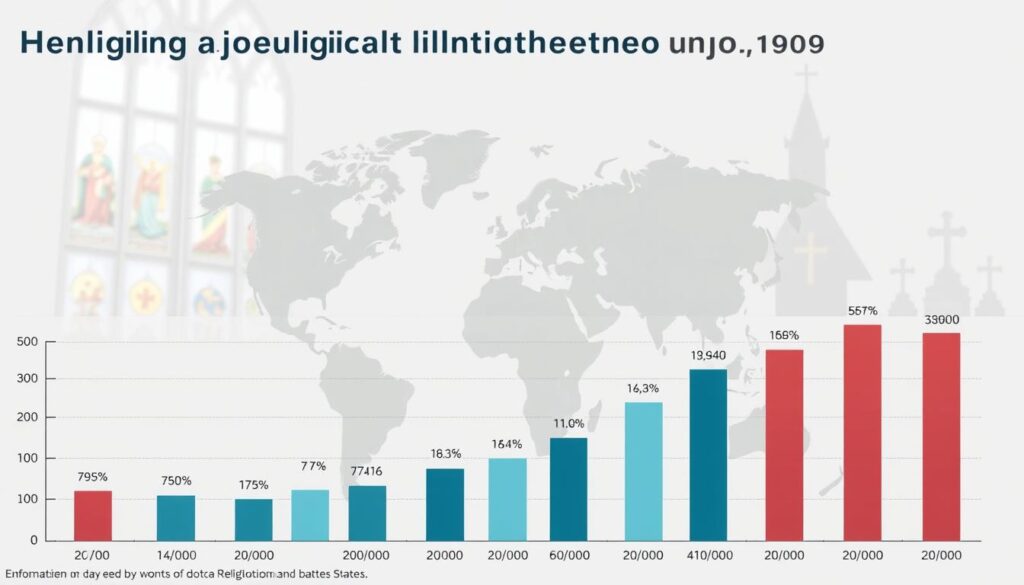
In 1910, about 600 million people followed Christian teachings. By 2010, that number surpassed 2 billion – yet their share of the world remained steady at 32%. This growth reveals fascinating patterns: some groups expanded rapidly in Africa and Asia, while others stabilized or declined in traditional strongholds.

Tracking these changes involves complex methods. Researchers analyze data from diverse sources, balancing local reports with broader demographic trends. Differences in how groups define membership add layers of complexity to these statistic-driven studies.

Key Takeaways

  • Christian traditions represent 32% of the global population, maintaining consistent growth rates since 1910
  • Regional growth patterns vary significantly, with rapid expansion in the Global South
  • Counting members across traditions requires adaptable research approaches
  • Cultural adaptation plays a crucial role in modern faith community growth
  • Demographic shifts impact resource distribution and leadership strategies

Global Trends in Christian Demographics

Christianity’s center of gravity has moved southward in an unprecedented demographic shift. While the total number of Christians worldwide quadrupled since 1910, their distribution tells a story of cultural adaptation and changing priorities.

From European Roots to Global Reach

In 1910, Europe housed 66% of all believers. Today, it accounts for just 26%. This change mirrors larger patterns of migration, missionary work, and local leadership development. Sub-Saharan Africa saw the most dramatic growth – soaring from 9% to 63% of its regional population embracing the faith.

New Frontiers of Belief

The Americas still host 37% of Christians worldwide, but Asia-Pacific regions now claim 13% – up from 3% in 1910. These areas face unique challenges, blending ancient traditions with modern interpretations of scripture.

Region 1910 Christian % 2010 Christian %
Europe 95% 76%
Sub-Saharan Africa 9% 63%
Asia-Pacific 3% 7%

Three key factors drive these changes:

  • Urbanization creating new community structures
  • Local leadership adapting practices to cultural contexts
  • Youth engagement strategies in developing nations

Current Trends in Protestant Church Population in the United States

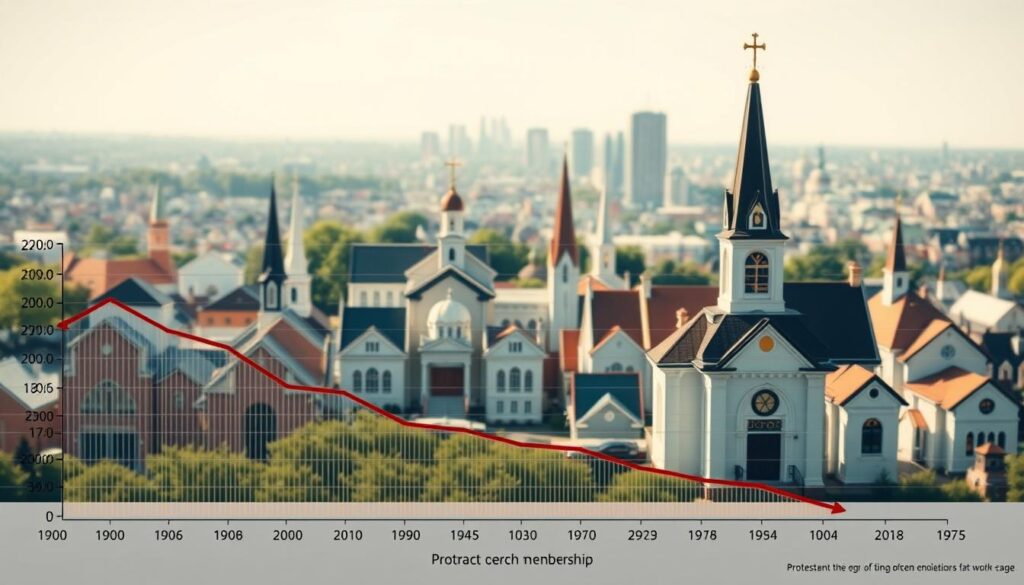
The U.S. faith landscape is undergoing its most significant transformation since record-keeping began. Gallup data shows membership in organized groups has dropped to 47% – the first time below majority status in 80 years of tracking. This marks a 29-point decline from its 1947 peak.

u.s. church membership trends

Statistical Overview and Membership Insights

While 140 million Americans align with Protestant traditions, no single group matches the Catholic Church’s unified presence. The Southern Baptist Convention leads with 13.7 million members, but faced a staggering loss of 500,000 adherents in 2022 alone.

Denomination Members (2022) Annual Change
Southern Baptist 13.68 million -3.5%
National Baptist 8.4 million +0.8%
United Methodist 6.3 million -1.9%

Younger generations are redefining spiritual engagement. Nearly 40% of adults under 30 claim no religious affiliation, compared to 10% in 1990. Regional differences also shape these patterns – Southern states maintain higher participation rates than the Pacific Northwest.

Traditional groups face dual challenges: retaining older members while attracting youth. Some evangelical movements grow through contemporary worship styles, while mainline denominations struggle with doctrinal debates. These shifts reshape community structures and resource allocation nationwide.

Regional Dynamics and the Global South Impact

Christianity’s heartbeat now pulses strongest in regions once considered peripheral. The Global South hosts 61% of believers worldwide – a staggering 1.3 billion people. This seismic shift reshapes how communities practice and propagate their faith across continents.

Growth in Latin America and Africa

Latin America remains a spiritual powerhouse, with 9 in 10 residents identifying with Christian traditions. While the Roman Catholic tradition claims 69%, vibrant evangelical movements gain ground through street-level outreach and pulsating worship services.

Africa’s transformation astonishes demographers. From just 9 million adherents in 1910, the continent now shelters 685 million believers. Nigeria alone boasts more Christians than Germany, France, and Italy combined – a testament to grassroots leadership development.

Developments in the Asia-Pacific Region

The Asia-Pacific area witnessed a tenfold surge since 1910, reaching 285 million followers. South Korea’s megachurches and China’s underground house networks reveal diverse expressions of belief. “Our faith wears local clothes,” observes Manila-based theologian Carlos Reyes. “It’s not imported – it’s reinvented daily.”

Three forces drive this southern surge:

  • Indigenous leadership adapting rituals to cultural norms
  • Youth-oriented ministries using music and technology
  • Urban migration creating tight-knit spiritual communities

These changes position the Global South as Christianity’s innovation lab. With Brazil and the Philippines now housing some of the largest Christian communities, the faith’s future increasingly speaks Portuguese, Swahili, and Tagalog.

The Shifting Landscape of Church Membership

American spiritual engagement has entered uncharted territory. For the first time since polling began, less than half of adults belong to a congregation. This 25-year slide accelerated during the pandemic, with 2021 marking the tipping point below 50% membership.

us religious affiliation trends

Traditional groups face uneven challenges. The Roman Catholic community saw 39% of former members join the non-affiliated group. “We’re not just losing members – we’re losing their children and grandchildren,” notes a recent Pew Research analysis.

Denominational Divides in Modern America

Mainline groups struggle most, while some evangelical movements grow. The Southern Baptist Convention lost 3.5% of its base last year. Meanwhile, non-denominational congregations added 1.4 million attendees since 2010.

Group 2010 Membership 2023 Membership Change
Evangelical Lutheran 4.2 million 3.1 million -26%
Non-denominational 12.1 million 13.5 million +12%
United Methodist 7.7 million 5.8 million -25%

Regional patterns reveal deeper stories. Sun Belt states show stable attendance, while the Northeast reports 34% fewer regular worshippers since 2000. Urban areas blend tradition with innovation – 61% of new megachurches launched in metro regions.

Young adults drive much of this change. Only 36% of millennials claim affiliation, compared to 76% of Silent Generation members. Many seek spirituality beyond traditional structures, reshaping America’s religious future.

Underlying Cultural and Societal Factors

Cultural tides have reshaped spiritual engagement across modern societies. Traditional assumptions about belief systems now compete with evolving values, creating new patterns in how people connect – or disconnect – from organized practices.

Secularization and Changing Beliefs

Secular thinking now dominates many Western nations. Over half of former members cite lost belief in teachings as their main reason for leaving. This shift appears sharper in Europe, where participation rates fell earlier than in the United States.

Recent scandals accelerated distrust. High-profile institutional failures made headlines worldwide, cooling enthusiasm for structured groups. Many now seek purpose through personal spirituality rather than established frameworks.

Younger generations drive this transformation. Raised without regular participation, they’re redefining community bonds. Urbanization and tech access provide alternatives to traditional gathering spaces.

Educational trends play surprising roles. College graduates often question inherited beliefs, while scientific perspectives gain cultural cachet. Yet some find new ways to blend ancient wisdom with modern life.

These changes create complex challenges. While some Christian denominations adapt through contemporary outreach, others struggle to maintain relevance. The religious landscape continues evolving, reflecting our ever-changing world.

FAQ

How has the Protestant population in the U.S. changed recently?

Recent data shows a gradual decline in affiliation, particularly among younger generations. However, certain denominations, like non-denominational groups, have seen growth, reflecting shifting preferences in worship styles.

Which regions are driving growth in Christianity today?

The Global South, including Latin America and sub-Saharan Africa, now holds the largest share of believers. Countries like Brazil and Nigeria have seen rapid expansion due to evangelism and cultural alignment with local values.

What’s the largest Protestant denomination in the United States?

The Southern Baptist Convention remains the biggest, though membership has dipped slightly in recent years. Independent congregations and multiethnic communities are also reshaping the landscape.

Why is Latin America experiencing a surge in Protestant communities?

Many find evangelical teachings more relatable to daily struggles than traditional Catholic practices. Grassroots outreach and social support programs have also played a key role in attracting followers.

How do Protestant membership trends compare to other faith groups?

While mainline groups have declined, Catholicism remains stable globally. Meanwhile, the “religiously unaffiliated” category has grown, especially in North America and Europe, reflecting broader secularization trends.

What cultural factors influence declining membership in some areas?

Younger generations often prioritize individualism over institutional loyalty. Scandals, political polarization, and delayed marriage/family formation have also contributed to distancing from organized faith groups.

Explore the Historic Protestant Church in Tbilisi


Step into a story of faith that has endured for generations. Nestled in Georgia’s vibrant capital, this historic place of worship stands as a testament to spiritual resilience. For over a century, it has offered hope and connection to believers from all walks of life.

What makes this community unique? While Eastern Orthodoxy dominates Georgia’s religious identity, this congregation has carved its own path. Its members have fostered dialogue across faiths, creating bridges in a culturally rich city.

Through wars, political shifts, and social changes, the church’s doors stayed open. Today, it hosts gatherings that blend tradition with modern outreach. Weekly services welcome locals and visitors alike, while ministry programs extend support far beyond its walls.

Key Takeaways

  • Discover a 100-year legacy of faith in Georgia’s capital
  • Learn how this community thrives within a majority Orthodox nation
  • Explore its role in fostering interfaith understanding
  • See how historical challenges shaped its mission
  • Find opportunities to connect through services and outreach

Tracing the Rich History of Tbilisi’s Protestant Church

Delve into the past of a landmark that has stood as a beacon of hope through turbulent times. For over 150 years, Peace Cathedral has woven itself into Georgia’s spiritual fabric, offering refuge and fostering unity in a region marked by shifting cultural tides.

Early Foundations and Historical Influences

When Protestant beliefs first took root in Georgia, this congregation emerged as a quiet revolution. At a time when Eastern Orthodoxy shaped national identity, its founders created space for diverse worship. They prioritized radical hospitality, welcoming seekers long before interfaith dialogue became common.

Impact of WWII and the Fight for Religious Freedom

World War II tested the community’s resolve—and revealed its courage. Members risked their lives to shelter prisoners and displaced families, turning sacred halls into sanctuaries. These acts of service cemented their role as protectors during crisis.

Post-war challenges brought new battles for freedom. Despite pressure to conform, leaders championed religious rights for all. Their steadfastness helped shape Georgia’s evolving spiritual landscape, proving minority faiths could thrive while respecting tradition.

Architectural Wonders and Cultural Landmarks

A fusion of stone and spirit rises in Georgia’s capital, where craftsmanship meets sacred purpose. This landmark’s design harmonizes old-world charm with contemporary touches, reflecting its community’s journey through time. Sunlight streams through arched windows, casting patterns that change with the hours—a living metaphor for evolving faith.

worship community architectural design

Iconic Features of the Building

The structure’s vaulted ceilings draw eyes upward, inviting quiet reflection. Hand-carved wooden pews curve gently, fostering connection among worshippers. At the heart lies a minimalist altar—a striking contrast to ornate Orthodox traditions, yet deeply reverent in its simplicity.

Modern additions blend seamlessly with original brickwork. A glass-walled annex hosts community meals and youth programs, proving sacred spaces can adapt without losing soul. Every corner whispers intentionality, from acoustic panels enhancing hymns to ramps ensuring all feel welcome.

Cultural Significance in the Urban Landscape

This landmark anchors its neighborhood like a compass pointing toward unity. Locals often pause beneath its bell tower, finding shade or solace. Over decades, it’s become a meeting ground where artists sketch, students debate philosophy, and families share laughter.

City maps highlight its spire alongside museums and theaters—proof that spiritual spaces shape cultural identity. Evening concerts here blend Georgian folk songs with global melodies, turning worship into a bridge between worlds. The building doesn’t just house a community; it becomes one.

Through thoughtful design, this place supports both quiet prayer and lively service projects. Classrooms buzz with language lessons, while gardens grow food for those in need. Here, architecture isn’t just seen—it’s lived, breathed, and shared.

Insights on protestant church tbilisi Community and Worship

At the heart of Georgia’s capital beats a rhythm of togetherness that transcends Sunday gatherings. This spiritual home thrives through intentional acts of care, where shared values spark meaningful change. Every handshake, meal, and conversation builds bridges across divides.

Community, Worship, and Inclusive Service

Sunday mornings here feel like family reunions. People from different cultures swap stories over coffee while kids laugh in play areas. The service model focuses on practical support—free language classes, job training, and meals for neighbors facing hardship.

Leaders here wear many hats. One bishop recently said, “Our faith isn’t confined to pews—it’s in how we stand up for others.” They’ve championed women’s education programs and created safe spaces for marginalized groups. Their food pantry feeds 200 families monthly, no questions asked.

Interfaith Unity and Advocacy for Rights

This community partners with mosques and synagogues to host cultural festivals. Last spring, they organized a citywide rights awareness campaign with interfaith volunteers. Together, they distributed resources about religious freedoms and equality laws.

Members don’t just talk about justice—they live it. When a local school banned headscarves, the congregation rallied with Muslim neighbors to reverse the policy. Their motto? “Love first, debate later.” This approach has turned the space into a workshop for social progress.

Through shared meals and collaborative projects, strangers become allies. The result? A vibrant tapestry of beliefs united by common hopes for a fairer world.

The Journey of Influential Leaders and Advocates

Behind every thriving spiritual community stand visionaries who turn challenges into catalysts for change. Two such figures have shaped modern faith practices through courage and intellect, proving leadership thrives where conviction meets action.

faith leadership resilience stories

From Nuclear Labs to Sacred Texts

Zaal Tkeshelashvili’s story reads like a Cold War thriller. As a physics professor at Georgia’s top university, he faced KGB surveillance for practicing his beliefs during Communist rule. When the regime fell, he swapped equations for scripture—earning a theology degree and launching a publishing house that prints 15,000 Bibles annually.

“Science taught me precision,” he reflects, “but faith revealed life’s deeper patterns.” His unique blend of analytical thinking and spiritual insight helps members reconcile modern questions with timeless truths.

Equations and Courtroom Battles

Pastor Nino’s journey began with numbers. After earning a Ph.D. in mathematics, she traded formulas for courtroom dramas. Alongside her husband and fellow members, she fought six legal cases to secure religious freedom in post-Soviet Georgia. Their victories set precedents protecting minority groups nationwide.

Today, she balances pastoral service with mentoring young women in STEM fields. “Truth exists in both labs and chapels,” she says, smiling beside their daughter Sharon during community meals.

Service and Outreach: Community in Action

Hands shape lives here more than words ever could. This spiritual hub transforms beliefs into action through initiatives that feed, clothe, and uplift people across continents. From neighborhood meal programs to disaster relief abroad, compassion knows no borders.

community service outreach

Global and Local Acts of Compassion

Every Thursday, volunteers pack 200 boxes of fresh produce for families facing food insecurity. But their reach stretches farther—last year, members helped build clean water systems in three African villages. “Service isn’t seasonal here,” explains a team leader. “It’s how we live.”

Local partnerships thrive too. The community collaborates with schools to provide winter coats and school supplies. Teens mentor refugees learning Georgian, while seniors knit blankets for hospice patients.

Historical Initiatives and Modern-Day Service

During the 1940s, this group turned their basement into a soup kitchen amid wartime shortages. Today, that same space hosts job training workshops. “We don’t just keep traditions—we reignite them,” says a longtime volunteer.

Modern challenges demand creative solutions. A new mobile clinic offers free medical checkups in remote villages. Youth groups organize tech drives to bridge the digital divide. Through time-tested values and fresh ideas, help flows where it’s needed most.

Sunday worship often ends with sign-up sheets for upcoming projects. Because here, faith isn’t fully lived until it’s shared—one act of kindness at a time.

Conclusion

In the heart of Georgia’s capital, a spiritual legacy continues to unfold. For over a century, this faith community has weathered storms—from political shifts to wartime crises—while holding fast to its core values. Its story isn’t just about survival, but about thriving through radical compassion.

Visionary leaders like the Tkeshelashvilis redefined what resilience looks like. Their blend of courage and creativity transformed challenges into opportunities for growth. Today, their influence echoes in every food pantry box packed and every interfaith partnership forged.

What makes this place enduring? It’s the commitment to listening first. Through bridge-building dialogues and justice initiatives, the community models how diverse beliefs can coexist peacefully. Neighborhood gardens and global aid projects alike carry forward its mission.

The true measure of this legacy lies in quiet acts of care—meals shared, hands held, hope renewed. As sunlight still filters through those arched windows, it illuminates a simple truth: faith grows brightest when rooted in service to others.

FAQ

What are the service times for the faith community in Tbilisi?

Gatherings typically occur on Sundays, with midweek events for study and fellowship. Specific schedules vary, so check their website or social media for updates.

How has this congregation contributed to local history?

The group played a vital role during WWII, offering refuge and advocating for spiritual independence. Their legacy includes defending religious rights under challenging regimes.

Are visitors welcome to attend events?

Absolutely! The community prioritizes inclusivity, inviting people of all backgrounds to join worship, discussions, and outreach programs.

What makes the building architecturally unique?

Blending traditional Georgian elements with European styles, the structure features stained glass, arched doorways, and a bell tower symbolizing resilience.

How does the group support the neighborhood today?

Initiatives include food drives, educational workshops, and partnerships with global charities to address poverty, healthcare, and education gaps.

Who are notable figures linked to this congregation?

Leaders like Pastor Zaal Tkeshelashvili and Pastor Nino gained recognition for overcoming persecution and advancing interfaith dialogue through education and legal advocacy.

Does the community collaborate with other belief groups?

Yes! They actively partner with diverse organizations to promote unity, human dignity, and shared ethical values across cultural and religious lines.

Explore the Historic Protestant Church in Pachmarhi


Welcome to your guide to a hidden gem nestled in India’s lush highlands. This historic landmark, built during the British colonial era, stands at over 1,000 meters elevation. Its stone walls and stained glass tell stories of faith, community, and architectural craftsmanship.

The structure’s location in Madhya Pradesh’s hill station offers more than spiritual reflection. Visitors are treated to sweeping vistas of misty valleys and forested slopes. Many come for the tranquility, while others admire its role as a cultural touchstone since the 19th century.

Photographers like Suyash Dwivedi have captured its Gothic-inspired arches and weathered facades. These images reveal how the building harmonizes with its natural surroundings. Its strategic placement near military cantonments highlights its past importance to stationed families.

Today, preservation efforts ensure this site remains a bridge between eras. Whether you’re drawn to history or scenery, it provides a window into India’s layered heritage. Let’s uncover what makes this destination unforgettable.

Key Takeaways

  • Discover a 19th-century architectural marvel in India’s hill country
  • Enjoy panoramic mountain views from its elevated location
  • Learn about colonial-era design through documented photography
  • Understand its role in serving British military communities
  • Explore ongoing conservation efforts for historical integrity

Historical Background and Cultural Significance

The story of this sacred site begins with 19th-century military strategists seeking respite in central India’s highlands. While specific dates remain unclear, historical records suggest its construction coincided with British efforts to establish summer retreats. This spiritual haven became a cornerstone for families stationed in nearby cantonments.

Origins and Evolution

Built initially as a modest chapel, the structure expanded over time to accommodate growing congregations. Local artisans blended European design elements with regional materials, creating a unique fusion. By the early 1900s, it served both colonial officers and Indian converts, marking a shift in community dynamics.

Time Period Development Impact
Mid-1800s Military chapel foundation British troop services
1900-1947 Congregation diversification Local community integration
Post-1947 Heritage recognition Cultural preservation efforts

Role in Local Heritage

Beyond religious functions, the site became a social catalyst. Elders recall harvest festivals where communities shared traditions under its vaulted ceiling. Today, it hosts interfaith dialogues and history workshops, bridging generational gaps in the state of Madhya Pradesh.

Annual celebrations now feature folk dances alongside traditional hymns. These events showcase how the location preserves architectural history while adapting to modern cultural needs. Its stone walls have witnessed countless weddings, peace treaties, and community milestones through time.

Architectural Insights and Preservation Details

This historic structure reveals a fascinating blend of design philosophies. British architects cleverly adapted European styles to central India’s tropical climate, creating a blueprint that still impresses today. colonial architecture fusion

Unique Architectural Features

Sloped roofs and elevated foundations show smart responses to heavy monsoon rains. Stone buttresses support walls designed to stay cool during summer heatwaves. The layout follows a precise east-west plane, allowing morning light to flood through arched windows.

Local sandstone and teak wood appear alongside imported stained glass. This mix created durable yet beautiful surfaces. Decorative carvings near the entrance display floral patterns inspired by regional art forms.

Efforts in Restoration and Preservation

Recent work focuses on maintaining original materials while preventing decay. Specialists use 3D imaging to study cracks in century-old plaster. Traditional lime mortar repairs protect the building’s historic character.

Restoration Phase Techniques Used Key Focus
2015-2017 Structural reinforcement Foundation stability
2018-2020 Material conservation Wooden beam treatment
2021-Present Digital documentation Archival image creation

Craftsmen train apprentices in heritage repair methods. This ensures skills needed for future projects aren’t lost. Community donations fund ongoing maintenance, showing local pride in this cultural treasure.

Protestant Church Pachmarhi: Legacy and Community Impact

For over a century, this institution has been more than a place of worship—it’s a social cornerstone. Located in a military cantonment established during British rule, it served as both spiritual refuge and community hub. Families from diverse backgrounds gathered here, creating bonds that shaped the region’s identity.

Historical Importance in Pachmarhi Cantt

Its strategic position within the cantonment made it vital for stationed troops. Soldiers’ diaries describe Sunday services as moments of unity amidst foreign postings. “The hymns echoed through the hills, reminding us of home,” wrote one officer in 1898.

Beyond religious ceremonies, the site hosted school fundraisers and health camps. Local elders recall summer fairs where British officers and Indian vendors shared stories under ancient trees. These interactions planted seeds for cross-cultural understanding.

Today, its legacy lives through scholarships for cantonment children and interfaith food drives. Annual heritage walks attract historians studying colonial-era architecture. Preservation teams recently digitized century-old marriage registers, safeguarding family histories.

The building’s influence extends to modern initiatives like free tutoring programs. Volunteers teach coding alongside traditional crafts, blending past and future. This approach keeps the institution relevant while honoring its roots as a gathering space for all.

Exploring Media and Image Resources

High-quality visual records play a crucial role in preserving heritage sites. Two professional photographs from September 2014 offer exceptional technical detail about this historic landmark. Captured by Suyash Dwivedi, these images combine artistic vision with precise documentation standards.

historic landmark documentation

Image Metadata and Technical Specifications

The first shot, taken at 17:53:35, uses an 18mm lens with ISO 100 for crisp details. Its 2,527 × 1,684 pixel resolution captures intricate stone textures. The second image, recorded 16 minutes later, employs faster shutter speeds to freeze golden-hour light on stained glass.

Both files contain GPS coordinates pinpointing the exact elevation of 1,065 meters. Embedded metadata reveals focal plane measurements and camera serial numbers for authenticity verification. Adobe Photoshop CS6 enhanced colors while maintaining original file integrity.

Archival Data from Wikimedia Commons

Uploaded in October 2016, these resources gained a 5-star rating for their educational value. The Creative Commons license allows free use in research and tourism projects. Detailed EXIF data helps photographers replicate ideal shooting conditions.

Platform statistics show over 8,000 views since publication. This digital preservation effort ensures future generations can study architectural details even if physical elements weather. The files’ manageable sizes (2.55MB-3.13MB) make them accessible across devices without quality loss.

Conclusion

This architectural treasure in India’s hills stands as a living classroom of cultural exchange. Its stone walls preserve stories of craftsmanship and connection, where colonial design meets local traditions. Through detailed images and preservation records, we safeguard its legacy for curious minds worldwide.

The site’s true power lies in its ability to spark dialogue across generations. Community-driven restoration projects show how historic spaces can adapt while honoring their roots. Photographic archives capture intricate details, from sunlit arches to weathered carvings, creating timeless visual references.

Visitors today experience more than scenic beauty—they walk through layers of shared history. Annual festivals here blend music, art, and storytelling, proving heritage thrives through participation. As preservation continues, this landmark remains a testament to unity in diversity.

Whether you’re drawn to architecture or human stories, the location offers fresh perspectives. Its quiet strength reminds us that enduring landmarks aren’t just built—they’re nurtured by countless hands across centuries.

FAQ

What makes this historic site in Pachmarhi Cantt culturally significant?

Built during British colonial rule, the structure reflects a blend of European and local design influences. It served as a spiritual hub and community gathering spot, shaping the region’s social and religious identity over decades.

Are there unique design elements to look for during a visit?

Yes! The building features Gothic-inspired arches, stained-glass windows, and locally sourced stonework. Its symmetrical layout and elevated spire stand out against Pachmarhi’s natural landscapes, offering great photo opportunities.

How can I access historical photos or archival records of the site?

Wikimedia Commons hosts high-resolution images with detailed metadata, including timestamps and camera specs. These resources help researchers study architectural changes or plan restoration projects.

What steps are being taken to preserve the building’s original structure?

Preservation teams use lime mortar repairs and moisture-resistant treatments to protect aging walls. Collaborations with heritage organizations ensure period-accurate restoration while maintaining public access for visitors.

Why is the location considered a key landmark in Madhya Pradesh?

As one of the oldest standing colonial-era structures in the region, it symbolizes Pachmarhi’s transition from a military outpost to a hill station. Its continued use for events and tours keeps local history alive for new generations.

Unraveling the Significance of the Protestant Church Rooster


High above countless European steeples, a familiar silhouette catches the eye – a weathervane shaped like a bold avian figure. This enduring emblem, often crafted from metal or wood, has crowned places of worship for centuries. From rural villages to bustling cities, its presence sparks curiosity among visitors exploring architectural traditions.

The tradition stretches back at least a millennium, with the oldest known example found in Brescia, Italy. Remarkably, this ancient symbol predates modern nations themselves. While commonly associated with French religious architecture, its meaning transcends borders and denominations. Interpretations vary as widely as the architectural styles beneath these symbolic sentinels.

What makes this imagery particularly fascinating is its dual role in history and faith. Originally serving practical purposes as wind indicators, these figures gradually acquired deeper spiritual significance. Their adoption during the Reformation era transformed them into powerful visual statements for certain Christian communities.

Modern visitors might be surprised to learn how this timeless motif connects biblical narratives with cultural identity. Its persistence through changing architectural trends reveals how sacred spaces preserve layered histories. Today, it continues to inspire conversations about tradition, resilience, and shared heritage.

Key Takeaways

  • This iconic spire-topper has graced religious structures for over 1,000 years
  • Appears across multiple Christian denominations and European countries
  • Gained specific importance in Reformation-era religious communities
  • Combines practical function with rich symbolic meaning
  • Remains a popular subject for architectural historians and travelers alike
  • Demonstrates how religious art preserves cultural memory

Historical Roots Behind the Rooster Symbol

This iconic spire-topper’s story begins in Southeast Asian jungles. Wild red junglefowl became domesticated companions over 7,000 years ago, gradually spreading through ancient trade routes. By biblical times, these birds were common fixtures in Near Eastern farmyards.

Ancient Origins and Early Christian Traditions

Archaeologists found chicken bones in first-century Judean settlements. This evidence matches Gospel accounts of dawn crowing. Early believers used the bird’s natural alarm clock for morning prayers long before bell towers existed.

Fifth-century monasteries eventually replaced live birds with metal bells. But the symbolic connection remained. Church leaders saw the crowing as both practical timekeeper and spiritual metaphor.

Medieval Influences and Papal Associations

Historical records show ninth-century innovations. The Gallo di Ramperto weathercock from 820 AD still survives in Brescia. This copper artifact proves the tradition’s early adoption in religious architecture.

While legends credit Pope Leo IV with mandating the symbol, no original decree exists. Regional customs likely shaped its spread more than papal orders. By 1000 AD, the practice became firmly established across Europe.

Protestant Church Rooster: Symbolism and Scriptural Echoes

One biblical story transformed a common farm animal into a timeless emblem of faith. This narrative bridges everyday life with spiritual truths, creating layers of meaning that resonate across generations.

peter denial rooster symbol

The Biblical Account of Peter’s Denial

All four Gospel writers record a midnight conversation that changed religious symbolism forever. Jesus told Peter: “Truly I tell you, this very night, before the rooster crows, you will deny Me three times” (Matthew 26:34). The fulfillment came swiftly:

“Immediately the rooster crowed. Then Peter remembered… and he broke down and wept.”

Mark 14:72

This moment reveals two profound truths. First, divine predictions hold absolute certainty. Second, human weakness can lead to spiritual growth when met with repentance.

Repentance, Vigilance, and the Dawn of a New Day

The crowing bird became nature’s alarm clock for the soul. Its morning call symbolizes:

Symbolic Meaning Biblical Connection Modern Application
Awakening conscience Peter’s tearful realization Self-reflection practices
Divine faithfulness Exact fulfillment of prediction Trust in spiritual promises
New beginnings Peter’s restoration post-denial Recovery programs

This story teaches that failure isn’t final. Just as dawn follows night, sincere repentance brings renewal. The rooster’s crow continues to remind believers that truth ultimately triumphs over fear.

Architectural Presence and Cultural Impact

Across the European skyline, a golden figure stands watch atop sacred spires. These iconic weathervanes blend craftsmanship with spiritual meaning, creating landmarks that unite communities. From Normandy’s countryside to Alpine valleys, their presence tells stories of faith and cultural identity.

European Church Traditions and Rooster Weathercocks

French villages showcase this tradition most visibly, with nearly every steeple bearing the familiar silhouette. Whether adorning Gothic cathedrals or rustic chapels, the metal figures crown crosses as both practical tools and spiritual markers. Swiss communities reveal fascinating variations:

Location Architectural Feature
Château-d’Oex Rooster only
Rossinière Rooster only
Rougemont Rooster and cross
Saanen Cross only

The weathercock’s positioning holds deeper meaning. By always facing wind currents, it mirrors the concept of confronting challenges directly – a metaphor embraced by religious thinkers.

Modern Interpretations in Reformed Communities

Many congregations now view the steeple-topper as a reminder of daily renewal. Its morning orientation symbolizes awakening conscience, while the durable materials represent enduring faith. For some groups, it serves as:

  • A visual alternative to traditional crosses
  • A connection to agricultural heritage
  • An emblem of vigilance against complacency

This architectural choice continues shaping town skylines while sparking dialogue about tradition’s role in modern spirituality. Through changing times, the weathercock remains both functional guide and silent preacher.

Conclusion

Through shifting cultural landscapes, this spire-topping symbol maintains its quiet power. Its journey spans farmyards to sacred towers, carrying layers of meaning that adapt without losing depth. The image serves as both historical artifact and living metaphor, whispering timeless truths to each generation.

What makes this emblem enduring is its ability to speak through simplicity. It reminds us that spiritual growth often begins with self-awareness, much like dawn follows darkness. Communities continue finding fresh relevance in its story of renewal and watchfulness.

As sunlight glints off weathervanes today, they remain more than decorative touches. These silent sentinels connect modern seekers to centuries of shared human experience. They challenge us to face life’s winds with courage, just as their metal forms turn toward prevailing breezes.

FAQ

Why is a rooster often seen on church steeples?

The rooster became a common steeple ornament in medieval Europe, symbolizing vigilance and spiritual awakening. Its placement atop buildings served as a reminder to stay faithful, echoing Jesus’s words in Mark 13:35 to “watch… for you do not know when the master of the house will come.”

How does the rooster relate to the story of Peter in the Bible?

In the Gospels, Peter denies knowing Jesus three times before a rooster crows. This moment highlights human frailty and the need for repentance. The bird’s crowing marks both failure and the dawn of forgiveness, making it a powerful symbol of redemption.

What historical roots connect roosters to Christian traditions?

Early Christians adopted the rooster from Roman culture, where it symbolized vigilance. By the 9th century, Pope Nicholas I encouraged its use on church spires. Later, Reformers embraced it as a symbol distinct from Catholic imagery, emphasizing personal accountability.

Does the rooster hold specific meaning in Reformed communities today?

Yes! Many Reformed congregations view it as a reminder of grace after failure. Its crowing at dawn also represents renewal—a daily call to live faithfully. Some churches use it to emphasize Scripture’s authority over tradition.

Why is the rooster linked to vigilance in religious contexts?

Roosters crow at sunrise, symbolizing alertness to God’s presence. This ties to biblical themes like staying spiritually prepared. Over time, it became a visual “alarm” against complacency, urging believers to live with purpose and humility.