Recent Posts

Protestant Church Meaning in Hindi Explained


Exploring faith traditions becomes richer when we understand their terminology in different languages. This guide helps bridge cultural gaps by explaining specific Christian concepts within Hindi-speaking communities. Whether you’re studying world religions or connecting with diverse traditions, clarity matters.

We focus on making complex ideas simple. Our approach combines linguistic insights with cultural context, showing how certain terms take shape in India’s vibrant spiritual landscape. You’ll learn not just translations, but also how ideas adapt across regions.

This resource acts like a specialized reference tool. It goes beyond basic definitions to explore historical roots and modern usage. You’ll gain practical knowledge for conversations, studies, or personal growth.

Key Takeaways

  • Clarifies religious terminology between English and Hindi
  • Explores cultural adaptation of faith concepts
  • Provides context for India’s Christian communities
  • Simplifies complex theological ideas
  • Supports academic and personal research

Our friendly breakdown avoids technical jargon. We emphasize real-world understanding over textbook definitions. By the end, you’ll confidently grasp how spiritual ideas cross linguistic boundaries.

Overview of Protestant Churches

The way a faith community organizes itself can reveal much about its beliefs. This branch of Christianity emphasizes direct engagement with sacred texts and personal faith. Its practices reflect core ideas developed during a transformative period in religious history.

https://www.youtube.com/watch?v=GccWLK_Xfrs

Definition and Key Terms

Central to this tradition are three Latin phrases: sola scriptura (scripture alone), sola fide (faith alone), and sola gratia (grace alone). These principles shape worship styles and community structures. Unlike some other Christian groups, services often focus on preaching and congregational singing.

Religious vocabulary adapts interestingly across cultures. Missionaries and translators have carefully reworked key terms into local dialects worldwide. This linguistic flexibility helps maintain core ideas while respecting regional communication patterns.

Historical Context and Evolution

The 1500s Reformation sparked major changes in Western Christianity. Leaders like Martin Luther questioned established religious authority, advocating for accessible scripture and simplified rituals. These reforms gradually created distinct worship communities across Europe.

Over centuries, these groups developed unique traditions while sharing foundational beliefs. Modern gatherings might range from formal liturgical services to contemporary worship styles. This diversity stems from the original emphasis on individual conscience and biblical interpretation.

Understanding these roots explains why certain phrases and practices remain vital today. The movement’s growth across continents shows how spiritual ideas evolve within different cultural frameworks.

Protestant Church Meaning in Hindi

Language bridges gaps between cultures, especially when exploring spiritual concepts. Translators face unique challenges in conveying theological ideas across linguistic boundaries. Let’s examine how specific terms resonate within India’s diverse linguistic landscape.
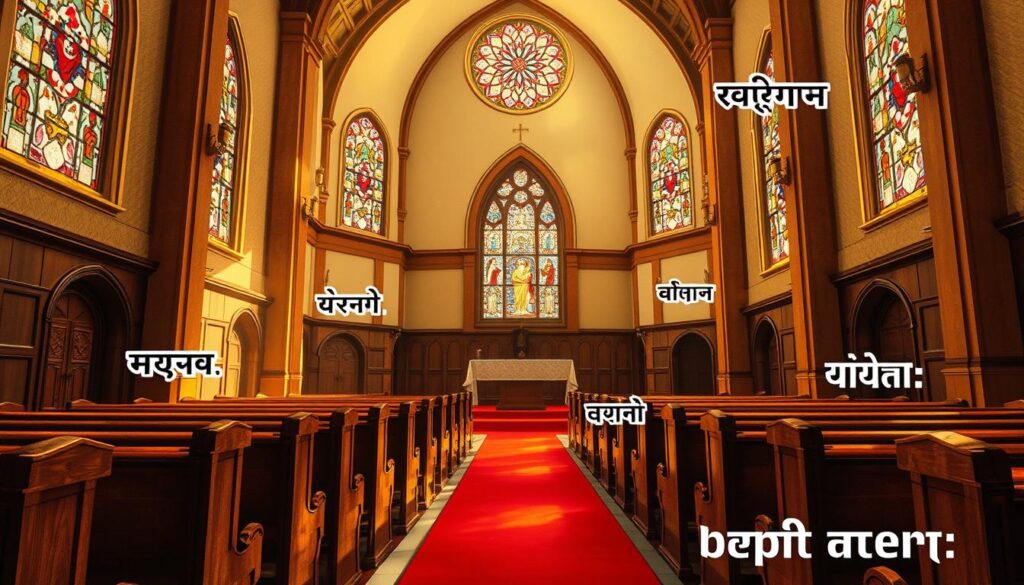
protestant church terminology in hindi

Hindi Translation and Spiritual Nuances

Two primary translations exist for this term in Hindi. The direct phonetic version प्रोटेस्टेंट चर्च preserves the original sound. Alternatively, धर्मसुधारवादी गिरजाघर emphasizes historical reformation aspects.

Hindi Term Translation Usage Context
प्रोटेस्टेंट Phonetic adaptation Urban communities, younger speakers
धर्मसुधारवादी Religious reformer Academic discussions, historical texts

Many Indian Christian communities prefer the English term for daily use. This practice reflects globalized religious vocabulary while maintaining local identity. Dictionaries show evolving usage patterns over generations.

Cultural adaptation plays a crucial role. Translators consider regional dialects and existing spiritual vocabulary. For example, गिरजाघर (church building) differs subtly from सभा (assembly) in certain contexts.

Effective communication requires understanding these subtle distinctions. Resources like bilingual glossaries help preserve core beliefs while fostering cross-cultural dialogue. This approach ensures theological ideas remain accessible yet authentic.

Denominations and Their Cultural Impact

India’s spiritual mosaic gains depth through varied expressions of Christian traditions. Groups like Baptists, Methodists, and Pentecostals maintain distinct identities while sharing core principles. This diversity sparks vibrant exchanges between global beliefs and regional customs.

Diverse Denominations in Practice

Major groups differ in worship styles and community rules. Lutherans often use structured liturgies, while Pentecostals embrace spontaneous prayer. Presbyterians value group leadership, contrasting with Baptist emphasis on local autonomy.

Denomination Key Practices Community Impact
Methodist Social outreach programs Healthcare initiatives
Pentecostal Spiritual healing services Youth empowerment projects

These groups adapt traditions to local needs. Some incorporate Indian instruments into hymns, blending cultural elements with spiritual practices. Language flexibility helps teachings resonate across states.

Shaping Communities Through Faith

Collectively, denominations drive social change. Many run schools in rural areas, offering education where government systems lag. Others focus on vocational training, helping artisans market traditional crafts.

Urban centers see interdenominational collaborations addressing homelessness. “Our food drives unite different groups under shared values,” notes a Mumbai community organizer. Such efforts strengthen both faith networks and neighborhood bonds.

From Kerala’s coastal towns to Delhi’s suburbs, these spiritual families shape India’s religious landscape. Their ability to balance tradition with innovation keeps their message relevant across generations.

Language, Grammar, and Learning Tips

Mastering religious terminology involves more than memorizing translations—it requires navigating intricate language patterns. Let’s explore strategies to build confidence in discussing spiritual ideas across languages.

Understanding Complex Sentence Structures

Complex sentences often layer multiple ideas. For example, theological discussions might combine historical context with doctrinal explanations. Break these into smaller chunks:

  • Identify main clauses and supporting phrases
  • Note connecting words like “because” or “although”
  • Practice rewriting lengthy statements

learning grammar tips for religious terms

Religious texts frequently use descriptive language. Pay attention to metaphors comparing spiritual concepts to everyday objects. This helps decode abstract ideas.

Tips for Learning Grammar and Vocabulary

Create a liked words journal for terms you want to remember. Include:

  1. English/Hindi translations
  2. Example sentences
  3. Related phrases

Use flashcards for tricky grammar rules. Group similar concepts, like verb conjugations for spiritual actions. Apps with spaced repetition boost retention.

Engage with bilingual speakers to test your sentence structure skills. Ask them to highlight natural phrasing choices. Over time, you’ll develop an ear for faith-related dialogues.

Utilizing Church Definitions in Indian Languages

Words become bridges when conveying spiritual ideas between cultures. India’s linguistic diversity offers unique ways to express faith concepts, blending global beliefs with regional flavors. Let’s explore how translation choices shape understanding.

comparing church terms english hindi

Comparing English and Hindi Terminology

English terms often carry historical baggage missing in Hindi equivalents. For example, “assembly” translates to सभा (community gathering), while “church building” becomes गिरजाघर. These distinctions matter in interfaith dialogues.

English Term Hindi Equivalent Cultural Association
Reformist Groups धर्मसुधार समुदाय Historical movements
Worship Space प्रार्थना स्थल Multipurpose venues

Three key reasons drive careful translation:

  • Preventing misunderstandings in intercommunity projects
  • Maintaining doctrinal precision in regional literature
  • Honoring local storytelling traditions

Hindi articles about faith groups often use loanwords for global concepts. Younger generations prefer terms like प्रोटेस्टेंट, while older texts use सुधारवादी. This evolution reflects changing cultural connections.

Accurate word choices in multilingual articles help preserve theological intent. As one translator notes: “We’re not just swapping words—we’re rebuilding ideas.” This approach strengthens bonds between diverse language groups.

Conclusion

Translating religious concepts requires balancing accuracy with cultural sensitivity. Our journey through faith terminology shows how words become tools for connection, not just labels. By studying grammar patterns and sentence structures, we unlock deeper understanding across languages.

Practical tips shared here—like analyzing phrases or practicing with native speakers—make learning sustainable. These skills help readers engage thoughtfully with articles and conversations about global belief systems.

Exploring Protestant communities through Hindi reveals compelling reasons to value linguistic diversity. Each translated term carries history and hope, blending universal truths with local expressions.

Remember: Meaningful dialogue thrives when we honor both language rules and cultural context. Whether discussing sacred texts or community practices, clarity and respect build bridges that transcend borders.

FAQ

How is the term "Protestant Church" translated into Hindi?

The phrase is commonly translated as “प्रोटेस्टेंट चर्च”, but its spiritual context emphasizes faith in scripture over rituals. Cultural adaptations sometimes use terms like “धर्मसुधार आंदोलन” to reflect historical roots.

What distinguishes different denominations within these religious groups?

Denominations vary in practices, leadership styles, and interpretations of the Bible. For example, Baptists focus on adult baptism, while Lutherans follow Martin Luther’s teachings. Local communities often blend traditions with regional customs.

Why is understanding grammar important when studying religious texts in Hindi?

Grammar helps decode complex sentences and cultural nuances. Learning prefixes, suffixes, and verb conjugations improves clarity when comparing terms like “पवित्र” (holy) or “उपासना” (worship) with English equivalents.

How do Indian languages adapt English religious terminology?

Words are often phonetically adapted or paired with native terms. For instance, “प्रार्थना सभा” (prayer assembly) might replace “congregation.” This blending preserves meaning while respecting linguistic traditions.

What tips help beginners learn vocabulary related to faith groups?

Start with high-frequency words like “विश्वास” (faith) or “कृपा” (grace). Use flashcards, listen to hymns, and practice forming simple sentences. Apps like Duolingo or regional language courses offer structured guidance.

How have these groups influenced local cultures in India?

They’ve contributed to education, social reforms, and interfaith dialogues. Schools like St. Stephen’s College and charities run by groups such as the Salvation Army reflect their community-focused ethos.
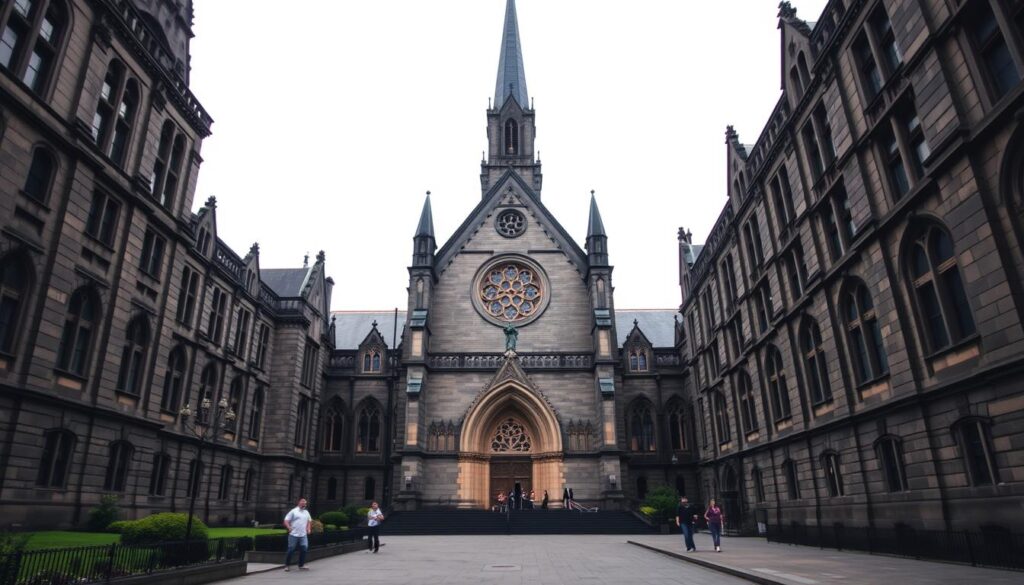
Protestant Churches in Glasgow: Uncover the City’s Spiritual Landmarks


Glasgow beats with a spiritual heart shaped by centuries of faith. Historic steeples and modern worship spaces dot the skyline, telling stories of devotion that span generations. These sacred sites blend tradition with vibrant community life, inviting exploration.

The city’s religious landscape offers a surprising variety of experiences. From grand stone cathedrals to cozy neighborhood chapels, each church reflects unique traditions and architectural styles. Many host lively events alongside traditional services, creating spaces where faith meets daily connection.

You’ll find these landmarks in central locations, easy to visit between museum stops or shopping trips. Their doors stay open for quiet reflection, guided tours, or community meals. Some even feature stunning stained glass that rivals local art galleries.

Key Takeaways

  • Glasgow’s spiritual heritage blends historic and modern worship spaces
  • Multiple denominations coexist with distinct architectural styles
  • Churches serve as community hubs beyond Sunday services
  • Central locations make visits convenient for travelers
  • Inclusive environments welcome all visitors
  • Many offer cultural programs alongside religious activities

Exploring Glasgow’s Protestant Heritage

Centuries of spiritual transformation shaped Scotland’s religious identity. The 16th-century Reformation rewrote rules of faith, replacing ornate rituals with Bible-centered practices. This shift birthed spaces designed for collective learning rather than ceremonial spectacle.

Historical Evolution of Worship

Before 1560, Latin Mass dominated worship. Reformed traditions flipped the script—congregants now heard sermons in their own language. Communal singing and shared communion tables became hallmarks of this new approach. By 1690, a democratic presbyterian system replaced top-down leadership, letting local elders guide spiritual life.

Architectural Significance from the Reformation

The Glasgow Cathedral stands as a living timeline. Construction began in 1136, but its purpose evolved over 350 years. Post-Reformation renovations stripped away statues, focusing attention on pulpits and simple stonework. These changes turned the building into a canvas for Protestant values—where every arch whispers stories of adaptation.

Directory of protestant churches glasgow

Finding spiritual communities here feels like discovering hidden gems. The city’s faith landscape mixes time-honored institutions with fresh approaches to shared beliefs. Whether you’re seeking quiet reflection or lively gatherings, there’s space for everyone.

church directory glasgow

Insights from the Church of Scotland

The Church of Scotland connects people to nearby congregations through their online finder. Just type your postcode for instant information about local services and events. They’re actively training new leaders, ensuring every building maintains vibrant programming.

This denomination’s network spans centuries-old parishes and modern hubs. Some locations host traditional hymns and sermons, while others offer casual coffee-shop-style worship. Their commitment to evolving keeps spiritual life dynamic across generations.

Highlighting Glasgow Cathedral and Other Landmarks

Glasgow Cathedral remains Scotland’s oldest mainland cathedral, operating continuously for 800 years. Its stone arches now frame both Sunday services and tourist visits. Newer spaces like Glasgow Grace blend theology with urban outreach, proving sacred variety thrives here.

From Gothic revival structures to minimalist chapels, architectural styles tell unique stories. Many locations double as community centers—think food banks, concerts, or youth programs. This dual purpose makes each stop more than just a sightseeing moment.

Spiritual Landmarks and Community Engagement

Stone walls hold more than history in this vibrant city—they cradle beating hearts of neighborhood life. These sacred spaces pulse with energy through shared meals, volunteer projects, and laughter echoing in fellowship halls. Their impact stretches far beyond traditional worship hours, weaving faith into everyday connections.

Worship Services and Congregational Life

The Church of Scotland walks alongside families during life’s milestones. Clergy offer personalized support for baptisms, weddings, and memorials, blending ancient rituals with modern compassion. Priority Area teams anchor their work in underserved neighborhoods, proving faith thrives where need runs deep.

Groups like The Guild create spaces for spiritual growth across generations. Members explore service projects and Bible studies, strengthening their commitment through action. “We’re called to be hands and feet, not just listeners,” shares one volunteer coordinating meal deliveries.

Innovative models like Glasgow Grace reimagine congregation dynamics. Small Grace Communities foster tight-knit relationships through weekly potlucks and prayer circles. Larger Sunday Meetings unite these groups under one roof, balancing intimacy with collective celebration.

Historic buildings like Glasgow Cathedral double as cultural anchors. Jazz concerts fill vaulted ceilings, while art exhibits transform naves into galleries. These events invite everyone to experience sacred spaces as living, breathing parts of city life.

Visitor Information and Access Details

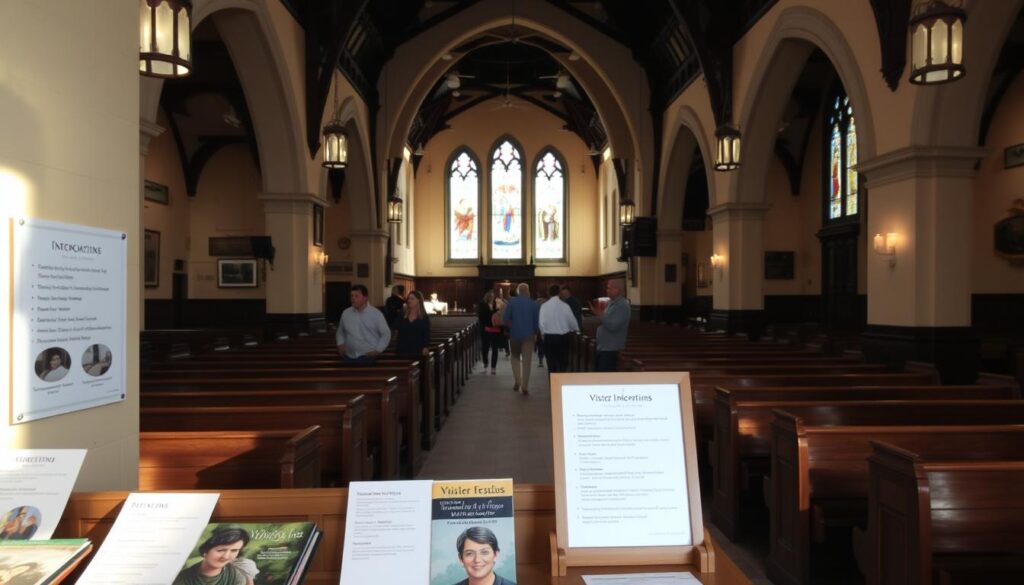
Stepping into these historic spaces feels like joining a warm conversation that’s been ongoing for centuries. Visitors will find thoughtful information to navigate services comfortably, whether attending for spiritual reflection or cultural curiosity.

church visitor information

Service Etiquette and Practical Guidance

No dress code stress here—wear what makes you feel at ease. While jeans and sneakers work for most gatherings, some opt for smart casual looks during holiday events. Leaders emphasize authenticity over formality, stating, “Come as you are, not as you think you should be.”

Financial transparency shines bright. Attendance costs nothing, and there’s zero pressure to donate. Buildings prioritize accessibility with ramps, hearing loops, and seating for mobility needs. Service animals rest comfortably beside pews, welcomed as part of the congregation.

Families rejoice—kids aren’t just tolerated but celebrated. Activity packs and child-friendly zones let young ones engage at their level. Non-English speakers follow along through visual cues and translated booklets outlining the worship flow.

Newcomers appreciate service guides explaining each step, from hymns to prayers. After the final amen, many locations host coffee hours for casual chats. It’s common to hear laughter echoing as visitors ask questions and connect with regulars over tea.

Conclusion

Scotland’s spiritual legacy thrives where ancient stones meet modern purpose. These sacred spaces blend history with hands-on compassion, creating living bridges between past and present. You’ll discover communities singing centuries-old hymns beside food pantry volunteers—proof that faith remains vibrantly relevant.

Every church tells its own story through architecture and action. Some feature vaulted ceilings perfect for choral echoes, while others prioritize cozy corners for coffee-fueled conversations. What unites them? A commitment to serving neighbors through meals, counseling, and inclusive worship gatherings.

Visitors quickly notice these aren’t museums but buildings buzzing with life. From toddler playgroups to elder lunch clubs, they foster connections across generations. Whether you’re drawn to Gothic arches or acoustic guitar-led services, there’s space for your journey here.

Glasgow’s Protestant traditions keep evolving without losing their roots. They invite exploration—not as spectators, but as participants in a story still being written. Come curious, and you might leave with more than photos: perhaps new friends or fresh perspectives.

FAQ

What historical events shaped the city’s spiritual landmarks?

The Reformation in the 16th century deeply influenced Glasgow’s religious identity. Many buildings, like the iconic Glasgow Cathedral, reflect this era’s blend of medieval design and post-Reformation simplicity. Over centuries, congregations adapted spaces to meet evolving worship needs.

Which landmarks are must-see for visitors interested in faith history?

Glasgow Cathedral stands out as a masterpiece of Gothic architecture and a symbol of resilience. Other notable sites include St. Andrew’s in the Square and St. Vincent Street Church, each showcasing unique styles tied to Scotland’s spiritual journey. Guided tours often highlight their stories.

Are there family-friendly services or events available?

Yes! Many congregations host family-oriented worship sessions, youth programs, and seasonal festivals. The Church of Scotland, for example, offers Sunday schools and community gatherings that welcome visitors of all ages. Check local event calendars for details.

How can I attend a service at Glasgow Cathedral?

The cathedral holds regular services open to everyone. Visit their website for schedules, including traditional hymns and modern worship formats. Modest attire is appreciated, and guests are encouraged to arrive 10–15 minutes early for seating.

What role do these congregations play in the community today?

Beyond worship, many groups run food banks, charity drives, and cultural events. The Church of Scotland actively partners with local organizations to support vulnerable populations, fostering unity and compassion across the city.

Is photography allowed inside historic buildings?

Policies vary, but most sites permit non-flash photography for personal use. Always ask staff or check posted guidelines before capturing images. Some locations may restrict photography during services to respect attendees’ privacy.

Understanding the Protestant Church Flag


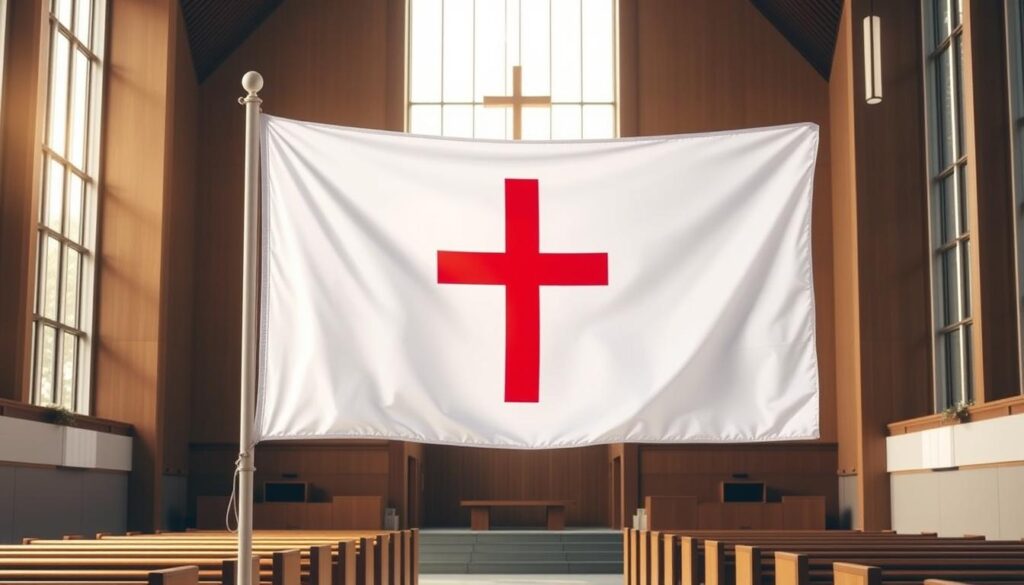
Picture a crisp white banner with a bold red cross against a sky-blue square. This iconic symbol began as a spontaneous idea during a Brooklyn Sunday school class in 1897. When a guest speaker didn’t show up, educator Charles C. Overton asked students to imagine a visual representation of their faith. That creative exercise sparked what we now recognize as one of Christianity’s most unifying emblems.

Every detail in this design carries spiritual significance. The white background reflects purity and peace, while the blue canton echoes baptismal waters and steadfast devotion. The crimson cross at the center serves as a vivid reminder of sacrifice and redemption. These elements combine to create more than fabric—they form a shared language for believers.

From its humble New York origins, this emblem spread rapidly across denominations. By 1942, it gained official recognition from major religious groups. Today, you’ll find it in sanctuaries from small-town chapels to international cathedrals, bridging theological differences through common imagery.

Key Takeaways

  • Originated in 1897 during an unplanned Sunday school discussion in Brooklyn
  • Color symbolism: white (purity), blue (faithfulness), red (sacrifice)
  • Adopted by multiple denominations as a unifying visual element
  • Appears in worship spaces worldwide despite denominational differences
  • Maintains relevance through its focus on core Christian beliefs

History and Origins of the Protestant Church Flag

A pivotal moment in religious symbolism unfolded one autumn morning in Brooklyn. On September 26, 1897, Charles Overton faced an empty podium at Brighton Chapel’s Sunday school. With no guest speaker present, the New York educator turned a potential setback into a creative opportunity.

Early Beginnings and Inspiring Moments

Overton pointed to the American flag draped nearby and posed a bold question: “What if believers had their own banner?” His students envisioned a universal emblem for their faith—a concept that simmered for years. By 1907, Overton teamed with Ralph Diffendorfer, a Methodist leader, to transform that Sunday school discussion into tangible reality.

Their collaboration produced a simple yet powerful design. Churches across the nation began displaying the symbol voluntarily. This grassroots adoption mirrored America’s growing desire for spiritual unity during rapid social changes.

Evolution Through the Ecumenical Movement

The early 20th century’s push for interdenominational cooperation propelled the emblem’s rise. Missionaries carried it overseas, while local congregations embraced its message of shared beliefs. By 1942, major denominations formally recognized the design through the Federal Council of Churches.

From Coney Island classrooms to global sanctuaries, this symbol’s journey reflects Christianity’s adaptive spirit. Its acceptance across diverse traditions proves simple visuals can sometimes unite better than words.

Design and Symbolism Behind the Flag

Three colors and one simple shape tell a story spanning centuries. The Christian Flag’s design transforms everyday hues into sacred messages, blending visual simplicity with layered spiritual meaning.

Christian flag design

Color Meanings: Red, White, and Blue in Christian Faith

The white field forms more than a backdrop—it embodies divine purity and the peace found through salvation. Like fresh snow covering imperfections, it reflects the cleansing power of belief.

Nestled in the upper left corner, the blue canton carries dual significance. Its azure tones recall baptismal waters initiating spiritual rebirth while honoring Christ’s eternal reliability. “Blue speaks to heaven’s constancy,” one theologian notes.

The Latin Cross and Its Significance

Centered in the blue square, the red Latin cross pulses with meaning. Its crimson shade memorializes sacrificial love, each drop of color whispering “This blood bought your freedom.”

Designers chose this cross style for instant recognition across cultures. Unlike ornate variations, its clean lines translate perfectly to banners and steeples alike. The vertical beam points toward divine connection, the horizontal arm embracing human community.

While sharing America’s patriotic palette, these colors rewrite the narrative. Red becomes redemption rather than revolution, white signifies sanctity instead of surrender, blue pledges heavenly fidelity over earthly governance. Together, they create a silent sermon hanging in worship spaces worldwide.

Trials and Traditions in Display and Usage

Where a banner hangs often reveals its cultural weight. Since 1938, congregations have followed James Russell Pollock’s guidelines to balance reverence with practicality. These protocols help worshippers honor sacred symbols while maintaining visual harmony in shared spaces.

Flag Placement in Church Sanctuaries

Two primary positions show proper respect for the emblem. It may stand at floor level outside the communion rail on the congregation’s right side, or occupy the right flank of elevated liturgical elements like altars. This placement strategy intentionally prioritizes spiritual authority over earthly power.

Aspect Christian Flag American Flag
Position in Sanctuary Right side (congregation view) Left side
Dipping Protocol Only to altar cross No dipping
Placement Height Equal when paired Equal when paired
Symbolic Meaning Spiritual allegiance National identity

Pledge Allegiance and Display Practices

Methodist minister Lynn Harold Hough penned the first formal promise in 1908. His version stressed unity: “One brotherhood under the Savior.” Later adaptations added doctrinal specifics about Christ’s resurrection, showing how different groups personalize the tradition.

During recitations, worshippers mirror patriotic customs with a twist—hands over hearts focus devotion heavenward. This blend of familiar gestures and sacred intent helps the symbol remain both accessible and spiritually potent.

The Protestant Church Flag in American Churches Today

In sanctuaries across America, a vibrant tapestry of tradition meets modern practice. Since the 1980s, congregations have blended historical symbolism with fresh expressions of faith. This balance reflects both respect for heritage and adaptability to changing cultural landscapes.

Christian flag in modern worship

Contemporary Worship and Symbolism

Modern services breathe new life into this century-old emblem. Many spiritual leaders use its colors as conversation starters during sermons. “The white field isn’t just background—it’s an invitation to personal renewal,” explains Reverend Sarah Mills of Tennessee.

Younger worshippers often encounter the banner through interactive lessons. Some congregations host art nights where members create personal versions using fabric markers. These activities help families discuss core beliefs while honoring shared history.

Integration with National and Church Flags

Display protocols continue evolving while maintaining key traditions. Most sanctuaries follow this pattern:

Element Position Symbolic Purpose
Christian Flag Congregation’s right Spiritual unity
National Flag Congregation’s left Civil responsibility
Altar Cross Central focus Divine connection

During patriotic holidays, some communities add historical context. A Missouri Lutheran pastor notes: “We explain how our grandparents displayed both banners during WWII—faith and patriotism walking hand-in-hand.”

This dual display remains popular in opening ceremonies. Many recite pledges to both emblems, creating a rhythm of devotion that honors sacred and secular commitments equally. The practice helps worshippers navigate complex modern identities while staying rooted in tradition.

Cultural Impact and Legacy in Christian Communities

Music and symbolism often walk hand-in-hand, creating lasting impressions across generations. The white-and-crimson emblem inspired more than visual displays—it sparked creative works that still resonate today.

Christian flag global impact

Hymnody and the Influence of Fanny Crosby

Blind hymn writer Fanny Crosby gave the emblem a voice through her 1903 composition “The Christian Flag.” Her lyrics urged believers to “speed its glorious mission” across nations. Like the banner itself, Crosby’s work carried no copyright—a radical choice ensuring universal access.

This four-verse anthem became a teaching tool in Sunday schools. Children learned to connect the symbol’s colors with spiritual truths through catchy melodies. Missionaries often packed both fabric banners and hymn sheets when traveling overseas.

Ecumenical Unity and National Identity

From Brazilian storefront chapels to Nigerian megachurches, the emblem bridges cultural divides. Its presence in churches throughout the world reflects both American missionary efforts and local adaptations. Congregations from different traditions find common ground beneath its folds.

Consider these dual roles:

  • Represents heavenly loyalty while respecting earthly governments
  • Appears beside national banners without competing
  • Encourages cooperation between denominations

Young believers in the United States now rediscover its meaning through art projects and social media. As one teen group in Texas demonstrated last year, digital designs featuring the emblem can spark conversations about faith’s role in modern life.

Conclusion

What began as a Brooklyn classroom exercise now flies in over 500,000 sanctuaries worldwide. The Christian Flag’s journey from chalkboard sketch to global emblem shows how simple ideas can spark lasting unity. Its open-source design philosophy—anyone can make or use it—keeps Charles Overton’s democratic vision alive.

The 1942 endorsement by the Federal Council of Churches gave formal recognition, but true power lies in grassroots adoption. From storefront chapels to cathedral altars, communities embrace this symbol on their own terms. As Christianity Today notes, its cross-cultural flexibility makes it “the ultimate ecumenical handshake.”

Modern congregations keep finding fresh meaning in its colors. Youth groups stitch quilt versions while historians display original 1907 prototypes. Missionaries still pack folded banners alongside Bibles, continuing the tradition started by early 20th-century pioneers.

This emblem’s endurance proves symbols outlive their creators. It doesn’t argue theology—it invites shared reflection. Whether draped beside the U.S. Flag or hung solo, it whispers the same message: common ground exists beneath sacred cloth.

As new generations reinterpret its legacy, the Christian Flag remains what Overton imagined—a blank canvas for collective hope. Its threads connect Sunday school kids in Kansas to believers in Kenya, weaving a tapestry of faith that transcends borders and generations.

FAQ

What’s the origin of the Christian flag used in many congregations?

The design emerged in 1897 after a Sunday school lesson by Charles Overton in New York. Ralph Diffendorfer later popularized it through the Federal Council of Churches, linking it to ecumenical unity and global outreach.

Why are red, white, and blue chosen for the flag’s colors?

Red symbolizes Christ’s sacrifice, white represents purity, and blue stands for faithfulness. These hues mirror core Christian values while aligning with the U.S. flag’s patriotic palette.

How should the Latin cross be positioned when displayed?

Tradition places it in the upper left corner, echoing its prominence in sanctuary spaces. This placement honors its role as a central symbol of faith and redemption.

Are there guidelines for flying it alongside national banners?

Yes! When paired with the U.S. flag, it typically sits to the right or lower position during services. Congregations often prioritize spiritual symbolism without diminishing national pride.

How did Fanny Crosby influence its cultural legacy?

Her hymns, like “To God Be the Glory,” reinforced themes of devotion tied to the flag. These songs became rallying points for unity and shared identity in worship settings.

Do modern churches still use it in contemporary services?

Many do! While styles evolve, congregations blend it with multimedia elements or youth programs. Its enduring symbolism bridges tradition and modern expressions of faith.

What’s the significance of reciting pledges to the flag?

Pledges, introduced in the 1940s, reaffirm loyalty to Christian principles over earthly nations. They’re often recited in Sunday schools or during patriotic-themed events.

How does it promote ecumenical unity among denominations?

Designed during the Federal Council of Churches era, it transcends doctrinal differences. Shared use across traditions fosters collaboration in missions and social justice efforts.

Protestant Church Music: A Melodic Journey Through History


Imagine walking into a 16th-century worship space where every voice matters. This was the vision of Reformation leaders who reshaped sacred soundscapes forever. Their goal? To replace exclusive Latin chants with melodies everyone could sing—a radical idea that still echoes in modern faith communities.

The shift wasn’t just about language. It created rhythmic poetry rooted in scripture, designed for group participation. Simple tunes replaced complex arrangements, letting ordinary people express devotion without formal training. This change turned passive listeners into active contributors, forging deeper spiritual connections.

Beyond worship halls, these melodies influenced cultures worldwide. From classical composers to folk traditions, the legacy of this musical revolution remains vibrant. Its emphasis on accessibility laid groundwork for community choirs, gospel music, and even modern congregational singing styles.

Key Takeaways

  • Originated during the 16th-century Reformation to involve all worshippers
  • Replaced Latin chants with vernacular lyrics based on Psalms
  • Prioritized simple melodies over complex professional performances
  • Empowered everyday people to participate actively in worship
  • Influenced both religious practices and global musical traditions

Historical Roots and the Reformation’s Impact on Church Music

Everyday voices rose as sacred songs became their own. Before the 1500s, worship melodies flowed exclusively from trained choirs in unfamiliar Latin phrases. This changed when religious leaders demanded audible lyrics that ordinary people could grasp and sing.

Transition from Latin to the Vernacular

The move to local dialects transformed spiritual experiences. As one reformer noted: “If prayer is the soul’s dialogue with God, shouldn’t both parties understand the conversation?” Congregations suddenly heard scripture-based lyrics in their mother tongues—a radical shift empowering personal devotion.

Aspect Pre-Reformation Post-Reformation
Language Latin-only Local dialects
Participants Professional choirs Entire congregations
Complexity Multi-layered polyphony Unison melodies
Purpose Artistic display Collective worship

Early Changes Promoted by Reformers

Religious leaders prioritized clarity over musical complexity. They replaced intricate vocal arrangements with four-part harmonies still used today. This simplification allowed farmers, merchants, and families to join hymns without formal training.

Three core principles guided these changes:

  • Lyrics must educate listeners
  • Melodies should unite communities
  • Every voice deserves inclusion

These innovations turned worship into participatory storytelling. What began as doctrinal debates reshaped how millions expressed faith through song for centuries.

The Development of Protestant Church Music

Two distinct approaches emerged as faith communities reimagined their relationship with melody. While both sought to deepen spiritual engagement, their methods created lasting musical legacies that still shape worship today.

Lutheran and Reformed music traditions

Lutheran Chorales and Musical Innovation

Martin Luther saw harmonies as divine tools, declaring: “Notes make scripture leap from pages into hearts.” He personally crafted hymns like “Ein feste Burg”, blending bold theology with catchy tunes. These chorales used repetitive stanzas, letting entire congregations join easily—first in unison, later in rich four-part arrangements.

By the 1700s, over 5,000 such hymns existed. This creative freedom allowed composers like Bach to transform simple chorales into complex masterpieces. Organs and choirs remained central, creating spaces where artistry and devotion intertwined.

Reformed Psalters and Congregational Singing

John Calvin’s vision took a different path. His followers sang only biblical Psalms, believing human-made lyrics couldn’t match God’s own words. The Geneva Psalter became their musical blueprint—poetic translations set to unaccompanied melodies.

Cantors like Loys Bourgeois trained communities to sing these Psalms a capella. Without instruments or harmonies, the focus stayed on collective voices. This stripped-down style aimed to eliminate distractions, making every service a pure expression of scriptural truth.

Tradition Musical Features Key Figures
Lutheran Four-part harmony, organs Martin Luther, J.S. Bach
Reformed A capella Psalms John Calvin, Loys Bourgeois

Cultural Resonance and Lasting Legacy of Protestant Church Music

Printed notes carried faith beyond stone walls into homes and hearts. By 1640, over a million psalm books circulated through England and Scotland—a staggering number for the era. This explosion of accessible lyrics transformed how communities engaged with spiritual ideas.

Music Printing and the Spread of Hymns

Movable type became a spiritual megaphone. For the first time, families could own songbooks featuring rhythmic psalms set to memorable tunes. A Scottish farmer might sing the same battle-ready hymn used during Mary Queen of Scots’ downfall—“Judge and revenge my cause, Oh Lord”—while working his fields.

These printed melodies served dual purposes. They taught theology through repetition and created cultural solidarity. Non-readers memorized scriptures by humming tunes during daily tasks, turning doctrine into muscle memory.

Sacred Music as a Unifying Force in Worship

Shared songs dissolved barriers between public worship and private life. What began as Sunday gatherings spilled into kitchens and workshops. Families sang psalms during meals, embedding faith into everyday routines.

This musical glue helped communities navigate seismic changes. When traditional comforts like Purgatory vanished from theology, collective singing provided emotional grounding. Harmonized voices reminded participants they weren’t alone—in their towns or across continents.

Conclusion

This melodic revolution stands as history’s great democratization movement for spiritual expression. What began with reformers handing songbooks to farmers now echoes in modern gatherings where entire communities raise their voices together. By replacing exclusive performances with collective participation, they gave every person a role in shaping sacred moments.

Printing presses amplified this cultural shift, turning localized traditions into global movements. Accessible lyrics traveled across continents, blending with folk melodies and inspiring new creative forms. The same principles that unified 16th-century believers now fuel diverse worship styles—from gospel choirs to contemporary praise bands.

Today’s gatherings still honor that original vision. Whether through ancient hymns or modern beats, the focus remains on inclusive participation. When voices merge across generations, they carry forward a 500-year legacy proving that shared song builds stronger communities—both inside sacred spaces and beyond.

FAQ

How did worship language change during the Reformation?

Before the Reformation, Latin dominated services. Reformers shifted to local languages, making texts accessible. This allowed congregations to engage directly with spiritual messages.

What role did hymns play in early Protestant traditions?

Hymns became central to communal singing. Leaders like Luther crafted chorales with memorable melodies. These tunes united people and simplified complex theology through poetry.

Why were psalters important in Reformed communities?

Psalters provided translated, metrical versions of biblical psalms. They encouraged congregational participation. Singing these texts fostered collective identity and deepened personal faith.

How did music printing shape religious practices?

Printing technology spread hymns rapidly. Affordable songbooks let households practice faith at home. This innovation blurred lines between formal worship and daily spiritual life.

Did reformers approve of complex musical arrangements?

Some leaders distrusted elaborate polyphony, fearing it obscured lyrics. Others balanced artistry with clarity. Simpler harmonies eventually dominated to prioritize textual understanding.

How did sacred melodies influence broader culture?

Hymn tunes crossed into folk traditions and classical works. Composers like Bach transformed chorales into art forms. This fusion kept theological themes relevant across generations.

Protestant Churches in Delhi: Your Guide to the Best


India’s capital city holds hidden spiritual gems for those seeking Christian fellowship. While Christians make up less than 1% of New Delhi’s population, their vibrant communities thrive through historic places of worship. Nearly 60% of these believers identify with Protestant traditions, creating a lively network of congregations across the city.

These sacred spaces blend British colonial designs with Indian cultural elements, offering visual stories of faith and history. Landmarks like the Cathedral Church of the Redemption stand near government buildings, while St. James’ Church showcases military-era architecture. Each location serves as both a spiritual hub and a social center, hosting events that unite diverse groups.

Visitors will find welcoming atmospheres in neighborhoods from Connaught Place to Delhi Cantonment. Many congregations actively support local charities and interfaith initiatives, reflecting their commitment to community growth. Whether you’re drawn to traditional hymns or contemporary services, there’s a place here for meaningful connection.

Key Takeaways

  • Protestant communities form the majority of New Delhi’s Christian population
  • Historic buildings showcase unique British-Indian architectural fusion
  • Multiple denominations offer varied worship styles and traditions
  • Central locations provide easy access for residents and travelers
  • Churches host cultural programs and social outreach year-round

Introduction to Protestant Churches in Delhi

New Delhi’s rich tapestry of faiths includes dynamic Protestant groups whose roots stretch back centuries. These communities thrive in a city where ancient traditions meet modern diversity, offering worship spaces that reflect both global connections and local culture.

What Makes Delhi Unique?

The capital’s spiritual landscape shines through its ability to blend traditions. Church of North India leads a major diocese here, uniting Anglican and Protestant practices across northern states. You’ll find Baptist congregations sharing streets with Sikh gurdwaras, while Pentecostal hubs welcome international visitors near diplomatic zones.

This mix creates congregations as varied as India itself. Members might include third-generation worshippers, professionals from other regions, or global expats. Together, they form communities that value service—many support schools, clinics, and food banks citywide.

An Overview of Protestant Heritage

Protestant roots here began with 16th-century Jesuit missionaries and grew under British rule. Today, denominations like Methodist and Presbyterian add distinct flavors to local worship. The Central Baptist Church’s lively services contrast with the Indian Pentecostal Church’s spirited gatherings, showing the spectrum of traditions.

Historic institutions still shape daily life. Old churches run respected schools, while newer ones host job-training programs. Whether through hymn-filled stone chapels or modern auditoriums, these groups keep faith alive in India’s ever-changing heart.

Historical Background and Heritage

Centuries before modern congregations, New Delhi’s Christian journey began with imperial curiosity across different eras. Rulers and missionaries shaped a faith legacy that survives through stone and story in India’s capital.

Mughal Influences and Early Encounters

The Mughal era opened new doors when Emperor Akbar invited Jesuit priests to his court in 1579. His secular approach let Christian ideas flow freely among royal circles. This unique time fostered cross-cultural exchanges that would echo through centuries.

Later governments shifted course dramatically. Emperor Aurangzeb’s strict policies pushed communities into hiding. Yet determined figures like Father Desideri founded a dedicated house of worship in 1723—only to see it destroyed during Persian invasions sixteen years later.

Year Event Significance
1579 Akbar’s Jesuit invitation Era of Mughal interfaith dialogue
1723 Virgin Mary church established Symbol of persistent faith
1739 Nadir Shah’s invasion Religious structures destroyed

Through unstable times, believers developed clever survival tactics. Missionaries hid in crumbling buildings, keeping their practices alive secretly. These efforts planted seeds for New Delhi’s future religious diversity as British influence later grew.

Prominent Protestant Churches in New Delhi

Architectural marvels stand as testaments to New Delhi’s spiritual diversity. The Cathedral Church of the Redemption and Sacred Heart Cathedral dominate the cityscape with their colonial-era grandeur. Both structures emerged from the creative mind of Henry Medd, a key figure in shaping the capital’s iconic buildings.

cathedral church redemption

Medd masterfully blended European designs with India’s climate needs. His work on these worship spaces features high ceilings for airflow and strategic window placements. These elements create cool sanctuaries that defy the city’s summer heat.

The Cathedral Church of the Redemption near Rashtrapati Bhavan serves diplomats and locals alike. Known locally as North Avenue Church, its pale stone facade contrasts with the red sandstone of nearby government buildings. Sunday services here often include hymns in multiple languages.

Feature Cathedral Church of the Redemption Sacred Heart Cathedral
Location North Avenue Gole Dak Khana
Architectural Style English Renaissance meets Indian practicality Romanesque Revival with Mughal influences
Unique Element Original 1935 pipe organ Distinctive terracotta exterior
Primary Community Government officials & international visitors Regional Christian populations

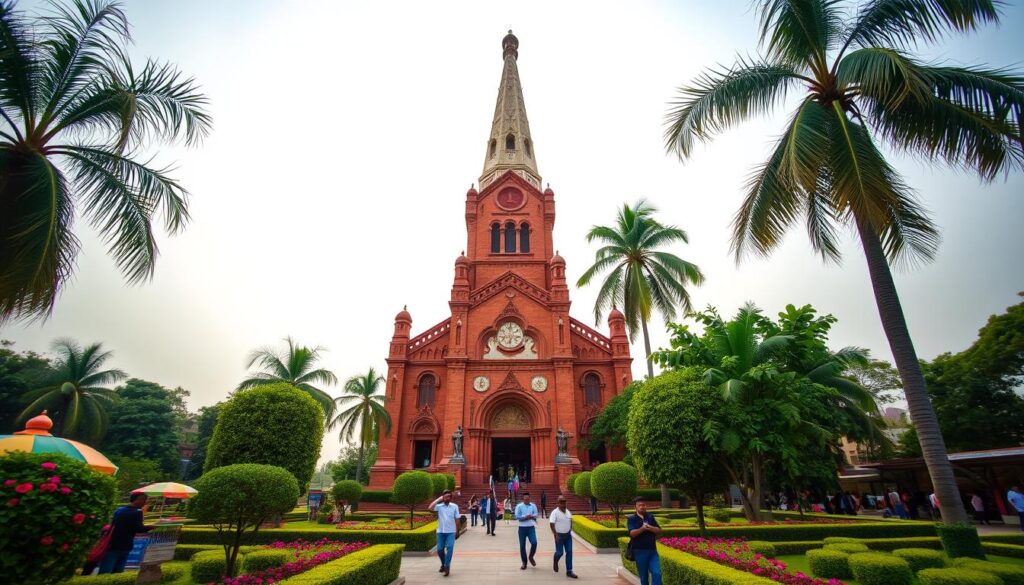
At Gole Dak Khana, the Sacred Heart Cathedral’s crimson walls make it unmissable. This landmark hosts Christmas markets that draw thousands. Its central location allows easy access from metro stations and major bus routes.

Both spaces regularly hold interfaith dialogues and charity events. They’ve become cultural bridges in a city where history and modernity constantly interact. Visitors often describe feeling transported through time while attending services here.

Protestant Church Delhi: A Visitor’s Guide

Exploring New Delhi’s spiritual landscape offers more than ancient temples—its Christian communities welcome curious travelers with open doors. These sacred spaces blend historical significance with modern hospitality, creating meaningful experiences for visitors of all backgrounds.

Essential Tips for First-Time Visitors

Morning worship services typically start between 8:00 and 10:00 AM, with exact times varying by congregation. Dress modestly—think knee-length skirts or trousers, and bring a light shawl for shoulder coverage. Arriving 15 minutes early lets you appreciate stained-glass artistry before the gathering begins.

Always ask staff before photographing interiors during services. Many congregations offer English-language programs, particularly in diplomatic areas. “Our doors open widest to those who come with open hearts,” shares a local community leader.

Planning Your Itinerary

Sunday mornings bring lighter traffic, making visits to multiple locations feasible. Create a route map considering service schedules and travel times between neighborhoods. Research architectural highlights like arched colonnades or rare biblical manuscripts displayed in some sanctuaries.

Prioritize quality over quantity—allow space for quiet reflection between stops. Many historic buildings host afternoon tea or cultural workshops, perfect for deepening your understanding of New Delhi’s spiritual tapestry.

Church North India: A Regional Perspective

The Church of North India stands as a unifying force across northern states, with its Delhi diocese acting as both spiritual anchor and organizational hub. This influential body connects believers from Punjab’s farmlands to Uttar Pradesh’s urban centers under shared traditions. Over 150 congregations coordinate through this central network.

More than just a local congregation, the diocese coordinates educational programs and healthcare initiatives reaching remote villages. Its leadership training center in the capital prepares clergy to serve diverse communities throughout the region. Annual conferences here shape strategies for addressing regional challenges.

church north india

Worship services beautifully merge Anglican prayer structures with regional music and languages. Hymns might feature harmonium accompaniments alongside traditional English choir arrangements. This blend creates experiences that honor both global connections and local identities.

Aspect Delhi Diocese Role Regional Impact
Governance Central administrative hub Unites 8 northern states
Cultural Integration Blends liturgy with local arts Preserves regional traditions
Social Outreach Manages 120+ initiatives Impacts 500,000+ annually
Leadership Development Trains 300+ yearly Supports rural congregations

New Delhi’s status as the national capital amplifies the diocese’s influence in interfaith collaboration. Recent partnerships have addressed food security and women’s education across six states. Through these efforts, the organization demonstrates how faith communities can drive positive change at scale.

The Cathedral Church of the Redemption: Architecture and History

Standing as a breath of cool air in India’s bustling capital, this landmark redefines sacred spaces through intelligent design. At 23, Henry Medd began shaping New Delhi’s skyline under Edwin Lutyens, later becoming the government’s chief architect during India’s pivotal transition years.

Where Vision Meets Climate

church redemption architecture

Medd’s genius shines through adaptive features that combat extreme heat while maintaining grandeur. He reduced window openings by 40% compared to European models, instead creating airflow channels within thick walls. The courtyard’s mango trees weren’t just decorative—their shade lowered ambient temperatures by 6°F during summer services.

Design Feature European Inspiration Indian Adaptation
Ventilation Stained glass windows Concealed air channels
Materials Portland stone Local quartzite blend
Layout Gothic arches Extended shaded verandas
Acoustics Vaulted ceilings Jali screen sound diffusion

Every part of the structure serves dual purposes. Buttresses support the roof while housing hidden drainage systems. The 1935 pipe organ’s placement wasn’t random—its position amplifies sound toward the congregation without echo.

Medd’s landscape integration makes the compound feel like an oasis. “True architecture,” he noted, “should solve problems before visitors notice them.” This philosophy transformed the church redemption project into a masterclass in climate-responsive design that still inspires architects today.

Sacred Heart Cathedral: An Iconic Landmark

Glowing like a ruby in New Delhi’s urban mosaic, the Roman Catholic Church of the Sacred Heart welcomes believers with its distinctive terracotta facade. This heart cathedral serves as both spiritual anchor and cultural crossroads, drawing diplomats and northeastern communities alike.

Henry Medd’s genius shines through clever climate adaptations. He scrapped Westminster Abbey-style blueprints after Lutyens warned against excessive glass in Delhi’s heat. The final design features thick walls and strategically placed windows that keep interiors 15°F cooler than outside.

Sunday services here blend Tamil hymns with Khasi prayers, reflecting the cathedral’s role as a home for Manipuri and Naga communities. “Our diversity strengthens our unity,” notes a regular attendee from Mizoram. Annual Christmas markets transform the compound into a global village, with embassy staff sharing traditions from Manila to Maputo.

The Sacred Heart complex buzzes beyond worship hours. Youth groups practice traditional dances under shaded verandas, while elders host tea gatherings. Its central location near Gole Dak Khana makes it accessible yet peaceful—a rare combination in India’s bustling capital.

Discovering St. Mary Orthodox Cathedral

South Delhi’s tree-lined streets hold a special surprise for spiritual explorers. The St. Mary Orthodox Cathedral in Hauz Khas stands as a cultural bridge for Kerala’s Syrian Christians in the capital. Built in 1975, this white-walled sanctuary became the community’s first major worship space north of their home state.

Professionals and students from Kerala find familiar traditions here. The orthodox cathedral hosts services in Malayalam, complete with incense rituals and liturgical chants. Its central location near metro stations makes weekly gatherings convenient for families across the city.

Notable figures like MG George Muthoot found solace within these walls. The late finance magnate frequently attended prayers here, blending business success with spiritual grounding. Today, the cathedral continues welcoming new generations seeking both career opportunities and cultural roots.

Visitors appreciate how the St. Mary Orthodox community preserves Kerala’s Christian heritage. From Onam festivals to Easter vigils, seasonal celebrations burst with South Indian flavors. This vibrant space proves faith traditions can thrive far from their geographic origins.

FAQ

What are the must-visit historic Protestant churches in Delhi?

The Cathedral Church of the Redemption and St. James’ Church are iconic for their colonial-era architecture. Sacred Heart Cathedral and St. Mary’s Orthodox Syrian Cathedral also blend spiritual significance with stunning design.

How does Church of North India differ from other denominations?

The Church of North India unites Anglican, Methodist, and other Protestant traditions. It focuses on regional cultural integration while maintaining core Christian practices, making it distinct from standalone denominations like Baptists or Pentecostals.

Are there guided tours available for these religious sites?

Yes! Many churches, like the Cathedral Church of the Redemption, offer self-guided pamphlets or volunteer-led tours. Check their websites or contact local tourism offices for scheduled events.

What architectural styles define Delhi’s Protestant landmarks?

British colonial designs dominate, like Henry Medd’s Renaissance-inspired work at the Redemption Cathedral. Some newer structures incorporate Indo-Gothic elements or Kerala-style influences, seen in Syrian Orthodox sites.

Can visitors attend worship services at these churches?

Absolutely. Most welcome visitors to join Sunday services or special events. Sacred Heart Cathedral holds multilingual masses, while St. Thomas’ Church offers English-language gatherings for international attendees.

Is photography allowed inside these sacred spaces?

Policies vary. For example, St. Martin’s Church permits non-flash photography, while others restrict it during services. Always ask staff or check posted guidelines before capturing images.

How do Mughal influences appear in Delhi’s church designs?

Early colonial churches used Mughal-inspired materials like red sandstone. Decorative motifs, such as floral patterns in St. Stephen’s College Chapel, reflect this fusion of local and European aesthetics.

Hong Kong’s Protestant Church: A Visitor’s Guide


In a city where skyscrapers meet centuries-old traditions, a unique spiritual landscape thrives. Visitors often discover unexpected treasures among the bustling streets—places where history whispers through stained glass and modern faith communities pulse with energy.

Religious roots here stretch back to 1841, blending Eastern and Western influences into something truly special. Today, nearly 1.3 million local residents identify with Christian traditions, creating vibrant hubs of worship and community service.

What makes these spiritual centers stand out? Many offer services in multiple languages, with English-speaking congregations warmly welcoming travelers. Architectural styles range from Victorian-era gems to sleek contemporary designs—each structure telling its own story of cultural adaptation.

Beyond Sunday services, these spaces host cultural events, charity work, and interfaith dialogues. Whether you’re drawn to historical exploration or seeking meaningful connections, these welcoming communities offer fresh perspectives on the city’s evolving identity.

Key Takeaways

  • English-friendly services make spiritual exploration accessible for international visitors
  • Architectural styles span colonial-era landmarks to innovative modern designs
  • Active congregations host cultural events beyond traditional worship services
  • Nearly 900,000 community members participate in various denominational traditions
  • Historic sites reveal fascinating stories of cultural exchange since 1841

Understanding Hong Kong’s Protestant Heritage

This vibrant spiritual tradition emerged as British influence reshaped the region. Missionaries arrived with colonial administrators, bringing faith and social reforms that left lasting marks on local institutions.

Historical Background and Colonial Influences

Early religious groups focused on education and healthcare. The London Missionary Society established To Tsai Chapel in 1888, where revolutionary leader Sun Yat-sen attended services during medical studies. Over 50 different faith groups now operate across the territory.

Evolution of Architecture and Culture

Worship spaces reveal fascinating cultural blends. Victorian-era structures stand beside modern complexes, featuring traditional Chinese roof designs alongside stained glass. These hybrid creations mirror the city’s identity as East-West meeting point.

Feature 19th Century Modern Era
Building Materials Red brick imports Steel & glass
Cultural Elements English Gothic arches Feng shui layouts
Community Role Medical clinics Youth centers

Educational institutions like the medical college (now part of a major university) show how faith groups shaped society. Today’s congregations continue this legacy through language classes and food banks.

Exploring “protestant church hong kong”: Notable Churches and Services

Faith communities across the city blend ancient traditions with modern urban life. These spaces welcome visitors through diverse worship styles and inclusive programs that reflect the region’s global connections.

english speaking services hong kong

Major Denominations and Their Outreach

Over 15 faith groups shape the spiritual landscape. Anglicans maintain historic sanctuaries with choral music, while Baptists host lively gatherings with coffee shops and tech-driven sermons. Young adults flock to Pentecostal communities offering career workshops and live music events.

Salvation Army centers run homeless shelters alongside Sunday services. Adventist groups organize free health screenings, merging wellness practices with spiritual guidance. This variety ensures everyone finds a community matching their values.

English Speaking and Multicultural Services

International visitors discover Sunday gatherings in over 20 languages. Many congregations provide real-time translation devices and bilingual bulletins. “Our doors open wider than the harbor” shares a local pastor, highlighting the warm welcome for global travelers.

Denomination Service Style Community Focus
Anglican Traditional liturgy Historical preservation
Pentecostal Contemporary worship Youth empowerment
Adventist Health-focused Family wellness

Weekday meetups range from Mandarin Bible studies to Filipino choir practices. Evening services cater to shift workers, proving spiritual support adapts to urban rhythms. Whether seeking quiet reflection or energetic praise, these communities deliver unforgettable experiences.

Top English Speaking Protestant Church Options for Visitors

Global travelers seeking spiritual connection in Asia’s World City find welcoming spaces tailored to their needs. Three standout communities combine accessibility with distinctive worship styles, all within easy reach of major transit hubs.

Anglican Icons Like St. Andrews

St. Andrews Anglican Church on Nathan Road shines with four Sunday gatherings. The 11:30 am cathedral service features traditional hymns, while the 5 pm auditorium meeting attracts younger crowds. Expat families from 20+ nations create a mosaic of cultures in this heritage building with vaulted ceilings.

Evangelical and Pentecostal Highlights

Island Evangelical Community Church near Quarry Bay station draws 1,200 weekly attendees. Their 10 am contemporary service uses LED screens and live translation headsets. Across the harbor, Vine Church’s converted theater in Wan Chai pulses with “worship that feels like a concert” according to regulars. Their 9:30 am and 6 pm gatherings fill quickly with under-35s.

All three locations provide visitor parking and detailed transit instructions online. St. Andrews sits 7 minutes from Jordan MTR, while Vine Church lies 10 minutes from Wan Chai Station exits. Island Evangelical offers shuttle buses from three Island Line stops.

Community, Youth, and Social Services in Hong Kong Churches

Modern spiritual centers serve as vital hubs shaping tomorrow’s leaders while addressing today’s challenges. These organizations blend learning opportunities with practical assistance, creating networks that uplift entire neighborhoods.

youth community activities hong kong

Youth Programs and Educational Initiatives

Young people thrive through dynamic programs mixing faith with real-world skills. Leadership camps and coding workshops sit alongside music festivals that draw thousands. Over 700 educational institutions operated by faith groups help students excel academically while developing strong values.

Top-performing schools like Diocesan Boys’ School showcase this approach. Nearly 1 in 4 university attendees come from these faith-based backgrounds. Weekend programs offer everything from robotics clubs to environmental clean-up projects.

Social Service Outreach and Support

Compassion drives over 230 social service centers across the region. Families access counseling, while seniors enjoy daily meal deliveries. Refugee assistance programs and job training workshops demonstrate practical care for vulnerable groups.

One community leader notes: “We measure success by lives transformed, not just services delivered.” Annual health fairs provide free check-ups, and after-school tutoring helps children from low-income households. These efforts create safety nets that strengthen entire communities.

Visitor Information: Locations, Hours, and Transit Tips

Exploring spiritual landmarks becomes effortless with smart planning. This guide simplifies navigation through Asia’s World City, helping you maximize every moment of your journey.

hong kong transport system

How to Navigate HK’s Transport System

The MTR subway connects major landmarks faster than walking. Grab an Octopus Card at any station—this rechargeable pass works on trains, buses, and ferries. Key stops include:

  • Jordan Station (Exit D): 3-minute walk to St. Andrews’ red-brick spire
  • Quarry Bay Station (Exit C): Direct access to Island Evangelical’s modern complex
  • Central Station (Exit D1): Gateway to Mid-levels sanctuaries via scenic escalators

Planning Your Spiritual Landmark Itinerary

Most communities welcome visitors daily from 8:30 AM to 5:30 PM, except during private events. Sunday schedules feature multiple English gatherings:

Location Service Times Transit Time
Vine Church 9:30 AM & 6:00 PM 5 mins from Wan Chai Station
Cathedral of Immaculate Conception 11:00 AM 10 mins via taxi from Central

Pro tip: Pair morning services with afternoon sightseeing. St. Andrews sits near Temple Street Night Market, while Island Evangelical neighbors Quarry Bay’s Instagram-famous apartment blocks.

Conclusion

In the heart of Asia’s bustling metropolis, spiritual sanctuaries offer more than just worship—they bridge cultures and generations. These communities blend centuries-old traditions with modern urban energy, creating spaces where visitors become participants rather than spectators.

English-friendly gatherings and diverse worship styles make spiritual exploration accessible. Young adults find mentorship through youth programs, while university students connect with global peers at cultural exchanges. Over 230 social initiatives demonstrate how faith groups uplift neighborhoods through practical care.

The Orthodox Metropolitanate of Hong Kong and Southeast Asia enriches the city’s spiritual mosaic with ancient liturgical practices. Whether you seek quiet reflection or lively fellowship, these welcoming groups invite meaningful discovery. Their stories of cultural adaptation since 1841 reveal how communities evolve while staying rooted in timeless values.

From skyline-view sanctuaries to heritage chapels, each space offers unique insights into the region’s identity. Plan your visit to experience how tradition and innovation coexist in one of the world’s most dynamic cities.

FAQ

Are there English-language worship options available?

Yes! Many congregations offer services in English, Cantonese, and Mandarin. Places like St. Andrew’s in Kowloon and Island Evangelical Community Church host multicultural gatherings tailored for international visitors.

What community programs do these groups organize?

From tutoring for students to food drives for low-income families, local faith-based organizations actively address social needs. Youth mentorship initiatives and addiction recovery support are also common.

How accessible are these buildings via public transit?

A> Most are easily reachable. For example, Kowloon Union Church sits near Jordan MTR Station, while Wan Chai’s St. John’s Cathedral is a 10-minute walk from Admiralty Station. Trams and buses connect key locations efficiently.

Can visitors join weekday activities?

Absolutely. Many host open events like choir rehearsals, cultural workshops, or volunteer opportunities. Check individual websites for schedules—some even offer guided tours of their historic architecture.

Do any cater specifically to university students?

Yes. Groups like Hong Kong Baptist University’s Chaplaincy and the Chinese Christian Fellowship provide campus-based Bible studies, career counseling, and leadership training tailored for young adults.

Are children welcome during services?

Families are encouraged to attend. Several congregations run Sunday School programs with age-appropriate lessons, while others have play areas for toddlers during worship hours.

What’s unique about Anglican traditions here?

Institutions like St. Stephen’s Chapel blend British colonial-era design with local customs. Their liturgies often incorporate both traditional hymns and contemporary Cantonese worship music.