Recent Posts

Catholicism and Birth Control: Exploring the Debate


For nearly two millennia, Christian communities shared a unified stance on family planning methods. Leaders across denominations consistently opposed artificial methods of preventing pregnancy, viewing them as contradictory to divine design. This historical consensus began shifting dramatically in the 20th century, creating one of modern religion’s most complex discussions.

The 1920 Lambeth Conference marked a turning point when Anglican leaders first reconsidered traditional views. While most Protestant groups later adapted their teachings, one institution maintained its original position. This divergence raises important questions about faith, ethics, and personal choice in today’s world.

Understanding this topic requires examining ancient theological principles alongside modern healthcare realities. We’ll explore how scriptural interpretations and natural law philosophy shape current teachings about family planning. You’ll also discover how these beliefs interact with contemporary issues like medical advancements and legal debates.

Key Takeaways

  • Christian traditions universally opposed artificial pregnancy prevention until the 1900s
  • The Anglican Church’s 1930 policy shift created major denominational divides
  • Scriptural analysis and natural law form the foundation of ongoing teachings
  • Modern applications intersect with healthcare, law, and social norms
  • Personal faith decisions often balance doctrine with practical life considerations

Historical Perspectives on Contraception in Christian Traditions

Until the 1900s, Protestant and Catholic leaders alike condemned artificial contraception methods. This shared stance crumbled when the Anglican Church reshaped its position contraception policies at the pivotal 1930 Lambeth Conference. What followed was one of Christianity’s most dramatic doctrinal splits.

Early Church Views and Jewish Traditions

Ancient Jewish teachings viewed procreation as sacred. Early Christians adopted this perspective, with Clement of Alexandria calling seed waste “against nature.” Augustine later described certain form contraception as “poisons” disrupting divine plans. These ideas became foundational for centuries of unified teaching.

“Onan’s sin wasn’t just disobedience – it was a perversion of life’s purpose,” wrote Martin Luther, echoing earlier thinkers.

Shifts in Protestant and Anglican Approaches

The 1930 Lambeth Conference changed everything. Anglican leaders cautiously approved some contraception uses, creating ripple effects. Within decades, most Protestant groups reversed their historical opposition. This table shows key changes:

Denomination Pre-1930 Stance Post-1930 Position
Anglican Prohibited Limited approval
Lutheran Condemned Permitted
Presbyterian Forbidden Neutral

This rapid shift left one major faith group maintaining traditional views. While others embraced widespread use of modern form contraception, certain teachings remained anchored in ancient principles.

The Catholic Church’s Teaching on Contraceptives

Modern religious discussions about family planning often center on one pivotal document. In 1968, Pope Paul VI released Humanae Vitae, reaffirming traditional views with new clarity. This encyclical remains the cornerstone of church teaching on marital relationships and reproductive ethics.
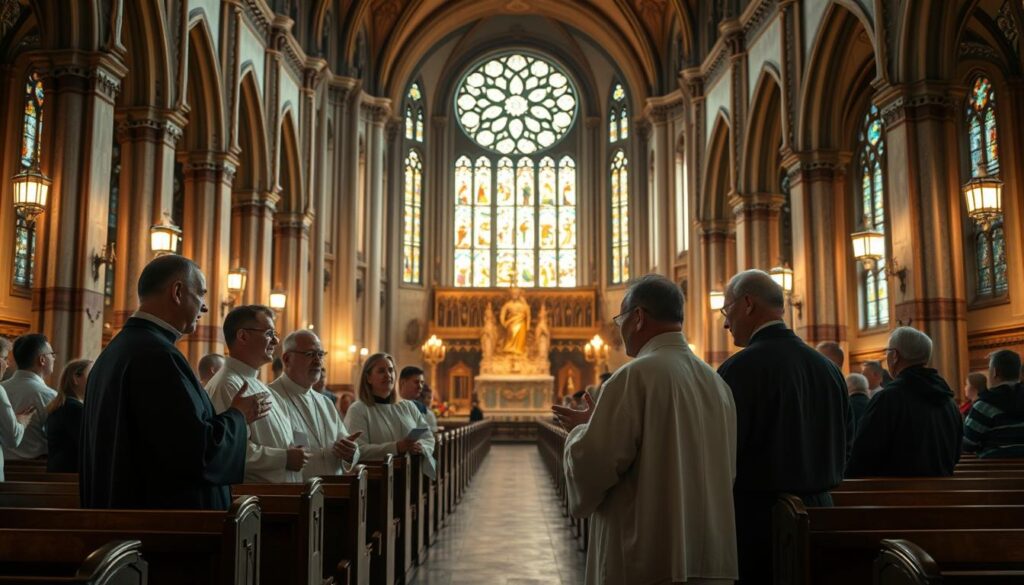
A grand Catholic cathedral stands tall, its ornate spires and stained glass windows casting a reverent glow. In the foreground, a group of priests and parishioners engage in a solemn discussion, their expressions thoughtful and their gestures measured. The lighting is soft and warm, creating an atmosphere of contemplation and spiritual reflection. In the background, the pews are empty, but the air is thick with the weight of the church's teachings on the controversial topic of contraception. The scene conveys the sense of a profound and complex debate unfolding within the hallowed walls of this sacred institution.

Foundational Encyclicals and Papal Declarations

Humanae Vitae defines contraceptives as any action interfering with conception during intimacy. The text states: “Each marital act must remain open to transmitting life.” This principle stems from the belief that humans should cooperate with natural processes rather than control them.

The Catechism of the Catholic Church supports this view, calling contraceptive use “intrinsically evil.” Church leaders emphasize this isn’t merely a rule but part of divine design. Recent popes have expanded these ideas through works like John Paul II’s teachings on marital unity.

Natural Law, Onan, and Moral Reasoning

Central to the church teaching is natural law philosophy. It teaches that intimacy serves two purposes: bonding partners and creating life. Blocking either purpose violates the act’s integrity.

“Deliberately frustrating conception mocks God’s plan for love,” explains a Vatican commentary on Humanae Vitae.

This table contrasts key concepts:

Aspect Contraception Natural Methods Church View
Purpose Prevent conception Track fertility Cooperate with nature
Moral Status Intrinsically wrong Morally acceptable Based on natural law
Example Barrier methods Cycle tracking Approved practice

While modern debates continue, the Catechism Catholic Church maintains these teachings as unchangeable. Pope Paul‘s vision still guides millions in balancing faith with family decisions.

Core Arguments in catholicism and birth control

Religious debates about family planning methods often return to foundational texts and ancient wisdom. Two key elements shape this ongoing discussion: scriptural analysis and centuries of theological interpretation.

Scriptural Interpretations and Biblical Narratives

The Genesis account of Onan remains pivotal in these discussions. When Judah ordered Onan to fulfill his duty to his brother’s wife, the man chose a forbidden method instead. His punishment – divine retribution – suggests more than simple disobedience.

Biblical Passage Required Action Penalty for Refusal
Deuteronomy 25:7-10 Levirate marriage Public shame
Genesis 38:8-10 Same requirement Death

This contrast highlights why scholars view Onan’s act as uniquely sinful. Early Christian thinkers like Augustine argued his form of contraception violated creation’s natural order.

Apostolic Tradition and Early Christian Thought

Church leaders consistently condemned intentional seed waste. Clement of Alexandria called it “defying nature’s purpose,” while Jerome linked it to moral corruption. Their views became bedrock for later teachings.

“What Onan did transformed a sacred act into selfishness,” wrote Martin Luther centuries later. “No wonder heaven’s wrath followed.”

These perspectives united Christian traditions until modern times. The law of fruitfulness, they believed, applied to all marital relationships – not just special cases involving a dead brother.

Modern Applications and Natural Family Planning Methods

Scientific advancements have transformed traditional approaches to managing fertility. Today’s natural family planning methods combine biological insights with digital tools, creating solutions that respect religious principles while matching modern lifestyles.

A serene, minimalist scene showcasing modern natural family planning methods. In the foreground, a woman's hands delicately hold a basal body temperature chart and ovulation test strips against a soft, natural backdrop. In the middle ground, a calendar and mobile app displaying fertility tracking data float ethereally. The background is filled with tranquil nature elements - lush greenery, soft lighting, and a sense of calm and wellness. The overall tone is one of empowerment, control, and a holistic approach to family planning.

Effectiveness and Scientific Developments

Modern methods track multiple fertility indicators for precision. Users monitor:

  • Basal body temperature patterns
  • Cervical mucus consistency changes
  • Urinary hormone levels via test strips

A 2007 Human Reproduction study found these techniques equally effective as the contraceptive pill when properly applied. Researchers noted a 99% success rate in avoiding pregnancy among committed users.

Designing Marriages Around Natural Family Approaches

Couples report unexpected benefits from shared responsibility. “Tracking cycles together improved our communication,” shares Emily, a mother of three from Ohio. “We’re partners in every decision now.”

University of Chicago data reveals divorce rates under 1% among married couples practicing these methods. This contrasts sharply with national averages exceeding 40%. The approach fosters:

  • Mutual understanding of reproductive health
  • Scheduled intimacy that builds anticipation
  • Joint accountability for family goals

“Switching from hormonal options helped me reconnect with my body and my spouse,” says Sarah, 34. “It’s about teamwork, not just biology.”

Legal and Ethical Considerations Surrounding Contraceptive Use

A serene, dimly lit room with natural lighting filtering through sheer curtains. In the foreground, a wooden table holds an open book, a pair of reading glasses, and a cup of tea, conveying a thoughtful, contemplative atmosphere. The middle ground features a large window overlooking a peaceful garden, where the silhouettes of trees sway gently. On the wall, a subtle artwork or tapestry adds a touch of elegance. The overall mood is one of quiet introspection, inviting the viewer to ponder the legal and ethical considerations surrounding contraceptive use.

Legal battles over contraceptive rights have reshaped healthcare policies and religious freedoms in the U.S. Landmark Supreme Court rulings established privacy protections while creating tensions with faith-based institutions. These decisions continue to influence how medical professionals balance patient needs with organizational values.

Key Court Cases and Privacy Rights

Three pivotal cases transformed access to family planning resources. Griswold v. Connecticut (1965) first recognized contraception as a private marital decision. Later rulings extended these rights to unmarried women and older minors, forming a legal safety net.

Case Year Impact
Griswold v. Connecticut 1965 Established marital privacy rights
Eisenstadt v. Baird 1972 Extended access to single adults
Carey v. Population Services 1977 Protected minor access (16+)

Healthcare Ethics in Faith-Based Settings

Catholic medical institutions follow strict guidelines prohibiting contraceptive prescriptions. Employees face tough choices when patients request these services. “I took an oath to help people,” shares a nurse from a Chicago hospital, “but our policies limit certain care options.”

The principle of double effect allows limited exceptions. Providers may prescribe hormone treatments for acne while acknowledging potential contraceptive side effects. However, direct use for pregnancy prevention remains forbidden.

“Our mission heals bodies and souls,” explains a Catholic hospital administrator. “We refer patients elsewhere for services conflicting with our beliefs.”

This approach helps institutions maintain religious integrity while acknowledging diverse community needs. Still, critics argue it creates barriers for women relying on faith-based healthcare networks.

Impact on Family Dynamics and Societal Norms

Family planning choices shape homes and communities in unexpected ways. While modern methods offer new freedoms, they’ve also reshaped expectations about relationships and responsibility. These changes carry deep implications for how we understand commitment and care.

The Role of Contraception in Marital Stability

Access to pregnancy prevention transformed how couples approach marriage. Some studies suggest separating sex from procreation altered perceptions of lifelong commitment. Partners now face complex decisions about timing children while maintaining emotional bonds.

Pope Paul VI’s 1968 warnings predicted strained relationships when intimacy loses its natural purpose. Data shows divorce rates tripled between 1960-1980 as contraceptive use became widespread. Yet many women report feeling empowered to choose when to start families.

Societal Consequences and Shifts in Family Structure

Broader cultural changes followed reproductive innovations. U.S. abortion rates climbed 128% between 1973-1990 despite contraceptive availability. Family sizes shrank as dual-career households became common, altering traditional roles for men and women alike.

These shifts raise questions about valuing life across generations. Smaller families often mean more resources per child, but fewer siblings to share caregiving duties later. Society continues grappling with balancing personal freedom and collective responsibility.

FAQ

What’s the Catholic Church’s stance on using contraceptives?

The Church opposes artificial methods, emphasizing natural law and the belief that sex must remain open to life. Documents like Humanae Vitae (1968) reinforce this teaching, promoting natural family planning as the only acceptable option for married couples.

How do Protestant views differ from Catholic teachings on contraception?

Many Protestant denominations, including the Anglican Church, shifted positions after the 1930 Lambeth Conference, allowing contraceptive use within marriage. This contrasts with Catholicism’s unwavering stance against artificial methods.

What biblical stories influence the Church’s opposition to birth control?

The story of Onan (Genesis 38:8–10) is often cited, where his refusal to fulfill a levirate marriage duty is interpreted as a condemnation of interfering with procreation. Early Church Fathers also linked this narrative to moral arguments against contraception.

Is natural family planning effective compared to other methods?

When practiced correctly, natural family planning (NFP) can be 97–99% effective. Modern tools like fertility trackers and hormone monitors have improved accuracy, though it requires commitment and education for couples.

How does Catholic teaching address contraception in healthcare settings?

Institutions adhering to Ethical and Religious Directives often prohibit prescribing contraceptives. This creates ethical dilemmas, such as in cases where maternal health risks clash with doctrinal policies.

Has contraception use affected societal views on marriage?

Studies suggest widespread contraceptive access correlates with shifts in family structure, including delayed parenthood and smaller families. Critics argue it challenges traditional marital stability, while supporters highlight autonomy for women.

What role does apostolic tradition play in this debate?

The Church Fathers, like Augustine, condemned practices seen as obstructing life. These teachings became codified through encyclicals and the Catechism of the Catholic Church, framing contraception as a violation of divine design.

Are there exceptions for contraceptive use in Catholic doctrine?

Exceptions are rare. The Church permits methods like NFP to space pregnancies for “serious reasons,” but strictly forbids abortion, sterilization, or barrier methods. Medical treatments with unintended contraceptive effects may be allowed under the principle of double effect.
Protestant vs. Catholic: Key Differences in Beliefs and Practices


Christianity’s two largest branches share a common foundation but diverge in meaningful ways. For over 500 years, theological debates about spiritual authority and how people connect with God have shaped these traditions. While both value Scripture, their approaches to interpreting it reveal deep contrasts.

The Reformation sparked lasting changes in how communities practice faith. Today, the catholic church maintains structured rituals and sacraments as central to worship. Other Christian groups prioritize personal faith experiences and direct engagement with biblical teachings.

Modern believers often wonder why these differences still matter. The answer lies in how each tradition answers life’s biggest questions: What defines salvation? Who guides spiritual truth? These ideas influence everything from daily prayers to major holidays.

Relationships between catholics protestants have warmed in recent decades. Yet core distinctions in beliefs about grace, leadership, and tradition remain vital. Understanding these nuances fosters respect and clarifies why diverse practices coexist within Christianity.

Key Takeaways

  • Spiritual authority differs significantly, with one group emphasizing church hierarchy and the other prioritizing individual interpretation
  • Views on salvation range from faith-based acceptance to a blend of faith and sacramental practices
  • Seven sacraments shape Catholic worship, while other traditions focus on two primary ordinances
  • Modern interactions show increased cooperation despite unresolved theological debates
  • Scripture and tradition hold varying levels of importance in shaping doctrines

Historical Roots and the Reformation Impact

A monk’s bold challenge in 1517 ignited a transformation across Europe’s spiritual landscape. Martin Luther’s 95 Theses questioned church practices like selling forgiveness for sins through indulgences. “Why does the pope’s wealth grow while faithful believers struggle?” he famously asked. This moment exposed deep tensions between spiritual ideals and institutional power.

Origins of the Protestant Movement

Luther initially sought to reform the Roman Catholic Church, not create new churches. His teachings emphasized grace through faith alone, clashing with traditions like paid indulgences funding St. Peter’s Basilica. Other reformers like Calvin expanded these ideas, creating distinct approaches to theology and worship.

Political leaders saw opportunities in challenging Rome’s authority. By 1529, protesting princes gave the movement its name – though divisions grew as fast as unity. The church faced its greatest crisis since the East-West Schism.

Evolution of Catholic Traditions

The Council of Trent (1545-63) launched the Counter-Reformation, reaffirming sacraments and apostolic tradition. Clergy training improved, and mystical experiences gained new emphasis. This period birthed enduring institutions like the Jesuit order.

Both traditions deepened their teaching on salvation during this era. While Protestants and Catholics shared Scripture, their interpretations of grace and authority kept them apart. Centuries later, dialogue continues – but core differences remain.

Scripture and Authority: Contrasting Perspectives

A grand cathedral with stained glass windows, its ornate architecture a testament to centuries of Catholic tradition. In the foreground, a holy book rests on an ornate lectern, representing the primacy of scripture. Yet, in the distance, a smaller church with a simple wooden cross stands apart, symbolizing the Protestant emphasis on sola scriptura. The lighting is soft and reverent, casting a warm glow that highlights the contrasting perspectives on the authority of scripture and tradition.

Christian communities worldwide have wrestled with a crucial question: where does ultimate spiritual truth reside? This debate shapes how believers approach sacred texts and community guidance.

Interpretation of the Bible

Many Christian groups champion personal Bible study. They argue Scripture alone (sola scriptura) provides all needed for salvation. As one reformer stated, “God’s word stands above human institutions.” This view empowers individuals but risks fragmented understandings.

The Roman Catholic approach differs. Their Catechism teaches: “Sacred Tradition and Scripture make up a single sacred deposit.” Church leaders preserve this through official teaching, believing the Holy Spirit guides their interpretations.

Aspect Protestant View Catholic View
Ultimate Authority Bible alone Bible + Tradition
Interpretation Individual + Community Magisterium (Pope/Bishops)
Role of Church Guides understanding Defines doctrine
Source of Doctrine Scripture first Equal partnership

Role of Tradition in Doctrinal Development

Catholics believe traditions dating to the apostles carry equal weight with biblical texts. Practices like Lent or Marian devotion grew from this perspective. The church maintains these help apply eternal truths to changing times.

Other Christian traditions honor history but prioritize Scripture. They might sing ancient hymns while rejecting later teachings not explicitly biblical. This tension impacts debates about justification and sacraments.

Both Scripture and Tradition must be accepted with equal devotion.”

These differences affect how communities handle modern issues. While disagreements persist, many find value in understanding both approaches to divine authority.

Sacramental Life and Worship Practices

Sacred rituals form the heartbeat of Christian worship. These practices shape how communities experience faith and connect with the divine. While shared roots exist, approaches to sacraments reveal profound differences in theology and daily spiritual life.

Comparing the Eucharist and Lord’s Supper

Catholics view the Eucharist as Christ’s real presence. The bread and wine transform into his body and blood through transubstantiation. This belief makes every Mass a participation in Jesus’ sacrifice. As the Roman Catholic Church teaches, “The Eucharist is the source and summit of Christian life.”

Other Christian groups see communion differently. The Lord’s Supper often serves as a symbolic remembrance. Elements remain bread and wine, pointing to Christ’s past work and future return. Open tables frequently welcome all baptized believers, contrasting with Catholic restrictions.

Variations in Sacraments and Rituals

Seven sacraments guide Catholic spiritual growth from birth to death. Baptism, confirmation, and marriage mark life’s milestones. Each ritual channels grace through physical signs like water or oil.

Most Protestant churches recognize two ordinances. Baptism and communion focus on personal faith rather than sacramental power. These elements become acts of obedience, not mystical transformations.

Practice Catholic Approach Protestant Approach
Sacraments 7 life-cycle rituals 2 symbolic acts
Communion Transubstantiation Memorial view
Participation Restricted to members Open to all believers

Importance of Holy Orders and Clerical Roles

Holy orders create a distinct priestly class in Catholicism. Ordained clergy alone can perform sacraments like the Eucharist. This teaching maintains unbroken succession from the apostles.

Many Christian groups see leadership differently. Pastors serve functional roles rather than holding sacramental power. This reflects the “priesthood of all believers” concept, emphasizing equal access to God.

Exploring Protestant Catholicism: Core Beliefs and Doctrines

At the heart of Christian theology lie fundamental questions about divine connection. How do people find forgiveness? What role do human actions play in spiritual growth? These inquiries shape distinct approaches to living out faith.

Understanding Justification and Grace

The Roman Catholic Church teaches that grace flows through sacraments and good works. Catholics believe ongoing transformation helps believers grow in holiness. This contrasts with faith alone views, where trust in Christ’s sacrifice brings instant justification.

Many Christian groups emphasize God’s unearned favor. They see grace as a free gift rather than something maintained through rituals. Both traditions agree on Christ’s centrality but differ in how salvation becomes personal.

Authority, Penance, and Spiritual Renewal

Confession practices highlight another contrast. The sacraments of reconciliation involve priestly mediation for addressing sins. Other traditions encourage direct repentance through prayer, reflecting different views on spiritual authority.

These approaches shape daily spiritual life. Whether through structured practices or personal reflection, both paths aim to heal broken relationships with the divine. Modern dialogues continue exploring these rich theological landscapes.

FAQ

How do views on salvation differ between these faith traditions?

Roman Catholics emphasize faith and works as part of salvation, guided by sacraments like penance. Many Protestant groups teach justification by faith alone, viewing grace as God’s unearned gift through Christ’s sacrifice.

Why is the Bible interpreted differently across these traditions?

The Roman Catholic Church teaches that Scripture must be understood through sacred tradition and the Magisterium’s authority. Protestants typically prioritize sola Scriptura (“Scripture alone”), encouraging personal interpretation within communities.

What distinguishes the Eucharist from the Lord’s Supper?

Catholics believe in transubstantiation—the bread and wine become Christ’s actual body and blood. Most Protestants view communion as symbolic or spiritual, commemorating Jesus’ sacrifice without literal transformation.

How do clerical roles vary between these groups?

The Roman Catholic Church reserves sacramental duties like confession and Eucharist to ordained priests. Protestant clergy often focus on preaching and pastoral care, with many denominations allowing marriage and broader lay participation.

Why do sacramental practices differ in number and meaning?

Catholics recognize seven sacraments, including confirmation and holy orders, as channels of grace. Protestants generally observe two (baptism and communion), viewing them as acts of obedience rather than means of salvation.

What role does Mary play in these traditions?

Catholics honor Mary as the “Mother of God” and seek her intercession, while Protestants typically avoid veneration, focusing solely on Christ’s role in redemption.

How did the Reformation reshape views on authority?

Reformers rejected papal supremacy, arguing that final authority rests in Scripture. The Council of Trent later reaffirmed Catholic teachings on tradition and the Pope’s role as Christ’s earthly representative.

Are confession practices the same in both traditions?

Catholics confess sins to a priest during penance, believing it reconciles them with God. Protestants usually confess directly to God, though some groups practice communal or pastoral confession for accountability.

Cremation in Catholicism: What You Need to Know


For centuries, the Catholic Church maintained a strict stance on burial practices. This changed in 1963 when new guidelines allowed families to choose cremation under specific conditions. The decision marked a historic shift in how the Church approaches end-of-life arrangements while upholding core beliefs about the sacredness of the human form.

Modern teachings emphasize that this practice must never contradict the hope of bodily resurrection. Current policies require ashes to be treated with the same reverence as a physical body. Many parishes now offer guidance to help loved ones honor these traditions during memorial services.

This guide explains how theological principles shape today’s practices. You’ll discover how faith traditions balance ancient doctrines with contemporary needs. We’ll also explore practical considerations for memorial planning that respect both spiritual values and personal preferences.

Key Takeaways

  • The Catholic Church permitted cremation in 1963 with specific guidelines
  • Ashes must be treated reverently, reflecting belief in bodily resurrection
  • Modern practices blend tradition with practical family needs
  • Memorial services should align with Church teachings
  • Consulting parish leaders ensures compliance with current policies

Historical Context and Evolution of Cremation Practices

Ancient burial customs reveal deep theological convictions. Early Christians faced persecution from Roman authorities who used fire to desecrate martyrs’ remains. This practice aimed to mock their belief in physical resurrection – a cornerstone of Christian faith.

Early Church Teachings and Traditions

The Church established burial traditions to counter pagan rituals. For over 1,000 years, earth burial served as both spiritual declaration and cultural identity. Leaders viewed intentional destruction of the body as incompatible with resurrection hope.

Shifts in Policy and Acceptance Over Centuries

By the mid-20th century, practical needs sparked change. Urban cemeteries faced space shortages, while families struggled with burial costs. The 1963 policy shift acknowledged these challenges without abandoning core teachings.

Church documents clarified: “The final disposition of ashes must always reflect respect for the human person.” This balanced approach honors tradition while addressing modern realities. Today, families work with parishes to plan memorials that uphold dignity and faith.

Understanding Church Teachings and Beliefs on Life, Death, and Resurrection

At the heart of Catholic doctrine lies the conviction that body and soul unite in divine purpose. This belief shapes how communities approach life’s final chapter while maintaining hope for what follows. Teachings emphasize that every person reflects God’s image, making both physical and spiritual elements worthy of reverence.

A luminous, ethereal figure emerges from a haze of shimmering light, its form seemingly transcendent and transfigured. Elegant, flowing robes cascade around a serene, beatific countenance, the face radiating a profound sense of peace and spiritual transcendence. Beams of heavenly illumination suffuse the scene, casting a warm, otherworldly glow that suggests the subject's connection to a higher realm. Subtle details, such as the transparent, glowing skin and the sense of weightlessness, convey the idea of a resurrected, glorified body, no longer bound by the constraints of earthly existence. The overall impression is one of profound spiritual transformation and the promise of new life beyond the grave.

Doctrine of the Resurrection Body

The Church’s belief in resurrection centers on God’s power to renew all creation. While the human body returns to dust, faith assures believers it will be gloriously transformed. A 2016 Vatican document states: “The final resurrection depends not on material preservation, but on divine will.”

This understanding removes anxiety about physical decay. Families find comfort knowing ashes represent a temporary state – not an eternal condition. The soul awaits reunion with its perfected form at the culmination of time.

The Role of Funeral Rites in Honoring the Deceased

Sacred funeral rites serve as spiritual anchors during grief. These practices affirm the dignity of life while acknowledging death’s reality. Through prayer and ritual, communities express collective hope in everlasting life.

Memorial services follow ancient patterns whether using a casket or urn. The Church prioritizes meaningful gestures – blessings, scripture readings, and communal support – over specific burial methods. Such rites bridge earthly farewells with heavenly promises.

Navigating cremation in catholicism Guidelines and Practical Considerations

When planning end-of-life arrangements, Catholic families face important decisions that balance faith traditions with modern realities. The Church provides clear direction to ensure dignity for the deceased while respecting spiritual values.

Proper Handling and Respect for Cremated Remains

The Church insists ashes receive the same reverence as a deceased body. This means placing them in consecrated ground like a Catholic cemetery or church-approved columbarium. A 2023 update allows keeping a symbolic portion in a meaningful location, provided most remains rest in sacred space.

Scattering or dividing ashes remains prohibited. These rules honor the belief that human bodies ultimately await resurrection. Families should work with priests to select appropriate containers and final resting places.

Cremation Versus Traditional Burial Practices

Both options allow full funeral Mass ceremonies. Some families prefer having the body present during services before cremation occurs. Others find memorials with ashes simpler to coordinate.

Consider these key differences:

  • Cost: Cremation often costs 30-50% less than casket burials
  • Flexibility: Allows more time for distant relatives to attend services
  • Tradition: Earth burial maintains centuries-old customs

Regardless of choice, the Church emphasizes that sacred rites and community support remain central to honoring loved ones.

Conclusion

Balancing tradition with modern needs, the Catholic Church provides compassionate guidance for end-of-life decisions. Its evolving approach reflects how sacred beliefs can meet contemporary realities without losing spiritual depth. Families now have meaningful choices that honor both faith and personal circumstances.

Whether selecting traditional burial or approved alternatives, the focus remains on dignity and hope. Church teachings emphasize treating the human body – in any form – with profound respect. This ensures memorial practices align with eternal truths about life and resurrection.

Practical benefits like cost savings and flexible timing help families during challenging times. Clergy guidance ensures decisions uphold spiritual values while addressing logistical needs. Through this balance, the Church supports loved ones in creating tributes that celebrate hope and lasting connections.

Ultimately, these guidelines showcase how ancient wisdom meets modern compassion. They allow families to navigate death with clarity, knowing their choices reflect both beliefs and love for those they cherish.

FAQ

Does the Catholic Church allow keeping ashes at home?

The Church strongly encourages placing cremated remains in a sacred place, like a Catholic cemetery. Keeping them at home is discouraged to ensure respect for the deceased and uphold the belief in the resurrection body. Families are asked to avoid dividing or scattering ashes.

Why did the Church historically oppose this practice?

Early teachings emphasized burial as a way to honor the body’s role in resurrection. For centuries, the Church viewed traditional burial as a reflection of Christ’s burial and resurrection. This shifted in 1963 when cremation became permitted under specific guidelines.

How does Catholic teaching connect funeral rites to faith?

Funeral Masses and rites honor the dignity of the deceased while affirming hope in eternal life. These practices remind communities of the soul’s journey and the sacredness of the human body, even after death.

Can a funeral Mass be held if someone chooses cremation?

Yes, but the body should be present for the Mass whenever possible. The Church prefers cremation occurs after the funeral service. If ashes are present instead, they must be treated with the same reverence as a body.

What’s the difference between cremation and burial in Catholic practice?

Both are allowed, but burial has long been the traditional choice. Cremation is permitted as long as families avoid actions that disrespect remains, like scattering or keeping them at home. The focus remains on honoring the person’s dignity and faith in resurrection.

Are there rules about urns or memorials for ashes?

Urns should be durable and marked with the person’s name. Memorials in a Catholic cemetery are preferred to ensure ashes rest in a consecrated space. This aligns with teachings about preserving the body’s sanctity.

Exploring the Fascinating World of Spanish Catholicism


Step into a land where centuries-old rituals blend with modern lifestyles in unexpected ways. Recent surveys reveal a striking shift: while over half the population identifies with religious traditions, only 16.8% actively practice their beliefs. Among younger generations, this number drops to just 10%, reshaping how communities engage with their cultural heritage.

This journey through the country’s spiritual landscape uncovers a paradox. Many celebrate holidays like Semana Santa or honor family milestones through time-honored customs, yet lead largely secular lives day-to-day. The decline in formal affiliation doesn’t erase the deep-rooted influence of faith—it simply transforms how people connect to it.

From Franco-era policies to today’s democratic society, the role of organized religion has evolved dramatically. Schools no longer emphasize doctrine, and government decisions reflect diverse viewpoints. Still, cathedrals draw crowds during festivals, and marriage ceremonies often include traditional elements—proof that cultural identity remains intertwined with historical practices.

Key Takeaways

  • 52% of residents identify with religious heritage, but under 17% actively participate
  • Young adults show the sharpest decline in practice, with 50% non-practicing
  • Cultural celebrations often outpace personal devotion in daily life
  • Post-Franco reforms reshaped the relationship between state and faith
  • Modern traditions blend historical rituals with contemporary values

Historical and Cultural Foundations

The roots of this nation’s religious identity stretch back over centuries. A pivotal moment arrived in 1492 when monarchs Isabel and Ferdinand unified territories through marriage and military campaigns. Their conquest of Granada marked a turning point, cementing church authority as central to national unity.

The Influence of Catholic Monarchs

Royal decrees reshaped daily life dramatically. Non-Catholics faced exile or conversion, upending communities that had thrived for generations. This policy created economic chaos—skilled merchants suddenly risked losing livelihoods unless they adopted new beliefs.

The Legacy of the Spanish Inquisition

Established to enforce religious conformity, this institution scrutinized converts for decades. Many families hid ancestral practices while publicly following catholic religion traditions. Today, surnames reveal this complex history, linking modern residents to medieval Jewish or Muslim ancestors.

These events forged lasting connections between culture and faith. Annual festivals still echo medieval rituals, blending ancient symbols with contemporary values. While religious affiliation declines, these shared experiences remain a vibrant part of collective identity.

FAQ

How did the Spanish Inquisition shape the country’s religious identity?

The Spanish Inquisition, active from 1478 to 1834, enforced strict Catholic orthodoxy. It unified the region under one faith, suppressing other beliefs. This period left a lasting mark on traditions, laws, and cultural values, emphasizing conformity to Catholic practices.

What role did Catholic monarchs like Ferdinand and Isabella play in Spain’s history?

Ferdinand II of Aragon and Isabella I of Castile married in 1469, uniting Spain. They sponsored Christopher Columbus’s voyages and established the Inquisition. Their rule solidified the Church’s power, making it central to governance and daily life for centuries.

Are religious holidays still widely celebrated in modern Spain?

Yes! Events like Semana Santa (Holy Week) and La Tomatina blend faith with local culture. Cities like Seville and Valencia host vibrant processions and festivals. While younger generations may prioritize tradition over doctrine, these celebrations remain deeply rooted in communities.

How does Spain’s Catholic heritage influence its art and architecture?

From Gaudí’s Basilica of the Sagrada Familia in Barcelona to El Greco’s paintings, Catholic themes dominate. Cathedrals and religious art serve as historical landmarks, attracting millions of visitors yearly and reflecting the faith’s enduring cultural impact.

Is Spain still considered a predominantly Catholic country today?

While over 60% of the population identifies as Catholic, regular church attendance has declined. Many younger people view the faith as part of their cultural identity rather than a guiding spiritual force. However, rites like baptisms and weddings often still follow Church traditions.

Converted to Catholicism: My Spiritual Journey


Choosing a faith isn’t like picking a new hobby. For me, it meant wrestling with questions bigger than myself. This story isn’t just about joining a church—it’s about how a nine-month OCIA program reshaped my understanding of community, purpose, and grace.

While many assume religious shifts happen overnight, Catholic conversion demands patience. Unlike some Protestant traditions, where decisions can feel immediate, the Church requires deep study and reflection. Think of it as a marathon, not a sprint—and that’s exactly what makes it transformative.

You might wonder why anyone would commit to such a rigorous path today. Yet figures like JD Vance and Tammy Peterson show this journey isn’t just for lifelong believers. Even as Catholic numbers dip nationwide, those who complete OCIA stick around 84% of the time. Why? Because true change takes roots slowly.

This isn’t a sugarcoated tale. I’ll share the doubts, the late-night Google searches about sacraments, and the moments that made everything click. Whether you’re curious about faith or just love a good life overhaul, there’s something here for you.

Key Takeaways

  • Catholic conversion involves a structured 9-month OCIA program, unlike quicker Protestant processes
  • 84% of OCIA participants remain active Catholics long-term despite broader membership declines
  • High-profile conversions reflect growing interest in traditional faith structures
  • The process emphasizes education and personal reflection over emotional decisions
  • Modern converts often balance ancient traditions with contemporary questions

Discovering My Spiritual Roots

The foundation of my spiritual journey was laid long before I could articulate what faith meant. Like many raised in Protestant homes, my earliest lessons blended heartfelt devotion with unspoken boundaries. Our family Bible sat prominently on the coffee table, its pages worn from years of nightly readings.

Childhood Faith Formation and Early Experiences

Sunday school felt like a second home. I memorized Psalms alongside multiplication tables and learned to distrust anything labeled “Catholic.” My father once described the Catholic Church as “the Great Idolater” during a heated dinner discussion. Yet those same years taught me to love Scripture and value community prayer.

Our small-town church reinforced these views. Coloring books depicted saints as suspicious figures, while sermons warned against “worshipping bread.” Still, the vibrant hymns and potluck gatherings nurtured genuine joy in Christian fellowship.

Influences from Family and Community

Three forces shaped my early worldview:

  • My grandmother’s lap, where she read Bible stories with theatrical voices
  • Youth group leaders who equated Catholicism with paganism
  • Neighbors from different denominations who somehow all claimed “truth”

This environment created quiet tensions. I adored my family’s passion for Jesus but sensed gaps in their critiques. Why did Catholics cross themselves? What really happened during Mass? These unanswered questions later became doorways.

Questioning Beliefs and Seeking Truth

My spiritual foundation began trembling during a college statistics class. As the professor charted global Christian denominations, I froze. If 45,000 Protestant groups existed, how could truth belong to just one?

A serene, dimly lit study filled with the warm glow of a single, old-fashioned lamp. An open book rests on a wooden desk, casting a soft light on the face of a person deep in contemplation, their expression a mix of curiosity and uncertainty. The background is hazy, with hints of bookshelves and a window revealing a starry night sky, symbolizing the search for truth and the questioning of beliefs. The scene is captured with a shallow depth of field, keeping the focus on the central figure's pensive gaze, inviting the viewer to join in their journey of spiritual discovery.

Confronting Prejudices and Early Doubts

Walking into St. Patrick’s Cathedral months later shattered my assumptions. Sunlight streamed through rose windows as tourists whispered. If this church was “wrong,” why did it feel holier than any sermon I’d heard?

Three discoveries upended my worldview:

  • Reading St. John of the Cross’ mystical writings revealed spiritual depth I’d never encountered
  • Historical records showed early Christians practicing rituals my childhood church condemned
  • Meeting Catholic people who loved Scripture as fiercely as my family

Late-night debates with friends exposed contradictions. “If tradition matters,” one asked, “why dismiss 2,000 years of time-tested beliefs?” My stomach churned—they weren’t attacking faith, but my inherited biases.

Each question felt like disloyalty. Yet ignoring them meant clinging to fear over facts. That tension birthed something unexpected: the courage to seek answers beyond familiar walls.

Encountering the Realities of OCIA

Joining the Catholic Church isn’t like signing up for a gym membership. The OCIA program unfolds over nine months minimum—a timeline that often stretches into years based on personal readiness. My first class felt like drinking from a firehose: sacraments, saints, and centuries of tradition all demanding equal attention.

Navigating the Process of Conversion

The structured classes revealed why Catholic conversion differs from Protestant models. While some churches offer instant baptism, Rome requires wrestling with complex teachings. Our catechist put it bluntly: “This isn’t a year-long Bible study. We’re forming souls, not filling notebooks.”

Three non-negotiable requirements emerged:

  • Annulments for previous marriages
  • Commitment to raise children Catholic
  • Full acceptance of doctrines like transubstantiation

Delays, Discernment, and Spiritual Trials

My journey hit a wall during Easter 2022. Though ready for confirmation, my annulment paperwork stalled. The pastor’s words still sting: “God’s time isn’t Amazon Prime.” That extra year of waiting taught me more about humility than any class.

Friends dropped out over Mary’s role or birth control rules. Others quit when required to break cohabitation habits. The process doesn’t bend—it asks you to change. Yet this rigor explains why those finishing OCIA tend to stay. Becoming Catholic means shedding old skin, not just acquiring new rituals.

Converted to Catholicism: Embracing a New Faith

The final step toward embracing a new spiritual identity arrives like sunrise—inevitable yet astonishing. After years of study and prayer, my journey reached its tipping point during a quiet Thursday Mass. Kneeling in the same pew I’d occupied for months, something shifted. The scent of incense mixed with whispered Latin prayers as light filtered through stained glass.

A serene Catholic church interior, dimly lit by soft, warm lighting that casts a reverent glow. In the foreground, a person kneels in prayer, their hands clasped, head bowed in solemn contemplation. The middle ground features wooden pews, ornate stained-glass windows, and intricate architectural details that evoke a sense of history and tradition. The background depicts an altar adorned with religious symbols, candles flickering, and a sense of tranquility and spiritual awakening pervading the space. The overall atmosphere is one of introspection, devotion, and the embrace of a new faith.

The Critical Moment of Decision

Surrender came unexpectedly. One moment I was mentally rehearsing arguments about papal authority. The next, a wave of clarity washed over me. My catechist’s words echoed: “Let grace carry what effort cannot.” Tears blurred the altar as years of resistance dissolved.

Three truths anchored my choice:

Declaring “I want to become Catholic” felt less like a leap than coming home. Previous worries about family reactions paled against this conviction. Years of OCIA had sanded down doubts, leaving bedrock certainty.

That decisive Mass became my bridge between worlds. Protestant hymns still comfort, but now they harmonize with ancient liturgy. The way forward finally made sense—not as rejection, but fulfillment.

Exploring Catholic Traditions and Community

I never expected to find chicken feathers in a Guatemalan chapel during Mass. This moment crystallized Catholicism’s unique blend of universal faith and cultural expression. The Catholic Church spans the world, yet each community stitches its traditions into the fabric of worship.

Meeting Diverse Catholic Cultures

My first parish picnic revealed unexpected divisions. A Sicilian grandmother insisted her statue of St. Lucy held special powers, while Polish members debated Vatican II reforms. Three discoveries reshaped my understanding:

  • Irish Catholic parishes prioritizing social justice over Latin Mass
  • Mexican American churches blending mariachi with Gregorian chant
  • Filipino communities incorporating ancestral healing rituals into prayer

At a Guatemalan mission, indigenous families left wax figurines near the altar—a practice older than Columbus. The priest smiled: “Faith grows where it’s planted.”

Finding a Spiritual Tribe

Without cultural roots, I felt like a tourist in others’ traditions. Then I discovered a young adult group mixing ancient liturgy with modern questions. Our shared worldview bridged ethnic divides—we were all becoming Catholic anew.

Sunday potlucks became my home. A Lebanese deacon’s baklava sat beside a Texan’s brisket, united by Eucharistic joy. This messy, beautiful family finally helped me belong.

Overcoming Challenges and Internal Conflict

Adopting a new faith feels like learning a foreign language in real-time. Every teaching clashes with muscle memory from past beliefs. My father’s voice echoed during Mass: “Why pray to saints when Jesus is enough?”

A serene Catholic church interior, the stained glass windows casting warm hues across the pews. In the foreground, a contemplative figure kneels, wrestling with internal conflict. Rays of light from above illuminate their pensive expression, as they grapple with doctrinal challenges that test their newfound faith. The middle ground shows shadowy, ambiguous figures - representing the weight of tradition and uncertainty. The background recedes into a hazy, dreamlike quality, conveying the mystical, ethereal nature of the spiritual journey. A sense of reverence and introspection permeates the scene, captured through soft, muted tones and a sense of chiaroscuro lighting.

Struggles with Church Doctrines and Personal Doubts

Mary’s role became my first hurdle. Veneration felt like betrayal until I read early church writings about her significance. Then came tougher questions—natural family planning rules collided with modern views on marriage.

Three teachings tested me most:

  • The Eucharist’s literal interpretation
  • Same-sex union restrictions
  • Papal authority over personal conscience

Losing friends hurt more than theological debates. One snapped: “You’re joining the oppressors.” Media attacks painted converts as backward—but my RCIA stories revealed nuanced believers.

Late-night journaling helped bridge gaps. I wrote letters to Protestant mentors, explaining why ancient practices felt liberating. Slowly, fear of “wrongness” faded. As my catechist advised: “Doubt isn’t failure—it’s fuel.”

Now, when doctrines chafe, I lean into prayer instead of panic. The church’s stability anchors me, even when my mind races. Surrender, I’ve learned, isn’t about having all answers—it’s trusting the journey.

Reflecting on Lessons and Lasting Insights

Time reveals what quick decisions often miss. The slow burn of spiritual formation taught me truths no instant conversion could provide. Patience became more than virtue—it was survival gear for the soul.

Wisdom Gained Through Trials and Transformation

Three discoveries reshaped my understanding of faith’s timeline:

  • Early Christians wrote about the Eucharist as literal flesh—not symbols—for 1,000 years
  • Grace works with human nature, not against it
  • Historical continuity matters more than modern convenience

My experience with annulment delays felt frustrating then. Now I see how waiting purified my intentions. Spiritual growth thrives in seasons of uncertainty.

Protestant Assumption Catholic Reality Historical Proof
Symbolic communion Real Presence Ignatius of Antioch (110 AD)
Sola Scriptura Apostolic Tradition Irenaeus’ writings (180 AD)
Faith vs. Works Grace perfects nature Augustine’s sermons

This journey taught me to value roots. Like an oak needing years to anchor deeply, faith matures through tested traditions. What once seemed rigid now feels reassuringly stable.

The greatest lesson? True home isn’t found in comfort but in shared struggle. As the author of this story, I’ve learned to embrace questions as companions, not enemies. Faith grows brightest when we stop running from the dark.

Conclusion

True transformation unfolds in seasons, not days. The OCIA program’s 84% retention rate proves what time teaches: lasting change grows through patient roots. Across years of study and prayer, I discovered faith isn’t a checkbox—it’s a lifelong conversation.

Those nine months of classes were just the start. Like many converts, I’ve found spiritual growth accelerates after confirmation. The Church’s global tapestry—from bustling urban churches to remote mission chapels—shows how ancient truth adapts to every culture.

To anyone considering this way: your questions matter more than quick answers. My friends who doubted now see how this journey deepened my life’s purpose. Our stories, woven together, strengthen the Church’s heartbeat worldwide.

Gratitude remains my compass—for mentors who challenged me, moments that broke me, and grace that rebuilt me stronger. Here’s to the messy, glorious work of becoming.

FAQ

How did family influence your decision to join the Catholic Church?

While my family wasn’t Catholic, their emphasis on service and community values shaped my understanding of faith. Their support during my spiritual exploration gave me courage to pursue deeper truths, even when it led me down an unexpected path.

What challenges did you face during the OCIA process?

The OCIA journey involved unexpected delays, like classes being postponed due to limited resources. These pauses tested my patience but also deepened my discernment, helping me reflect on whether this faith truly aligned with my heart’s calling.

How did New York City’s diversity shape your Catholic experience?

Attending Mass in neighborhoods like Harlem and the Bronx exposed me to vibrant cultural expressions of Catholicism. From gospel choirs to multilingual prayers, the city’s eclectic communities showed me how universal the Church truly is.

Were there doctrines you struggled to accept initially?

Yes—teachings on topics like confession and Marian devotion felt unfamiliar at first. Open dialogue with mentors and studying Church history helped me grasp their spiritual significance over time, turning uncertainty into reverence.

How did you find your “spiritual tribe” after becoming Catholic?

Volunteering at parish events and joining small faith groups connected me with others who shared my hunger for authenticity. These relationships provided encouragement during moments of doubt and celebrated milestones in my journey.

What advice would you give someone considering this path?

Embrace curiosity and ask hard questions—both to others and yourself. The process isn’t about having all the answers but trusting that grace meets you where you are. Find a parish that feels like home, and let community guide you forward.

Catholicism’s Relationship with the Pope Explained


At the heart of a global religious community stands a figure recognized by over 1.3 billion followers. This leader serves as both spiritual guide and organizational anchor, bridging ancient traditions with modern challenges. The role traces its roots to Saint Peter, whom believers view as the first appointed successor by Jesus.

Today’s church governance centers on the bishop of Rome, who holds authority through apostolic succession. This concept ensures continuity from Peter’s ministry, symbolized by the “Keys of Heaven” described in scripture. Elected in 2025, Leo XIV now guides the institution through 21st-century complexities while preserving core teachings.

Understanding this position requires exploring its dual nature: part ancient tradition, part living administration. From shaping moral frameworks to addressing global crises, the office adapts without losing its foundational identity. We’ll unpack how historical events reshaped its influence and why it remains pivotal in faith communities worldwide.

Key Takeaways

  • The bishop of Rome leads as both spiritual figurehead and organizational leader
  • Apostolic succession links modern leadership to Saint Peter’s original ministry
  • Papal elections follow time-honored traditions updated for contemporary needs
  • Church governance balances ancient doctrine with modern societal challenges
  • Global influence stems from both religious authority and diplomatic engagement

Historical Foundations of the Papacy

Long before grand cathedrals, humble gatherings in Roman homes planted seeds for what would become a global religious office. Early believers met in secret, sharing teachings passed down from Jesus’ closest followers. This network of communities would shape leadership patterns for centuries.

Early Christian Beginnings

First-century followers organized under presbyter-bishops who led local groups. Rome gained importance through its connection to martyred apostles. By 180 AD, Irenaeus noted: “Every church must agree with this Church because of its superior origin”.

Archaeologists found a 2nd-century burial site beneath St. Peter’s Basilica. This supports traditions about Peter’s final resting place. Emperor Constantine later built a shrine there, cementing Rome’s spiritual significance.

Event Century Impact
Peter’s Martyrdom 1st Established Rome’s apostolic link
Irenaeus’ Writings 2nd Defined Roman Church authority
Basilica Construction 4th Solidified physical legacy

Apostolic Succession and the Role of St. Peter

The idea of direct succession from Peter gave Roman bishops special status. While historians debate early records, the faith community embraced this continuity. Leaders used this spiritual lineage to unify growing congregations.

By the 3rd century, clear bishop lists appeared. These documents connected each successor to the original apostles. This system helped maintain doctrinal consistency across regions.

St. Peter’s Legacy in Shaping the Church

A fisherman turned foundational leader, Peter’s journey reveals how personal transformation shapes institutional identity. His story begins with a radical call to discipleship, evolving into responsibilities that would define leadership for generations.

A solemn and reverent scene of the leadership of St. Peter's Church, bathed in warm golden light filtering through stained glass windows. In the foreground, a group of respected clergy members gather, their faces etched with wisdom and authority. Behind them, the grand altar stands tall, adorned with intricate carvings and religious symbols that command respect. In the middle ground, rows of ornate wooden pews stretch out, creating a sense of grand, sacred space. The background is filled with the architectural splendor of the church, its towering columns and vaulted ceilings casting dramatic shadows that convey the weight of tradition and the gravitas of the institution. An atmosphere of contemplation and devotion permeates the scene, reflecting the enduring legacy of St. Peter's influence on the Catholic Church.

The Significance of Peter’s Leadership

Three biblical moments anchor Peter’s unique role. In Matthew 16:18, Jesus renames Simon as “Peter” (meaning “rock”), declaring: “Upon this rock I will build my church.” This passage forms the bedrock of leadership succession claims.

The symbolic keys to the kingdom in Matthew 16:19 represent authority to guide believers. Early Christians saw this as Peter’s mandate to unify communities through decisive spiritual governance. Later leaders inherited this responsibility as successors of St. Peter.

John’s Gospel adds depth with Jesus’ post-resurrection command: “Feed my sheep.” This charge established pastoral care as central to leadership. Modern leaders mirror this through teaching, crisis response, and global outreach.

Peter’s blend of boldness and humility created a leadership template. He walked on water yet denied knowing Jesus. He received divine revelations but needed correction from Paul. This balance of human frailty and spiritual authority remains vital for those guiding the church today.

Exploring the Role of catholicism pope in the Church

Guiding a global faith community requires balancing ancient traditions with modern responsibilities. The Bishop of Rome serves as both spiritual compass and organizational anchor, addressing timeless questions while navigating 21st-century challenges. This dual mission shapes every aspect of church governance and global engagement.

Spiritual Leadership and Servanthood

The Church’s central figure holds multiple titles reflecting varied responsibilities. As “Servant of the Servants of God,” the leader emphasizes humility while exercising authority over matters of faith and morals. This unique combination ensures doctrinal unity across 1.3 billion followers through teaching documents like encyclicals and apostolic letters.

Modern spiritual leadership extends beyond traditional boundaries. Recent leaders have addressed climate change, interfaith cooperation, and social inequality while maintaining core teachings. Their guidance helps believers navigate complex moral landscapes through the Magisterium – the Church’s official teaching authority.

Traditional Role Modern Adaptation
Doctrinal preservation Environmental encyclicals
Sacramental oversight Digital outreach initiatives
Ecclesiastical governance Global humanitarian advocacy

World leaders frequently consult the Holy See on peacebuilding and human rights issues. This advisory role demonstrates how spiritual leadership influences international diplomacy while staying rooted in serving humanity’s needs.

Development Through Early Christianity

As dawn broke on Christianity’s second century, Rome’s church began shaping faith communities far beyond its city walls. Letters like the one sent to Corinth in 96 CE showed leaders stepping into disputes, setting patterns for centralized guidance. This growing influence would redefine how believers navigated spiritual and practical challenges.

Growth of the Roman Church

By 195 CE, Bishop Victor I made a bold move. He cut ties with Eastern churches celebrating Easter on Nisan 14, insisting on Sunday observance. This marked Rome’s first major enforcement of unified practices. Such decisions cemented its role as an arbiter for the wider church.

Influence of Doctrinal Debates

The Arian controversy rocked the 4th-century church. When some leaders denied Christ’s divinity, bishops gathered at Nicaea in 325 CE. Their creed affirmed core teachings while acknowledging Rome’s special position. Emperor Constantine’s support after 313 CE boosted the church’s public role, blending spiritual authority with political weight.

These early struggles built frameworks still used today. From settling calendar disputes to defining orthodox beliefs, Rome’s leaders shaped Christianity’s course. Their actions forged systems that balanced local diversity with centralized doctrine – a legacy enduring through time.

Papacy in Late Antiquity and the Middle Ages

When Rome’s political structures crumbled, spiritual leaders stepped into new roles. The collapse of imperial governance in 476 CE left Western Europe searching for stability. Religious figures gradually became crucial anchors, blending spiritual guidance with practical leadership.

A grand cathedral interior, bathed in warm, golden light filtering through stained glass windows. In the ornate central altar, a robed papal figure stands, hands raised in benediction, radiating an aura of divine authority. Surrounding him, rows of elaborately dressed clergy kneel in reverence, their faces filled with solemn devotion. Intricate tapestries and frescoes adorn the walls, depicting scenes of religious significance. The architecture is a harmonious blend of Romanesque and Gothic styles, conveying a sense of timeless majesty and the weight of centuries of tradition. The overall atmosphere is one of reverence, power, and the unwavering influence of the papal office during the late antique and medieval periods.

Transitions from Imperial Power to Religious Authority

Pope Gregory I (540-604) transformed church operations during chaotic times. His reforms standardized worship practices and organized food distribution during famines. This practical approach earned him the title “Gregory the Great” – a model for balancing faith and governance.

The year 800 marked a seismic shift. By crowning Charlemagne as emperor, Leo III established that royal authority required church approval. This partnership between throne and altar shaped European politics for centuries.

Event Century Impact
Gregory’s Reforms 6th Strengthened social services
Charlemagne’s Coronation 9th Linked political power to church blessing
Saeculum Obscurum 10th Exposed political vulnerabilities

Dark times followed from 867-1049. Known as the “Age of Shadows,” this period saw multiple leaders deposed or harmed. Yet the office endured, proving its lasting importance in medieval society.

Through these challenges, religious leaders maintained their role as moral guides. Their ability to adapt ensured continued influence across a changing world.

Papal Election: The Conclave Process

When a spiritual leader’s seat becomes vacant, cardinals embark on a sacred electoral journey steeped in tradition. The conclave—derived from Latin meaning “with key”—requires participants to isolate themselves within Vatican walls until consensus emerges. This centuries-old system blends prayerful reflection with structured decision-making.

A dimly lit room, the air thick with anticipation. Cardinals in scarlet robes gather in the Sistine Chapel, their faces cast in shadow as they prepare to elect the next Pope. The ornate altar stands at the center, a symbol of the Church's ancient traditions. Candlelight flickers, casting a warm glow on the frescoed walls, as the cardinals cast their ballots in a solemn, ritualistic process. The tension is palpable, the outcome uncertain, as the world waits with bated breath for the white smoke to rise, signaling the selection of a new spiritual leader.

Traditions and Rituals in the Conclave

Cardinals under age 80 enter the Sistine Chapel swearing secrecy. Each morning begins with Mass, followed by four voting sessions daily. Ballots bear the phrase “Eligo in Summum Pontificem” (“I elect as Supreme Pontiff”), folded twice before casting.

After each round, ballots burn in a stove with chemicals producing black or white smoke. Black signals no decision; white announces success. The famous chimney becomes the world’s most-watched signal during these events.

The Two-Thirds Majority Requirement

Electors need a two-thirds majority to confirm leadership. This threshold prevents factional splits by requiring broad agreement. If deadlocked after 34 votes, rules permit election by absolute majority—a change made in 2007.

Once chosen, the new leader selects a name reflecting spiritual priorities. The declaration “Habemus Papam!” then introduces him to crowds in St. Peter’s Square, completing one of history’s most consequential transitions of authority.

Symbols, Titles, and Authority of the Pope

Behind every name given to the Vatican’s highest authority lies a story of faith, tradition, and governance. The Holy See’s official directory lists multiple titles that evolved over centuries, each reflecting distinct responsibilities. These designations aren’t just ceremonial—they shape how global communities understand spiritual leadership.

Exploring Ecclesiastical Titles

The title “Bishop of Rome” remains foundational, connecting modern leaders to the city where early apostles witnessed their faith. This designation anchors the Bishop of Rome as both local pastor and global figure. Another key name, “Vicar of Jesus Christ,” underscores the belief in divinely guided stewardship across nations.

Historical records show titles like “Servant of the Servants of God” emerged to emphasize humility amid growing influence. While “pope” is commonly used, it’s formally a less solemn style. The office balances local duties with worldwide guidance—mirrored in titles like “Primate of Italy.” This layered system, rooted in the Bishop of Rome’s ancient role, helps maintain continuity while addressing modern challenges.

FAQ

Why is St. Peter considered the first leader of the Church?

According to tradition, Jesus entrusted Peter with building His Church (Matthew 16:18). Early Christian communities recognized his leadership, and bishops of Rome later traced their authority to this apostolic succession.

How does the conclave process work?

Cardinals gather in Vatican City’s Sistine Chapel to vote in secrecy. A two-thirds majority is required to elect a new leader. Rituals like burning ballots symbolize transparency and the Holy Spirit’s guidance.

What authority does the bishop of Rome hold?

The office teaches on faith and morals, as seen in documents like Pope Leo XIII’s social encyclicals. While respected globally, his role emphasizes spiritual service, not political power.

How did doctrinal debates shape the Church’s growth?

Early councils, like Nicaea, addressed disputes over Christ’s divinity. These debates solidified core teachings, uniting believers under shared doctrines despite cultural shifts.

What symbols represent the Holy See’s leadership?

The Keys of St. Peter, papal tiara, and Fisherman’s Ring symbolize spiritual authority. Titles like “Pontiff” reflect bridging roles between God and humanity.

How did the Second Vatican Council modernize Church practices?

It promoted vernacular Masses and interfaith dialogue, balancing tradition with contemporary needs. Pope John Paul II later expanded its vision through global outreach.

Why is Vatican City significant?

As the world’s smallest independent state, it houses St. Peter’s Basilica and serves as the Holy See’s administrative center. Its sovereignty ensures spiritual independence.