Recent Posts

Catholic 10 Commandments: Spanish Translation


Welcome to a guide designed to strengthen spiritual connections across languages! Whether you’re deepening your faith, teaching religious principles, or learning Spanish, this dual-language resource bridges understanding for diverse communities. With over 40 million Spanish speakers in the U.S., grasping these core teachings in both English and Spanish fosters unity and enriches worship experiences.

This page offers more than direct translations—it’s a toolkit for growth. Each commandment is paired with pronunciation guidance and cultural insights, helping learners speak with confidence. Educators will find it invaluable for bilingual classrooms, while families can use it to nurture shared spiritual values.

Why focus on language diversity? Studies show that learning faith-based principles in multiple languages strengthens retention and emotional resonance. For Spanish learners, practicing through sacred texts adds depth to language skills. For native speakers, it reinforces traditions in a relatable format.

Key Takeaways

  • Bilingual resources help bridge language gaps in faith education
  • Accurate translations support religious and language learning goals
  • Pronunciation tools enhance confidence in speaking sacred texts
  • Cultural context enriches understanding of spiritual teachings
  • Accessible formats cater to educators, students, and worshippers alike

Understanding the Catholic 10 Commandments in Spanish

Language shapes how we perceive divine instructions, especially in bilingual faith communities. When sacred texts move between languages, translators balance literal meaning with cultural resonance. For example, “I am the LORD your God” becomes “Yo soy el Señor tu Dios,” preserving reverence while adapting to Spanish grammar rules.

Meaning Beyond Words

Key terms like Señor (Lord) and mandamientos (commandments) carry centuries of tradition. These choices matter in religious education – “You shall not take the name in vain” transforms to “No tomarás el nombre en vano,” keeping the core teachings intact across dialects.

Building Bridges in Communities

For over 14 million Hispanic households in the U.S., bilingual resources help maintain spiritual roots. Churches using both languages report stronger family participation. As one educator notes: “When youth hear sacred texts in their heritage tongue, connections deepen.”

Pronunciation guides address common hurdles, like rolling Spanish “r” sounds in tendrás (shall have). Regular practice helps learners speak confidently during worship or study groups. This approach strengthens both faith and language skills simultaneously.

Breakdown of Each Commandment and Their Meanings

Divine principles take on new dimensions when expressed through different linguistic lenses. The first five directives focus on humanity’s relationship with higher power and family bonds, while the latter five address social harmony. Let’s explore how translations preserve core values across languages.

A visually compelling comparison of Catholic Commandment translations, featuring a central display of the Spanish and English versions side-by-side. The foreground showcases the commandments on antique-styled scrolls, illuminated by soft, warm lighting to evoke a reverent, scholarly atmosphere. The middle ground features ornate, vellum-textured backdrops, with subtle religious motifs in the borders. The background blends seamlessly, hinting at a grand, cathedral-like setting, with muted, shadowy architectural elements creating depth and a sense of grandeur. The overall composition strikes a balance between reverence and intellectual exploration, inviting the viewer to closely examine and contemplate the nuances of these sacred, timeless tenets.

Insights from English and Spanish Versions

The opening directive—”You shall not have strange gods”—becomes “No tendrás dioses ajenos” in Spanish. This future tense construction (“tendrás”) emphasizes lasting commitment rather than momentary obedience. Similarly, “Honor your father and mother” transforms to “Honra a tu padre y a tu madre,” using the imperative form to stress immediate action.

Grammatical choices shape understanding. The Spanish “No cometerás adulterio” (you shall not commit adultery) employs the future tense to denote ongoing responsibility. This contrasts with older English translations using “thou shalt,” now often updated to “you shall” for modern clarity.

Comparative Analysis: Commandments 1-5 vs. 6-10

Commandments 1-5 establish spiritual foundations:

  • Worship priorities (“No dioses ajenos”)
  • Sacred speech (“No tomarás… en vano”)
  • Community practice (“Santificar el día”)

Directives 6-10 govern human interactions:

  • Moral purity (“No cometerás adulterio”)
  • Social ethics (“No robarás”)
  • Internal discipline (“No desearás”)
Focus Area Examples
Divine Relationship Commandments 1-3: Worship, reverence, observance
Human Interactions Commandments 6-10: Chastity, honesty, contentment

“Language bridges ancient wisdom and modern practice—each translation choice echoes through generations.”

The Impact of These Translations on Faith and Church Teachings

How do sacred texts in two languages shape modern worship? Bilingual presentations of moral guidelines create dynamic learning environments. Over 60% of U.S. parishes now use dual-language materials to engage diverse congregations.

Role in Modern Worship and Education

Churches report 40% higher family participation when using both English and Spanish resources. Interactive videos with repetition exercises help learners grasp pronunciation while reinforcing core values. One catechism teacher shared: “Students connect faster when they hear truths in their heart language.”

Digital tools transform how communities access teachings. Online libraries offer side-by-side translations, while apps provide audio practice for key phrases. This supports:

  • Multigenerational faith discussions in immigrant families
  • Clearer understanding during bilingual sacraments
  • Consistent teachings across language preferences

Younger generations often prefer English, but grandparents value Spanish traditions. Dual-text materials bridge this gap. A recent study showed families using both languages had 30% deeper engagement during prayer times.

“Our parish’s bilingual youth program doubled attendance after introducing translated moral guides.”

—Maria González, Religious Education Director

Clergy members find these resources vital for counseling mixed-language households. By referencing shared principles in both tongues, they build trust across cultural divides.

Conclusion

Exploring sacred texts in multiple tongues reveals fresh perspectives on timeless truths. This bilingual approach deepens our grasp of moral principles while honoring cultural diversity. For educators and worshippers alike, dual-language tools transform how communities engage with spiritual teachings.

Mastering these guidelines in two languages strengthens family bonds and faith practices across generations. Whether leading study groups or personal reflection, the ability to reference both versions fosters richer discussions about ethical actions and shared values.

Looking ahead? Continue building your spiritual resource library with materials that bridge linguistic gaps. Many find that comparing translations clarifies complex concepts like social ethics or personal purity. Digital tools now make this exploration easier than ever.

Questions about pronunciation or cultural context? Seek out community workshops or trusted online platforms. Every step toward bilingual mastery helps create more inclusive church environments where wisdom transcends language barriers.

Ultimately, these ancient instructions remain vital guideposts for modern life. By embracing multilingual understanding, we honor tradition while nurturing unity in our diverse world.

FAQ

How accurate is the Spanish translation of the Ten Commandments compared to the original text?

The Spanish translation closely aligns with traditional teachings, though minor linguistic adjustments ensure clarity for modern speakers. Phrases like “no cometerás adulterio” (thou shalt not commit adultery) reflect both literal meaning and cultural resonance.

Why do some Spanish versions use “no desearás” instead of “no codiciarás” for the 10th Commandment?

Regional dialects influence word choice. “No desearás” (you shall not desire) emphasizes intent over action, aligning with teachings about purity of heart. Both terms reinforce avoiding envy or wrongful longing.

How does cultural context shape the interpretation of these guidelines in Spanish-speaking communities?

Concepts like honoring family or respecting neighbors often carry deeper social weight in Hispanic cultures. Translations emphasize communal values, making teachings relatable to daily life and worship practices.

Are there resources to help English speakers learn the Spanish version of these moral laws?

Yes! Many churches and online platforms offer bilingual guides. Websites like the Vatican Library or educational apps break down translations side by side, highlighting key phrases like “amarás a Dios sobre todas las cosas” (love God above all things).

How does the phrase “no matarás” address modern ethical debates beyond literal killing?

While “no matarás” directly translates to “you shall not kill,” teachings expand it to include respect for life in all forms—from physical harm to emotional neglect. This aligns with broader church messages about compassion and justice.

Why is understanding these translations important for bilingual families?

Bilingual households often blend traditions. Knowing both versions helps bridge generational gaps, ensuring teachings on topics like honesty or fidelity remain consistent across languages and cultural perspectives.
Explore the Catholic Faith with Our Captivating DVD Series


Imagine unlocking centuries of spiritual wisdom from your couch. A groundbreaking educational program brings sacred teachings to life through stunning visuals and thoughtful storytelling. Created by Bishop Robert Barron, this $99.95 resource combines cinematic artistry with deep theological insights.

This visually rich experience transforms complex teachings into relatable lessons. Viewers explore global landmarks, sacred art, and timeless rituals that shaped religious history. Every episode balances scholarly depth with emotional resonance—perfect for both lifelong believers and curious newcomers.

The program’s high-definition cinematography captures intricate details of stained-glass windows, ancient manuscripts, and architectural marvels. You’ll hear how music and literature intertwine with core beliefs, making abstract concepts feel tangible. It’s more than education—it’s an invitation to see faith through fresh eyes.

Key Takeaways

  • Engage with 2,000 years of spiritual heritage through cinematic storytelling
  • Explore global holy sites and artistic masterpieces without leaving home
  • Understand core teachings through relatable examples and modern contexts
  • Discover how music, art, and architecture express theological truths
  • Strengthen personal faith with visually stunning, emotionally powerful content

Discover the Journey Behind the Series

What drives a team to span continents in pursuit of spiritual storytelling? This project began as a bold idea to make ancient teachings feel alive through modern eyes. At its heart stands Bishop Robert Barron—a scholar whose gift for explaining complex ideas shines in every scene.

Unveiling the Inspiration and Vision

Bishop Robert Barron teamed up with Mike Leonard, an Emmy-winning filmmaker, to blend deep knowledge with cinematic flair. “We wanted to show faith as a living, breathing adventure,” Barron explains. Their partnership took crews to 15 countries, from Jerusalem’s ancient streets to Uganda’s vibrant communities.

The series reveals how shared beliefs unite cultures worldwide. Take a look at key locations that shaped this visual odyssey:

Location Cultural Impact Featured Themes
Jerusalem, Israel Roots of Christian tradition Historical sites tied to Jesus Christ
Kampala, Uganda Modern faith practices Community and worship
Mexico City Fusion of old and new Artistic expressions
Paris, France Architectural marvels Gothic cathedral design

History and Global Reach

For 2,000 years, these teachings have shaped art, science, and daily life across six continents. The series highlights how local customs—like Kolkata’s street festivals or New York’s urban parishes—express universal truths. More than one billion people worldwide find meaning in this tradition, making it humanity’s oldest continuous community.

Through stunning visuals and personal stories, viewers see how ancient wisdom meets today’s challenges. From Rome’s grand basilicas to humble Christ Church gatherings, every frame celebrates faith’s power to transform lives.

Embracing the Richness of Catholicism and Cinematic Excellence

Step into a world where ancient stones whisper sacred stories. This visual journey pairs technical artistry with spiritual discovery, revealing universal truths through breathtaking landscapes and urban energy.

A grand cathedral, its spires reaching skyward, bathed in the warm glow of golden-hour sunlight. The ornate facade and stained-glass windows reflect the sacred splendor within. In the foreground, a shallow depth of field highlights the intricate carvings and statues, drawing the viewer's eye inward. The middle ground reveals the vast, awe-inspiring interior, where sunbeams pierce the shadows, illuminating the reverent silence. In the background, other iconic holy sites dot the landscape, their silhouettes framed against a dramatic, cinematic sky. This high-definition, cinematic vision captures the essence of Catholicism's timeless, transcendent beauty.

On-Location Filming and High-Definition Cinematography

Professional crews captured 50+ locations across 15 nations using high-definition cinematography. From Jerusalem’s sun-baked paths to Mexico City’s colorful alleys, every frame pulses with authenticity. Advanced camera systems reveal textures you could almost touch—weathered parchment, marble veins, stained-glass kaleidoscopes.

Location Visual Focus Cultural Connection
Jerusalem Stone pathways Biblical history
Paris Gothic arches Architectural wonder
Kolkata Street festivals Living traditions
New York City Modern parishes Urban faith

Exploring Iconic Sacred Sites and Cultural Treasures

Walk where saints prayed and artists created masterpieces. Italy’s hilltop shrines glow golden at dusk, while Spain’s cathedrals tower like stone hymns. “The camera becomes a pilgrim,” notes the director. “We didn’t just film places—we captured heartbeats.”

Urban streets tell equally powerful stories. Mexico’s Day of the Dead altars burst with marigolds, while Uganda’s choirs transform dusty roads into worship spaces. These scenes showcase how beauty emerges where tradition meets daily life.

“Through the lens, we found truth in weathered walls and laughing children—the Church isn’t a museum, but a living family.”

Features and Highlights of the catholicism dvd series

Uncover hidden gems in spiritual storytelling through ten visually stunning episodes. Each 50-60 minute segment balances intellectual depth with emotional resonance, making ancient wisdom accessible to modern viewers.

Episode Overviews and Thought-Provoking Themes

Begin with “Amazed and Afraid”, exploring the revolutionary concept of God becoming human. The second episode unpacks Jesus’ teachings on forgiveness and compassion through parables and beatitudes. Episode three tackles the ineffable mystery of God, using insights from St. Anselm and Aquinas.

Later segments reveal how sacred traditions shape daily life. Witness Mary’s role as “our tainted nature’s solitary boast” through global pilgrimage sites. The mystical union of Christ and the Church comes alive in episode six, showing faith as both suffering and glorious.

Educational Value for RCIA and Adult Faith Formation

Perfect for group studies or personal growth, this program offers:

  • Bilingual resources (Spanish/German) for diverse communities
  • Leader guides with discussion prompts
  • Historical context for sacraments like the true bread of heaven

Real-world examples help learners connect doctrine to modern challenges. Explore how saints like Mother Teresa lived out the fire of love in everyday service.

Enhancing Your Prayer Life and Spiritual Journey

Episode nine transforms prayer from ritual to relationship. Discover four practical approaches:

  1. Contemplative silence
  2. Eucharistic adoration
  3. Intercessory petitions
  4. Gratitude practices

The final episode, “World Without End”, offers hope-filled perspectives on life’s ultimate questions. Viewers emerge with tools to deepen their connection to the vast company of witnesses across generations.

Conclusion

Bishop Robert Barron’s program offers an extraordinary path to explore timeless truths. For $99.95, this comprehensive package delivers ten visually stunning episodes paired with practical study guides—perfect for personal reflection or group discussions.

Available in English, Spanish, and German, the materials meet diverse community needs. Families can bond over shared learning, while parishes gain ready-to-use resources for education programs. The investment goes beyond screens—it’s about building lasting connections to spiritual heritage.

Thousands have already transformed their understanding through this journey. Whether you’re deepening personal beliefs or guiding others, the program’s richness meets you where you are. Multi-language support ensures no one misses out on its wisdom.

Take the final step toward meaningful faith exploration. Let these masterfully crafted lessons renew your perspective as you discover beauty woven through centuries of tradition. Your spiritual adventure awaits—where will it lead you?

FAQ

What makes this series unique compared to other faith-based programs?

Bishop Robert Barron’s series combines stunning high-definition visuals with deep theological insights, guiding viewers through sacred sites, art, and history to reveal the beauty and truth of the Catholic tradition.

How does the series help deepen one’s prayer life?

By exploring themes like the mystical union with Christ and the transformative power of the Eucharist, the episodes invite reflection and provide practical ways to connect with God through prayer and sacraments.

Can this series be used for group study or educational purposes?

Absolutely! It’s ideal for RCIA programs, adult faith formation, or small groups. Each episode includes discussion-worthy themes, such as the Church’s global impact and the role of suffering in spiritual growth.

What locations are featured in the filming?

The series showcases iconic sacred sites worldwide, from the streets of Jerusalem to European cathedrals, highlighting cultural treasures that have shaped the faith over centuries.

Does the series address modern challenges to faith?

Yes! Bishop Barron tackles contemporary questions with clarity, emphasizing how timeless truths—like the “Word made flesh” and the “fire of love”—remain relevant in today’s world.

Is prior knowledge of theology required to enjoy the series?

Not at all. The content is designed to inspire both newcomers and lifelong believers, blending storytelling, history, and scripture to make complex ideas accessible and engaging.

Explore Catholicism on YouTube: Discover the Faith


In today’s digital age, video platforms have reshaped how people connect with spiritual ideas. A growing number of viewers are turning to online media to explore religious teachings, find community, and deepen their understanding of theology. For many, this journey starts with simple questions—and often leads to life-changing discoveries.

Creators across the globe now share authentic stories and insights about traditions, prayers, and daily practices. Their content breaks down complex topics into relatable formats, making ancient wisdom feel fresh and accessible. Whether through personal testimonies or deep dives into scripture, these videos offer a modern way to engage with timeless truths.

This shift has also opened doors for meaningful dialogue. Viewers who once felt disconnected from organized religion now find clarity through thoughtful explanations. Some even describe feeling drawn toward a richer spiritual life after encountering compassionate voices online. The platform’s interactive nature fosters connections that transcend physical boundaries, building bridges between seekers and mentors.

Key Takeaways

  • Video platforms are transforming how individuals explore spiritual topics and connect with faith communities.
  • Creators simplify complex theological ideas through engaging, easy-to-understand formats.
  • Authentic storytelling helps viewers relate ancient traditions to modern life experiences.
  • Online interactions provide accessible pathways for those questioning or deepening their beliefs.
  • The digital space fosters global connections, uniting people through shared spiritual journeys.

Understanding the Landscape of Catholicism on YouTube

The quest for religious understanding increasingly starts with a search bar. Viewers worldwide now engage with spiritual ideas through dynamic video platforms, where faith-based creators blend ancient wisdom with modern storytelling. This digital shift has transformed how people explore beliefs—and reshaped what it means to build community.

Where Creators and Seekers Connect

Faith-focused channels thrive by offering more than lectures. They deliver relatable explanations of complex traditions, from sacraments to saintly histories. One viewer shared, “These videos made me feel like I wasn’t alone in my questions.” Regular uploads and interactive formats keep audiences returning, fostering spaces where curiosity meets clarity.

Why Algorithms Love Spiritual Content

The internet’s recommendation system plays a surprising role. When users watch one theological discussion, they’re often served related content—creating immersive learning journeys. This visibility helps channels reach global audiences, including many exploring faith transitions. Current events also drive engagement, with creators offering faith-rooted takes on news stories that resonate in today’s culture.

What makes this ecosystem unique? Creators balance authenticity with accessibility. They reference ancient texts while using memes or short-form videos—proving tradition and trends can coexist. As one commenter noted, “It’s like having a wise friend explain things, not a textbook.”

Embracing catholicism youtube: Engaging with Faith-Based Content

Creators are redefining religious education by turning cameras into pulpits for the digital generation. Engaging formats help audiences connect with spiritual teachings in ways that feel personal and immediate. This shift has sparked a renaissance in how traditions are shared—and who gets to share them.

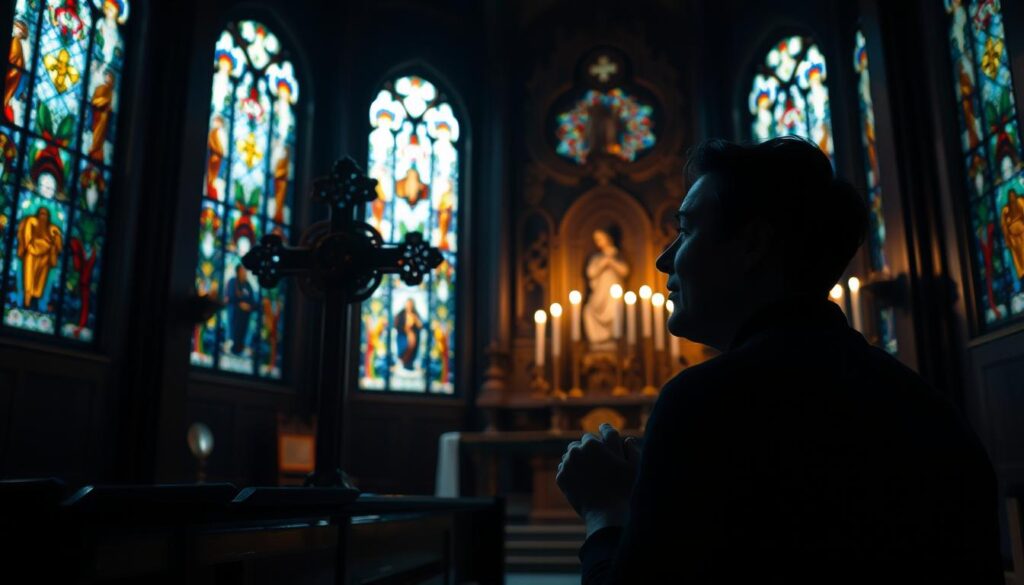
A serene, dimly lit sanctuary with stained glass windows casting a warm, reverent glow. In the foreground, a person seated in prayer, their hands clasped, expression one of contemplation and devotion. The middle ground features a stylized, ornate cross prominently displayed, its intricate design a symbol of faith. The background showcases a large, ornate altar with candles flickering, creating an atmosphere of solemnity and reverence. The scene conveys a sense of tranquility, introspection, and the profound connection between the individual and their spiritual beliefs.

Popular Channels and Video Formats

Channels like Jubilee Youth blend lively discussions with deep dives into theology, attracting viewers who crave substance without stiffness. Their approach proves that ancient wisdom can thrive in modern formats—think Q&A sessions paired with saintly bio animations.

Diverse styles keep audiences hooked. Some creators host roundtable talks about saints’ legacies, while others break down complex doctrines using relatable analogies. One subscriber noted, “It’s like having coffee with someone who gets both my faith and my TikTok feed.”

Strategies for Creating Impactful Content

Authenticity drives success. Top channels prioritize storytelling over scripts, letting personal journeys illustrate broader truths. They balance scholarly insights with practical advice—like how to pray during hectic days.

Community-building beats heavy advertisement. Instead of sales pitches, creators foster dialogue through comment discussions and live streams. This strategy turns passive viewers into active participants, nurturing spaces where questions are celebrated.

By focusing on quality over quantity, these innovators prove that meaningful media can thrive without compromising depth. Their work shows how digital platforms become sacred ground for curious seekers.

Exploring History, Theology, and Reformation Dialogues

Why do centuries-old debates still spark modern curiosity? Historical theology fuels today’s faith conversations, bridging past decisions with present-day questions. Content creators unpack these rich discussions through formats that make ancient conflicts feel urgent and relatable.

Papal History and the Influence of Pope Leo XIV

Pope Leo XIV’s decisions still shape theological debates. Creators examine how his 18th-century reforms clarified doctrines about authority and tradition. “His letters reveal a leader wrestling with unity,” notes one historian-host. These deep dives help viewers see how past popes addressed challenges similar to today’s.

Interfaith Dialogues and Protestant Perspectives

Surprisingly, Protestant voices often struggle in online religious debates. One creator observed, “Many evangelicals dismiss Catholic teachings without understanding their roots.” Videos comparing Reformation-era arguments with modern beliefs draw crowds hungry for balanced discussions. The planned book Rome Ain’t Home aims to address this gap through structured comparisons.

The Role of Apologetics in Modern Discussions

Defending beliefs isn’t about winning—it’s about clarity. Short videos tackle questions like “Why do Catholics venerate saints?” or “What’s the biblical basis for papal authority?” These clips use historical context and scripture to build bridges rather than burn them.

Viewers increasingly seek content that respects multiple sides. As one commenter wrote, “Finally, someone explains both positions without mockery.” This shift reveals how digital spaces can foster deeper understanding when guided by thoughtful voices.

Deep Dive into Catholic Traditions and Practices

Ancient rituals shape modern faith journeys in powerful ways. These time-tested practices bridge generations, offering believers tangible connections to sacred history while addressing contemporary spiritual needs.

The Chaplet of St. Michael and Angelic Choirs

This prayer tradition began with Antonia d’Astonac’s 18th-century vision. St. Michael instructed her to honor nine angelic choirs, promising divine protection for devotees. The chaplet’s structure mirrors heavenly hierarchy:

A dimly lit cathedral interior, the stained glass windows casting a warm, reverent glow. In the foreground, a worshiper kneels in prayer, rosary beads clasped tightly in their hands. Shadowy figures of other parishioners can be seen in the middle ground, heads bowed in contemplation. The background features ornate wooden pews, intricate altar carvings, and the towering presence of a crucifix, symbolizing the central tenet of Catholic faith. The scene conveys a sense of solemn reverence, with soft lighting and muted tones evoking the solemnity of Catholic prayer traditions.

Choir Role
Seraphim Worship leaders
Cherubim Divine wisdom keepers
Thrones Justice administrators
Dominations Universal regulators
Powers Cosmic order guardians
Virtues Miracle workers
Principalities Nation protectors
Archangels Divine messengers
Angels Human guardians

Regular recitation invites nine-angel escorts during Communion according to tradition. This practice shows how personal revelations became church-approved devotions over time.

Liturgical Traditions and Their Historical Roots

Many rituals trace back to early Christian communities. The Easter Vigil’s candlelight procession, for instance, began when persecuted believers met in catacombs. These traditions evolved but kept their core meaning.

Seasonal practices like Advent wreaths demonstrate historical continuity. What began as family customs often gained official church recognition. This blending of personal piety and institutional approval shapes living traditions.

Modern creators explain these roots using relatable analogies. One video host compared liturgical colors to “spiritual mood rings” reflecting the Church’s emotional journey through the year. Such approaches help people see ancient patterns in fresh ways.

Navigating Social Media, Apologetics, and Modern Engagement

Faith conversations now thrive where people already spend time—social platforms. Creators blend ancient teachings with modern engagement strategies, turning comment sections into virtual gathering spaces. This shift helps seekers explore traditions while feeling heard.

A serene, dimly lit sanctuary with a large stained-glass window casting a warm, ethereal glow. In the foreground, a person sitting cross-legged, deeply engaged with a smartphone, fingers scrolling through social media. The middle ground features a collection of religious symbols and iconography - a crucifix, rosary beads, and a Bible - arranged neatly on a wooden table. The background showcases a large, ornate cross hanging on the wall, surrounded by intricate carvings and architectural details, suggesting a traditional Catholic church setting. Soft, ambient lighting creates a contemplative, reverent atmosphere, blending the digital and the sacred.

Using YouTube to Foster Community and Faith Conversations

Successful creators focus on relational apologetics—answering tough questions without lectures. One host shared, “People don’t want debates; they crave honest dialogue.” Interview-style videos with Protestant thinkers build bridges, showing respect across differences.

Many younger viewers seek spiritual renewal through these exchanges. A recent study found 68% of converts cited online content as part of their journey. Channels addressing Marian doctrines or papal history often use visual aids to simplify complex topics.

Strategy Purpose Impact
Weekly Q&A livestreams Build real-time connections 42% higher viewer retention
Patreon-exclusive content Sustain ministry work 35% of creators fund full-time work
Collaborative debates Showcase interfaith respect Doubles shared content across platforms

Creators balance media trends with substance. Short videos dissect sola Scriptura arguments, while longer deep dives explore church history. This mix keeps content accessible without sacrificing depth.

Community-building remains central. Many channels use social media polls to choose topics, making viewers feel invested. As one commenter noted, “It’s like having friends guide your spiritual growth.” This approach turns passive watching into active participation.

Conclusion

Digital spaces have become unexpected allies in spiritual journeys. Through thoughtful media, creators reshape how traditions meet modern life. They prove ancient wisdom thrives when shared with creativity—not compromise.

Faith-focused channels succeed by honoring substance over trends. Their work shows religious content can engage without flashy advertisement. Stories of saints and liturgical practices gain fresh relevance through relatable explanations.

This digital shift complements—not replaces—traditional church experiences. Viewers discover new ways to deepen beliefs while staying rooted in sacred traditions. As one creator noted, “Our screens become windows to timeless truths.”

The future holds exciting possibilities. Expect more interview-style explorations and ministry-driven projects bridging online engagement with real-world impact. In this war for attention, authenticity remains the winning strategy.

Through it all, the purpose stays clear: guiding seekers toward richer spiritual life. Digital tools now serve as vital companions on that age-old journey.

FAQ

How can faith-based channels build community through YouTube?

Channels often use live streams, comment discussions, and collaborative projects to connect viewers. Many host Q&A sessions or share personal testimonies to foster authentic dialogue around shared beliefs.

What role does Pope Leo XIV play in modern theological discussions?

While not an officially recognized figure, discussions around Pope Leo XIV often explore themes like church authority and reform. Content creators analyze historical context to address current debates on tradition versus modernization.

Why do creators focus on the Chaplet of St. Michael in videos?

This devotional practice resonates with audiences seeking spiritual protection. Videos often blend prayers with artistic visuals or explanations about angelic choirs, making ancient traditions accessible to younger generations.

How do Catholic creators approach interfaith dialogues online?

Many use respectful debates, scripture comparisons, and shared service initiatives to highlight common ground. Channels like Ascension Presents balance apologetics with open-ended questions to encourage mutual understanding.

What makes liturgical content popular on digital platforms?

Viewers crave connection to historical roots. Explainer videos about Mass symbolism or deep dives into sacraments satisfy curiosity while reinforcing the “why” behind rituals in daily life.

Can social media authentically represent Catholic teachings?

Yes—when creators pair academic rigor with relatable storytelling. Channels like Theology of the Body Institute show how bite-sized videos can unpack complex concepts without diluting their depth.

The Catholic Church’s View on Speaking in Tongues


Many wonder how spiritual experiences like unexpected languages during prayer fit within traditional faith practices. The Church embraces diverse expressions of devotion while maintaining theological clarity. This balance reflects its approach to charisms – special graces believed to strengthen communities.

Approved movements within the faith community practice these gifts today, including what some describe as heavenly or unfamiliar earthly languages. These experiences aim to deepen worship and connection, not replace core teachings. Historical records show such practices existed in early Christian groups, though interpretations evolved over centuries.

The Church emphasizes that no single spiritual expression guarantees holiness. As St. Paul taught, love remains the greatest virtue. Modern leaders affirm this view while supporting those who experience extraordinary prayer forms. This creates space for both traditional and contemporary worship styles.

Key Takeaways

  • The Church recognizes spiritual gifts but doesn’t require specific practices for salvation
  • Approved renewal movements practice extraordinary prayer forms with leadership support
  • Love and service hold greater importance than any singular spiritual experience
  • Historical roots of these practices appear in early Christian writings
  • Modern neuroscience has studied these phenomena in controlled environments
  • Diverse worship styles coexist within the global faith community

Understanding the Roots and Teachings

Exploring spiritual expressions in worship reveals fascinating connections to ancient texts and traditions. Early Christian communities experienced diverse forms of prayer, some involving what scripture calls “the gift of languages.” These practices aimed to unite believers across cultural barriers while honoring core teachings.

Scriptural Foundations and Early Church Insights

The Acts of the Apostles describes a pivotal moment when followers communicated across language divides. This event enabled message-sharing with diverse groups, demonstrating faith’s universal reach. Later writings by St. Paul offer practical guidance, stressing that such gifts should strengthen communities rather than create division.

Paul teaches that personal prayer languages differ from public expressions needing interpretation. He identifies three purposes: intimate communion with God, prophetic messages requiring translation, and missionary outreach to foreign listeners. “If I speak human or angelic languages but lack love,” he writes, “I gain nothing,” highlighting love’s supremacy over extraordinary experiences.

Historical Perspectives on Tongues in Worship

Early Christian leaders debated whether these practices belonged solely to their time. Some thinkers argued they fulfilled specific needs during faith’s initial spread across nations. Others maintained their ongoing relevance, creating varied approaches within different communities.

Historical records show fluctuating acceptance through centuries. Certain groups preserved these prayer forms as part of their identity, while others viewed them as temporary signs. This rich history explains why modern faith communities approach the topic with both reverence and caution.

Catholicism Speaking in Tongues: Scriptural and Doctrinal Insights

Faith traditions often balance mystical experiences with established teachings. The Church’s approach to extraordinary spiritual gifts combines scriptural wisdom with practical guidance for modern believers.

A serene, ethereal depiction of the "Spiritual Gifts Framework" in the Catholic Church's theology. The composition features a central figure representing the Holy Spirit, surrounded by radiating beams of light and celestial symbols. In the foreground, a cluster of symbolic elements - a cross, a dove, and hands in a gesture of prayer - evoke the manifestations of the Spirit's gifts. The background is rendered in soft, muted tones, creating a contemplative, reverent atmosphere. Captured through a wide-angle lens with balanced, natural lighting, this image aims to visually capture the scriptural and doctrinal insights of Catholicism's understanding of speaking in tongues.

Biblical Patterns and Church Definitions

Scripture describes diverse charisms meant to uplift communities. The Catechism clarifies these gifts exist “for the common good,” never for personal glory. As paragraph 2003 notes, even extraordinary abilities like gift tongues must serve love’s unifying purpose.

Consider these scriptural principles:

Aspect Biblical Reference Purpose
Personal Prayer 1 Corinthians 14:2 Private communion with God
Prophetic Message Acts 2:4-6 Edifying communities through interpretation
Missionary Outreach Mark 16:17 Cross-cultural faith sharing

Apostolic Guidance and Historical Context

Paul’s famous words remind believers: “If I speak human or angelic languages but lack love, I gain nothing.” Early Christian writers like Augustine later stressed this balance. They viewed extraordinary gifts of the Spirit as tools for service, not status symbols.

Church history shows varied approaches to these practices. Some communities embraced them as signs of divine presence. Others focused more on developing virtues like patience and kindness. Both paths aimed to deepen believers’ connection to God and neighbor.

The Role of Catholic Charismatic Renewal in Worship

A vibrant wave of spiritual energy swept through Catholic communities in the late 1960s. This charismatic renewal movement reintroduced dynamic prayer practices while staying rooted in tradition. Its growth reshaped modern worship experiences for millions.

Movement Origins and Papal Endorsements

Pope Paul VI made history in 1975 by hosting a special Mass at St. Peter’s Basilica. Cardinal Suenens led prayers using spiritual languages during this service, marking official approval of these practices. Subsequent popes continued supporting the movement, recognizing its power to deepen faith.

Liturgical Guidelines and Contemporary Practice

Brazilian bishops created clear rules in 1994 to maintain worship harmony. Their guidelines state: “Spiritual languages require interpretation if used publicly” and forbid urging others to use them during services. Father Edward McNamara emphasizes that official liturgies must remain unchanged.

Guideline Source Key Rule Purpose
Vatican (1975) Allow prayer languages during approved events Encourage spiritual growth
Brazilian Bishops (1994) Require interpretation for public use Maintain order
Modern Communities Separate personal prayer from group worship Balance tradition & renewal

This approach proved particularly effective in South America. Many believers found renewed passion through these practices, reducing shifts to other denominations. Today’s charismatic renewal groups focus on both enthusiastic prayer and serving their neighbors.

Conclusion

The intersection of faith and science reveals fresh insights into spiritual experiences. A University of Pennsylvania study showed unique brain activity during prayerful moments, with practitioners remaining fully conscious. This aligns with the Church’s view that extraordinary gifts like the ability to speak tongues serve as tools for connection, not causes for division.

Tim Staples of Catholic Answers notes the Church welcomes all Holy Spirit-given charisms while respecting personal preferences. Whether someone embraces these practices or prefers traditional prayer, the focus stays on building up the community. Modern research even suggests such experiences may support emotional well-being when rooted in genuine devotion.

This balanced approach reflects a timeless truth: authentic faith thrives through both ancient teachings and lived experience. By allowing freedom in non-essential matters, the Church creates space for diverse believers to grow together. As St. Paul taught, every gift finds its purpose when guided by love and service to others.

FAQ

Is the practice of praying in tongues officially accepted by the Catholic Church?

Yes, when rooted in faith and order. The Church recognizes it as a charism of the Holy Spirit, especially within the Charismatic Renewal. However, it emphasizes discernment, alignment with liturgy, and avoiding division.

How does the Charismatic Renewal movement align with traditional Catholic teachings?

The movement integrates spontaneous worship, like praying in tongues, with sacramental life. Popes Paul VI, John Paul II, and Francis have endorsed its focus on personal encounter with the Holy Spirit while upholding doctrines like the Eucharist and Marian devotion.

What biblical passages support this practice in Catholic spirituality?

Key references include Acts 2:4 (Pentecost) and 1 Corinthians 12–14. St. Paul teaches that tongues should build up the community, not cause confusion. The Catechism (CCC 2003) also affirms spiritual gifts for serving the Church.

Did early Christians use this form of prayer?

Historical accounts, like those from St. Augustine and St. Irenaeus, mention ecstatic prayer. However, its expression evolved over time, with greater emphasis on order in communal settings after the apostolic era.

Are there specific rules for using this gift during Mass?

The Vatican’s 1997 guidelines state that charismatic practices should not disrupt liturgy. Private prayer groups are the primary setting, while public worship prioritizes unity through structured prayers and sacraments.

How does this gift differ from prophecy or healing?

Like all charisms, tongues are meant for edification. St. Paul ranks it below love and prophecy (1 Cor 13:1). The Church teaches that no gift is superior—all must work together to spread the Gospel and serve others.

Catholicism’s Unforgivable Sins: Understanding the Unpardonable


Many faith traditions teach that divine mercy offers endless opportunities for redemption. Yet some spiritual choices create barriers even grace struggles to overcome. This paradox lies at the heart of a complex theological concept involving actions that reject forgiveness itself.

Church teachings identify six specific attitudes blocking reconciliation with God. These include stubborn refusal to change, jealousy of others’ spiritual growth, and denial of evident truths. What makes these actions particularly concerning is their persistent rejection of transformative grace.

Contrary to popular belief, these offenses aren’t unforgivable because divine power has limits. The issue lies in human free will – when someone continuously refuses to acknowledge wrongdoing or seek healing, they effectively lock the door from within. This state of permanent resistance, known as final impenitence, forms the core challenge.

Understanding this distinction helps clarify common misunderstandings. Our exploration will break down each aspect, from historical context to modern interpretations, providing clarity on this sensitive yet vital spiritual topic.

Key Takeaways

  • Six specific spiritual attitudes block reconciliation in traditional teachings
  • Offenses become irredeemable through persistent rejection of grace
  • Human choice determines forgiveness accessibility
  • Final impenitence defines the point of no return
  • Doctrine emphasizes free will over divine limitations
  • Proper understanding prevents harmful misconceptions

Overview of Catholicism’s Unforgivable Sins

Spiritual teachings often emphasize hope in redemption, but certain attitudes create roadblocks even mercy can’t bypass. The concept centers on six specific rejections of grace, each forming a unique barrier to reconciliation. These actions differ from ordinary mistakes by their persistent refusal to accept healing.

“Whoever blasphemes against the Holy Spirit will never have forgiveness” (Mark 3:29)

. This statement highlights actions that reject thevery sourceof forgiveness rather than specific wrongdoings.

Here’s how these barriers manifest:

Type Core Issue Spiritual Impact
Despair Believing change is impossible Blocks hope
Presumption Assuming salvation needs no effort Stops growth
Impenitence Refusing remorse Prevents healing
Obstinacy Ignoring grace Hardens heart
Resisting Truth Denying spiritual reality Clouds judgment
Envy of Grace Resenting others’ growth Breeds bitterness

What makes these actions unique is their double rejection – saying no to both the mistake and the solution. Unlike momentary lapses, they represent ongoing resistance to transformation.

The holy spirit works through openness. When people shut doors through stubbornness or denial, they create their own prison. Understanding these patterns helps believers recognize early warning signs and choose different paths.

Biblical Foundations and Scriptural Analysis

Understanding scriptural context is key to grasping the concept of irreversible spiritual choices. Jesus’ teachings in Mark and Matthew reveal how persistent rejection of divine influence creates lasting barriers. These passages highlight actions that actively oppose truth rather than simple human error.

A dimly lit cathedral interior, the stained glass windows casting a warm, ethereal glow. In the foreground, a figure kneeling in prayer, hands clasped, face uplifted, conveying a sense of humility and supplication. The figure is surrounded by a soft, diffuse light, as if bathed in the presence of the Holy Spirit. In the middle ground, a large, ornate crucifix dominates the scene, its carved figure serving as a symbol of divine forgiveness and redemption. The background fades into a hazy, atmospheric space, hinting at the vastness and mystery of the spiritual realm. The overall tone is one of reverence, solemnity, and the transformative power of divine grace.

Mark 3:28-29 and the Words of Jesus

In Mark’s Gospel, Jesus makes a striking distinction: “All sins will be forgiven… except blasphemies against the Spirit.” The Greek phrase dia touto (“because of this”) links this warning to His earlier miracle. By healing through divine power, Christ exposed hearts hardened against evident truth.

Exegesis from Matthew and Hebrews

Matthew 12 shows religious leaders attributing Jesus’ works to evil forces. This refusal to acknowledge God’s activity reveals a deeper issue – rejecting the Spirit’s role in revealing truth. Hebrews 6:4-6 clarifies this isn’t about momentary doubt but final refusal to accept grace after knowing its source.

Scripture Context Key Insight
Mark 3:28-29 Response to miracle critics Rejecting evidence hardens hearts
Matthew 12:31-32 Pharisees’ false accusation Mistaking good for evil blocks repentance
Hebrews 6:4-6 Warning to early believers Knowing truth then abandoning it has consequences

Jesus’ “strong man” analogy in Matthew 12:29 underscores His authority over evil. Those who dismiss this power risk aligning against the very force offering freedom. The biblical message remains clear: openness to truth allows grace to work, while stubborn denial builds walls no one can tear down but ourselves.

Historical and Theological Insights

The roots of spiritual understanding often grow from deep theological soil. Early Church thinkers shaped how believers approach complex concepts of divine mercy and human responsibility.

St. Augustine’s Groundbreaking Work

Fourth-century bishop Augustine of Hippo transformed pastoral care through his teachings. He identified final impenitence as the critical barrier to forgiveness, stating: “He who dies obstinate rejects the Spirit’s call to renewal.” This insight came from witnessing people hardening their hearts despite repeated offers of grace.

Aquinas Builds a Framework

Eight centuries later, Thomas Aquinas expanded these ideas in his Summa Theologiae. He explained how certain actions become irredeemable by nature, not divine decision. “The refusal to repent removes the path forgiveness travels,” he wrote, comparing spiritual rejection to shutting windows against sunlight.

Both thinkers emphasized human freedom over heavenly limitations. Augustine focused on real-life struggles, while Aquinas created systematic explanations. Their combined work shows how persistent resistance to change can outweigh even infinite mercy.

Modern teachings still reflect this balance. By studying these masters, believers gain tools to avoid spiritual traps while trusting in grace’s power. The key lies in remaining open to transformation until life’s final moments.

The Role of the Holy Spirit in Forgiveness

At the core of spiritual renewal lies an often-overlooked collaborator: the Holy Spirit. This divine presence doesn’t force change but patiently illuminates paths toward healing. As Pope John Paul II taught, rejecting this guidance means refusing “the salvation God offers through the Cross.”

“Blasphemy against the Holy Spirit consists in refusing salvation working through the Cross’s power”

Pope John Paul II

A serene, ethereal scene of the Holy Spirit's role in forgiveness. In the foreground, a glowing, translucent figure of the Holy Spirit, radiating divine light and grace. Soft, billowing clouds of ethereal energy swirl around, creating an atmosphere of sacred tranquility. In the middle ground, a kneeling figure, hands clasped in prayer, bathed in the Spirit's resplendent glow, conveying a sense of humility, repentance, and the transformative power of forgiveness. The background is a hazy, heavenly landscape, hinting at the boundless mercy and redemption offered by the Holy Spirit. Warm, muted tones and a soft, diffused lighting lend a reverent, contemplative mood to the scene.

Understanding Divine Mercy

Mercy flows through the Spirit’s gift of grace, creating bridges where human effort falls short. Unlike temporary fixes, this process addresses root causes – transforming guilt into growth opportunities. The Spirit works as a counselor, gently exposing harmful patterns while offering strength to change them.

The Spirit’s Work in Transformation

True change requires partnership. The Holy Spirit initiates conviction but waits for our yes. Like sunlight needing open windows, grace activates when we allow it entry. Practical openness includes:

  • Regular self-reflection
  • Honest prayer
  • Willingness to course-correct

Resisting this process risks spiritual hardening over time. Yet daily choices to welcome the Spirit’s work keep hearts pliable and ready for renewal.

Understanding Sin: Despair, Presumption, and Beyond

Spiritual health thrives when we recognize patterns that distance us from growth. Certain choices act like weeds in the soul’s garden, choking opportunities for renewal. Let’s explore how specific attitudes create lasting barriers.

Despair and Its Impact on the Heart

Despair isn’t mere sadness—it’s a willful choice to believe change is impossible. This mindset slams shut the door to hope, convincing a person that their mistakes define them forever. When the heart stops seeking light, even available grace can’t penetrate.

Impenitence, Obstinacy, and Resisting Truth

Impenitence keeps someone stuck in harmful cycles by refusing to admit wrongs. Combined with obstinacy—closing the mind to clear truths—it creates a double barrier. These choices reject the very tools needed for healing: honesty and humility.

True repentance requires courage to face flaws and embrace growth. By contrast, resisting truth plants seeds of bitterness that overshadow spiritual progress. The path forward starts with one humble step toward openness.

FAQ

What is considered the "unforgivable sin" in Catholic teaching?

The “unforgivable sin” refers to final impenitence—a deliberate, persistent rejection of God’s mercy and refusal to repent before death. This is rooted in passages like Mark 3:28-29, where blasphemy against the Holy Spirit signifies a hardened heart unwilling to accept grace.

Why is blasphemy against the Holy Spirit described as unforgivable?

This sin isn’t about a single action but a lifelong refusal to open oneself to divine forgiveness. As St. Augustine taught, it’s the rejection of grace that heals and transforms. Without repentance, even God’s mercy cannot force salvation on someone who resists it completely.

How does despair relate to unforgivable sins?

Despair—the loss of hope in God’s mercy—can lead to impenitence if left unchecked. It closes the heart to healing and isolates a person from the transformative work of the Spirit. However, genuine sorrow and seeking reconciliation always restore hope.

What role does the Holy Spirit play in overcoming sin?

The Spirit awakens conscience, inspires repentance, and empowers believers to live in truth. Through sacraments like Confession, the Spirit renews hearts, making forgiveness possible even for grave sins—unless one persistently rejects this divine help.

Can someone accidentally commit an unforgivable sin?

No. Final impenitence requires full knowledge and deliberate choice. Fear or doubt doesn’t equate to rejection of grace. As St. Thomas Aquinas emphasized, God’s mercy is always available to those who turn back, even at life’s end.

How does presumption differ from despair?

Presumption assumes salvation without effort or repentance, while despair abandons hope in mercy. Both distort trust in God—one through arrogance, the other through hopelessness. Both hinder authentic conversion.

What does “final impenitence” mean practically?

It describes dying in a state of unrepentant rebellion against God. For example, someone who knowingly rejects forgiveness and clings to evil until their last breath. Only God judges hearts, so we pray for all to seek reconciliation.

Are heresy or doubt considered unforgivable?

Not inherently. Heresy becomes dangerous if paired with obstinacy—a prideful refusal to accept truth. Doubt, when honestly wrestled with, can lead to deeper faith. The issue is resisting the Spirit’s guidance despite recognizing the truth.

Catholic Quiz: Discover How Much You Know About the Faith


How well do you understand the beliefs and traditions of one of history’s most enduring spiritual paths? This interactive experience offers a fresh way to explore core teachings, historical milestones, and modern practices. Designed for both newcomers and seasoned followers, it blends education with friendly engagement.

The questions cover everything from foundational principles to nuanced theological ideas. You’ll encounter topics like sacraments, saints, and the Church’s global impact. Whether you’re testing your knowledge or starting your learning journey, the format adapts to your pace.

This isn’t just about right or wrong answers. It’s a chance to reflect on what resonates with you and identify areas for deeper study. Many find surprising connections between ancient traditions and today’s spiritual practices.

Key Takeaways

  • Explore core teachings and historical milestones through interactive questions
  • Suitable for all knowledge levels, from beginners to lifelong adherents
  • Learn about sacraments, saints, and global cultural influences
  • Self-paced format encourages reflection and discovery
  • Identify personal strengths and topics for further study

Exploring the Foundations of the Catholic Church

To grasp the roots of this global institution, we journey through two thousand years of spiritual growth and cultural transformation. The Church traces its origins to Jesus Christ’s teachings and the leadership of Peter, recognized as the first Pope. This lineage continues today, shaping communities worldwide.

Historical Context and Doctrinal Milestones

Major events like the Council of Nicaea (325 AD) defined core beliefs about Christ’s divinity. Centuries later, Vatican II modernized practices while preserving tradition. These turning points reveal how teachings adapt without losing their essence.

Scriptural References and Traditions

The Bible serves as the cornerstone, with passages like John 20:28 highlighting pivotal moments. Sacred writings blend with oral traditions passed through generations. Saints like Augustine and Teresa of Ávila enriched these interpretations, creating a living tapestry of wisdom.

Seven sacraments guide worship, from baptism to marriage. Canon law provides structure, ensuring unity across diverse cultures. This balance between ancient texts and evolving practices keeps the faith relevant for modern believers.

Interactive “catholic quiz” Experience

Engage with 62 carefully crafted inquiries designed to meet learners at every stage. The experience blends straightforward navigation with opportunities for reflection, letting you explore topics from sacred rituals to global spiritual demographics at your own pace.

A vibrant, interactive interface for a Catholic faith quiz, bathed in soft, warm lighting and a serene, contemplative atmosphere. The foreground features a clean, minimalist design with a large quiz question prominently displayed, surrounded by clickable answer options. The middle ground showcases an elegant, wooden podium-like structure, evoking a sense of spiritual reverence. In the background, a stained-glass window casts a kaleidoscope of colors, creating a tranquil, church-like ambiance. The overall composition promotes a thoughtful, introspective experience, encouraging users to engage with their Catholic knowledge in a visually captivating and visually immersive way.

How to Navigate the Quiz

Begin by selecting responses from multiple-choice options that match your understanding. Each screen displays one inquiry, with clear buttons to progress or revisit previous ones. No timers mean you can research unfamiliar topics mid-session—ideal for deepening knowledge about concepts like apostolic succession.

Want to save progress? Opt-in for email updates to receive personalized content recommendations based on your results. This feature helps users track growth areas while discovering new resources about liturgical seasons or saintly traditions.

Understanding the Question Formats

Expect a mix of concrete facts and abstract ideas. Some prompts ask about specific locations, like where papal elections occur. Others explore doctrines such as the transformation of communion elements.

Three-tiered difficulty levels ensure everyone finds value. Beginners might tackle identification of common prayers, while advanced participants interpret nuances of infallibility declarations. Every answer includes brief explanations, turning mistakes into teachable moments.

Diving Deeper into Catholic Doctrines and Beliefs

Understanding the core elements that shape spiritual practices offers insight into centuries-old traditions. This section explores three pillars that define daily worship and annual observances.

Papal Authority and Infallibility

The Pope guides the global community as Saint Peter’s successor. A unique aspect of this leadership is infallibility—protection from error when officially defining matters of faith. This principle, formalized in 1870, ensures unity in core teachings.

Sacraments, Mass, and Liturgy Explained

Seven sacred rituals mark key spiritual moments. The Eucharist stands central, with believers recognizing transubstantiation during Mass. Below shows essential elements:

Sacrament Purpose Key Example
Baptism Initiation Water blessing
Eucharist Communion Bread & wine
Confirmation Strengthening Chrism oil
Matrimony Union Vows exchange

Seasonal Celebrations and Fasting Practices

Liturgical calendars structure the year with preparation periods. Lent spans 46 days, featuring Friday meat abstinence and pre-communion fasting. Advent’s four-week wait for Christmas uses wreaths with candles.

These practices create rhythm in spiritual life. Attending multiple masses during holy days deepens the ultimate experience of connection. Names of rituals and vessels carry historical significance, linking modern worshipers to earlier generations.

Reflecting on Catholic Traditions and Contemporary Insights

Modern spiritual journeys often reveal diverse interpretations within shared traditions. Exploring different branches helps believers appreciate how ancient teachings adapt to modern values. A thoughtful comparison of perspectives enriches personal understanding while honoring historical roots.

A grand cathedral's interior, where Roman Catholic and Ecumenical Catholic traditions converge. In the foreground, stained glass windows cast a kaleidoscope of colors, illuminating ornate altars and intricate carvings. In the middle ground, worshippers kneel in reverence, their faces reflecting the solemn atmosphere. The background showcases a harmonious blend of Gothic and modern architectural elements, symbolizing the coexistence of ancient and contemporary insights within the faith. Soft, warm lighting creates an ethereal, contemplative mood, inviting the viewer to meditate on the rich tapestry of Catholic traditions.

Roman vs. Ecumenical Perspectives

Key differences emerge when examining leadership structures and moral guidance. While both traditions share core spiritual practices, their approaches to societal issues reflect evolving priorities. Below highlights four areas where beliefs diverge:

Topic Roman View Ecumenical View
Papal Authority Infallible leader Respected teacher
Contraception Prohibited Personal choice
Communion Members only Open to all Christians
Priest Eligibility Celibate men Married or women

These distinctions show how communities balance tradition with contemporary needs. For example, Roman teachings maintain strict sacramental guidelines, while Ecumenical groups often prioritize inclusivity. Such contrasts encourage reflection on personal convictions.

Understanding these beliefs helps individuals navigate their spiritual paths. Many find value in exploring both perspectives through interactive quizzes that compare doctrinal stances. This approach fosters respect for diversity while clarifying one’s alignment with specific practices.

Conclusion

Your journey through these questions reveals the profound depth of spiritual traditions shaping millions of lives worldwide. Whether you’re new to these teachings or revisiting familiar concepts, every response offers a mirror reflecting your current understanding.

Your results aren’t just scores—they’re invitations to explore sacraments, saints, and evolving practices more deeply. Many discover unexpected connections between ancient rituals and modern worship styles.

While this experience highlights key aspects, true spiritual growth thrives through ongoing engagement. Consider joining study groups, attending services, or reading foundational texts to strengthen your connection.

Remember, knowledge expands gradually. Each step taken—whether reviewing missed questions or discussing doctrines with others—nurtures a richer appreciation for timeless teachings. Let this be the beginning of your next chapter in understanding sacred traditions.

FAQ

How can I test my knowledge of church teachings?

Our interactive experience offers multiple-choice and short-answer formats to explore topics like sacraments, papal authority, and liturgical practices. It’s designed to deepen understanding while keeping engagement high.

What’s the difference between Roman and Ecumenical Catholic perspectives?

Roman traditions emphasize papal centrality and specific liturgical rites, while ecumenical dialogues focus on shared beliefs with other Christian denominations, fostering unity without compromising core doctrines.

Why are seasonal celebrations like Lent important?

Observances such as Lent or Advent encourage spiritual reflection, fasting, and preparation for key events in the liturgical calendar. These practices connect believers to historical roots and communal worship.

How does papal infallibility work?

This doctrine states that the Pope is preserved from error when defining matters of faith or morals *ex cathedra*. It’s a rare occurrence, rooted in centuries of theological development and scriptural interpretation.

Can non-Catholics participate in Mass?

Everyone is welcome to attend, but receiving Communion is reserved for baptized members in good standing. This respects the sacrament’s significance while inviting others to observe and learn.

What role do sacraments play in daily life?

Baptism, Eucharist, Confirmation, and other sacraments mark spiritual milestones, offering grace and strengthening one’s relationship with God. They’re woven into both personal devotion and communal rituals.